
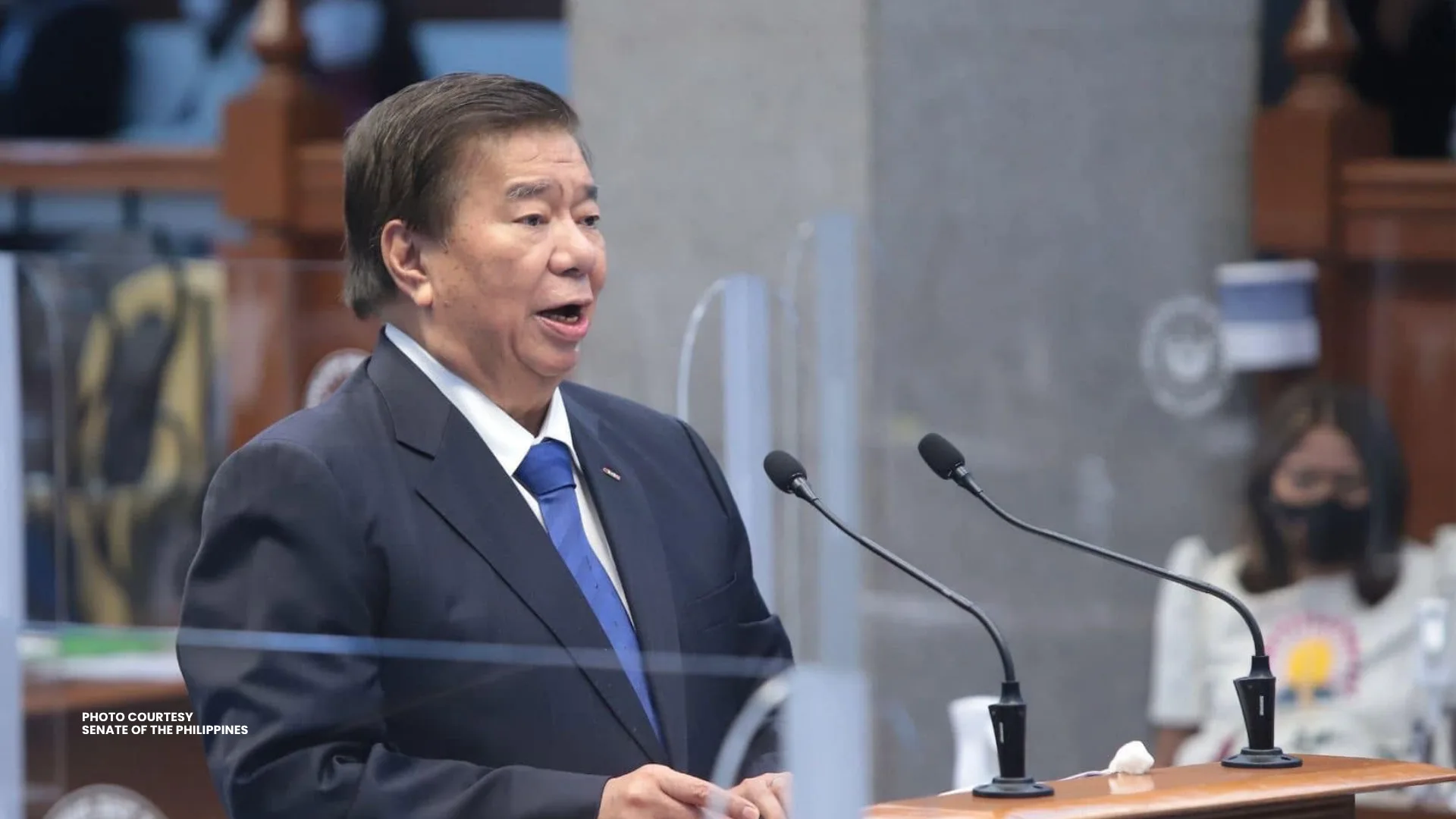
Former Senate President Franklin Drilon warned that the election of Sen. Sherwin “Win” Gatchalian as Senate President may have resolved the leadership dispute, but not the deeper political tensions that continue to threaten stability in the chamber.
Speaking on ANC Headstart, Drilon described the current Senate as the most unstable since the restoration of democracy in 1986, citing rising political polarization, the upcoming impeachment trial of Vice President Sara Duterte, and maneuvering ahead of the 2028 presidential elections.
“I have never seen a Senate since 1986 more unstable than what we have today… In the history of the Senate, this is the first time we have a Senate President for two weeks and then he is replaced… After 21 days, we have a new President of the Senate,” he said.
While congratulating Gatchalian, Drilon said the new leadership faces a challenge beyond securing the presidency, stressing the need to stabilize a deeply divided institution.
He warned that recent leadership changes would not end ongoing political infighting.
“Let us not kid ourselves… There will be a continuous struggle for the Senate presidency because of the impeachment and the 2028 elections,” he said.
Drilon said control of the Senate is crucial as it will influence both the impeachment trial of the Vice President and the broader political landscape leading up to the 2028 elections.
“The control of this institution would play a critical role as to who will control the country in 2028,” he said.
He urged Gatchalian to strengthen his majority bloc by securing additional support from at least one or two more senators to prevent further instability.
“What is important for Senator Win and his group to do is add one or two more to provide some stability in the structure of the Senate, especially with the upcoming impeachment trial,” he said.
Drilon also reminded senators to prioritize national interest amid political divisions.
“Running the Senate today is the art of the possible… But our friends in the Senate should not forget that there is a higher calling — the country, the national interest,” he added.