
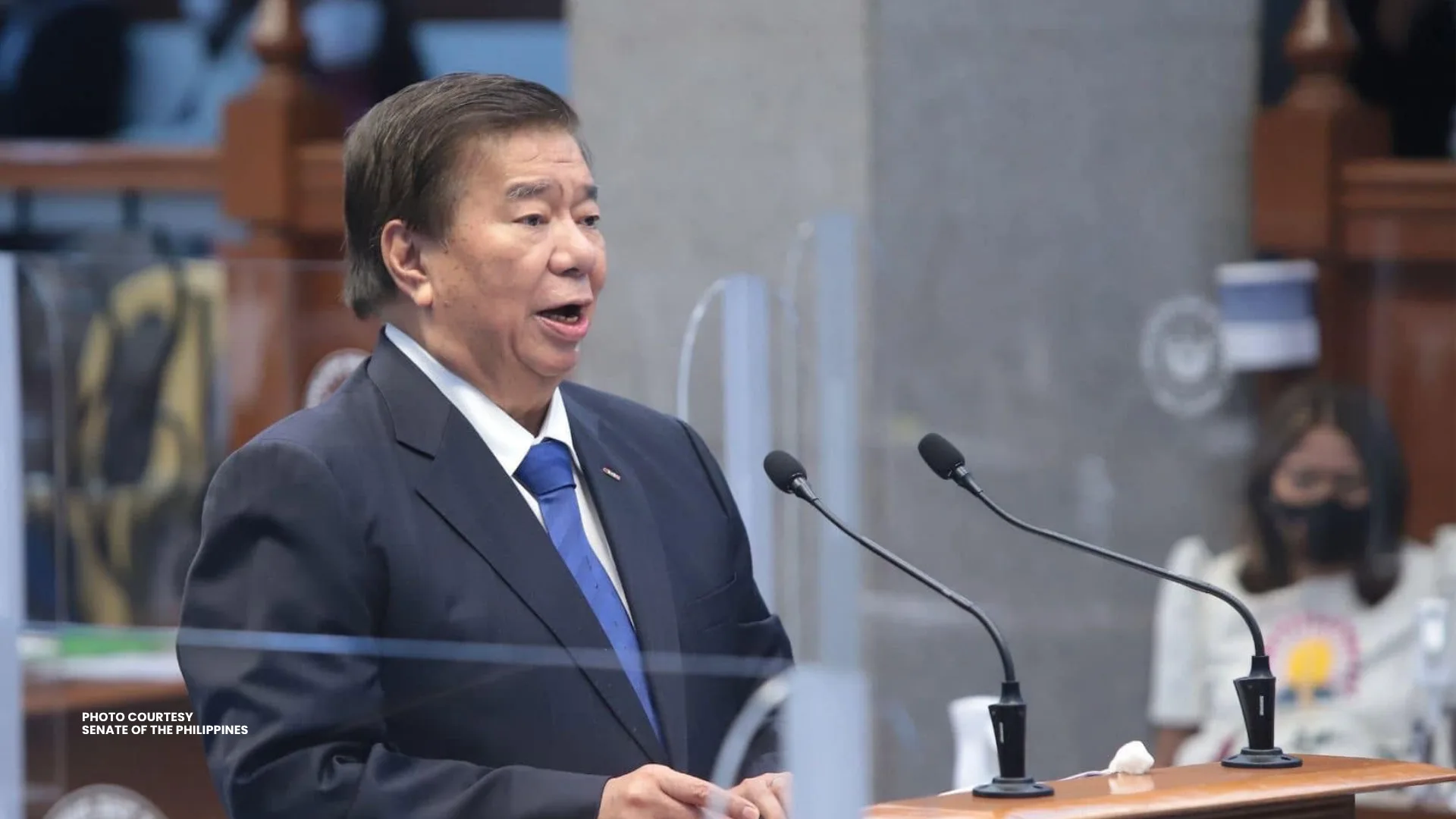
A legal discussion has emerged over how the Senate should determine quorum in the upcoming impeachment trial of Vice President Sara Duterte, with former Senate President Franklin Drilon offering the view that the computation may be based only on senators who are physically able to attend the proceedings.
He said the interpretation becomes relevant in situations where some senators may be unable to participate in the trial due to circumstances beyond the Senate’s control, raising practical questions on how constitutional requirements should be applied.
He also pointed to the legal principle of statutory construction, which holds that laws should not be interpreted in a way that leads to unreasonable or impractical outcomes.
“Meron kaming rule na mga abogado na tawag ay statutory construction, you do not interpret statute to its absurdity,” Drilon said in a radio interview. He noted that applying the rule to a limited attendance scenario could raise issues on how voting thresholds are computed if only a reduced number of senators are present.
Drilon also cited the Avelino v. Cuenco doctrine, which recognizes that quorum is determined based on members physically present and capable of participating in a session. He said this principle may be applied to impeachment proceedings, which allow supplementary reliance on Senate rules and existing jurisprudence.
“Kung ikaw ay hindi puwedeng mag-attend ng session dahil ikaw ay nasa labas or ikaw ay nakakulong, eh ang theory doon ay di na dapat bilangin sa numero ng mga senador kung saan nakasalalay ang quorum,” he said.
Under this view, senators who are unable to attend due to legal or physical constraints may be excluded from quorum computation, as they are not within the Senate’s effective coercive authority during the proceedings.
The Iloilo former solon stressed, however, that the impeachment trial should proceed despite unresolved procedural questions, with legal disputes ultimately subject to review by the Supreme Court if necessary.
“Ituloy natin at kung sino man ang hindi sang-ayon sa resulta, opinion, or ruling, dalhin sa Supreme Court,” he said, adding that the process should not be delayed by interpretative issues.
He also noted that detained senators may request permission from the court to participate in proceedings, although such participation would still depend on judicial approval.
“Ang maliwanag dapat ang bilang ay doon lang sa mga senador na walang restriction na humarap,” he added.
On the evidentiary side, who was a former Senate President, said there should be no issue if the prosecution presents additional evidence during trial, provided these are aligned with the allegations stated in the impeachment complaint.
Senate President Pro Tempore Sherwin Gatchalian, for his part, said the chamber is working with the assumption that 16 votes are required to convict an impeachable official, consistent with constitutional requirements.
He said preparations for the impeachment trial are ongoing, with pre-trial briefs from both prosecution and defense currently under review ahead of the scheduled pre-trial conference.
He said the pre-trial phase is largely procedural, focused on organizing evidence, identifying witnesses, and setting timelines to ensure an orderly progression of the trial.
“Ilalagay na rin doon ang timetable para malaman natin gaano kahaba yung stipulation of facts, kung meron man,” he said, noting that the objective is to streamline the proceedings once the trial formally begins.
Gatchalian added that he is set to preside over the impeachment trial, although he did not rule out the possibility of electing a presiding officer following recent amendments to Senate rules.