
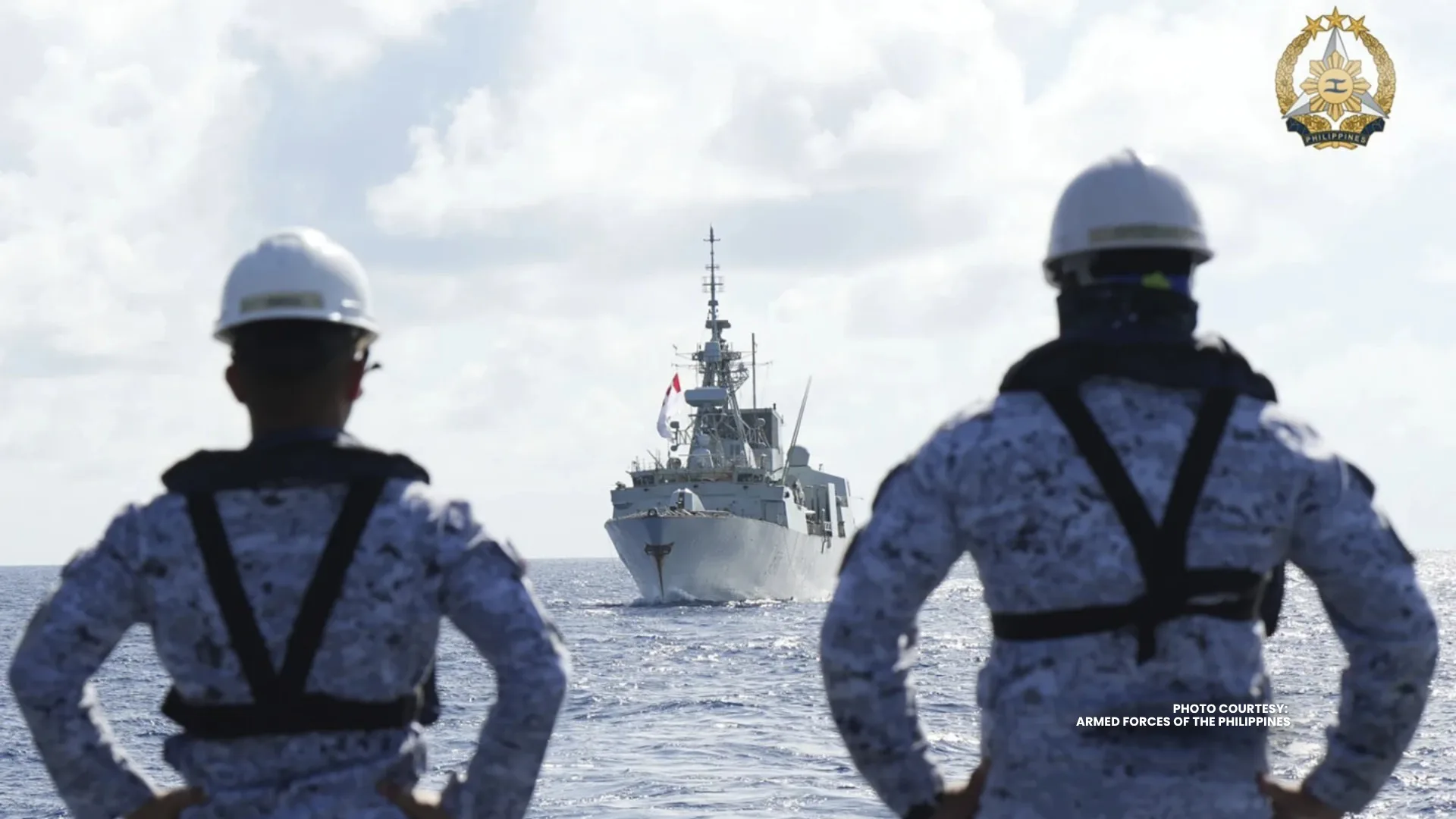
The Philippines and Canada have signed new agreements to bolster defense cooperation and logistical support, reinforcing their commitment to a free and stable Indo-Pacific.
The announcement came during a joint news conference on Friday with Canadian Defense Minister David McGuinty and Philippine Defense Secretary Gilberto Teodoro Jr., who is the first Philippine defense chief to make an official visit to Canada.
McGuinty also extended Canada’s condolences to the victims of the recent magnitude 7.8 earthquake in Southern Mindanao, acknowledging the resilience of the Filipino people in the aftermath of disasters such as Typhoon Haiyan in 2013.
“Our thoughts are with the families who have lost loved ones, those who have been injured or displaced, and the communities now facing the very difficult task of rebuilding,” he said.
The two officials signed a statement of intent to enhance defense cooperation, alongside a mutual logistics support arrangement that will allow the countries to assist each other during military exercises, training, and operations. These agreements build on the Status of Visiting Forces Agreement (SOFA) signed last November in Manila, the first such Canadian agreement in the Indo-Pacific.
Canada has been increasing its defense engagement in the region, with participation in exercises such as Balikatan and Sama Sama alongside the Philippines, Australia, Japan, and New Zealand. McGuinty said the agreements will improve interoperability, strengthen trust between armed forces, and prepare both countries to respond to security challenges.
Teodoro highlighted that the agreements also support broader objectives, including upholding the United Nations Convention on the Law of the Sea (UNCLOS) amid the 10th anniversary of the South China Sea arbitral ruling. He noted that cooperation extends to cybersecurity, multilateral maritime exercises, information-sharing, and other initiatives critical to economic, industrial, and infrastructure security.
“These agreements are a microcosm of the Canada-Philippines relationship, reinforcing mutual trust and enabling cooperation in defense, trade, and people-to-people exchanges,” Teodoro said. Both officials emphasized that their partnership advances international norms, a rules-based order in the Indo-Pacific, and shared security under the rule of law.
The visit underscores the deepening ties between the two nations, spanning defense, economic, and cultural connections, and lays the groundwork for further strategic collaboration in the region.