
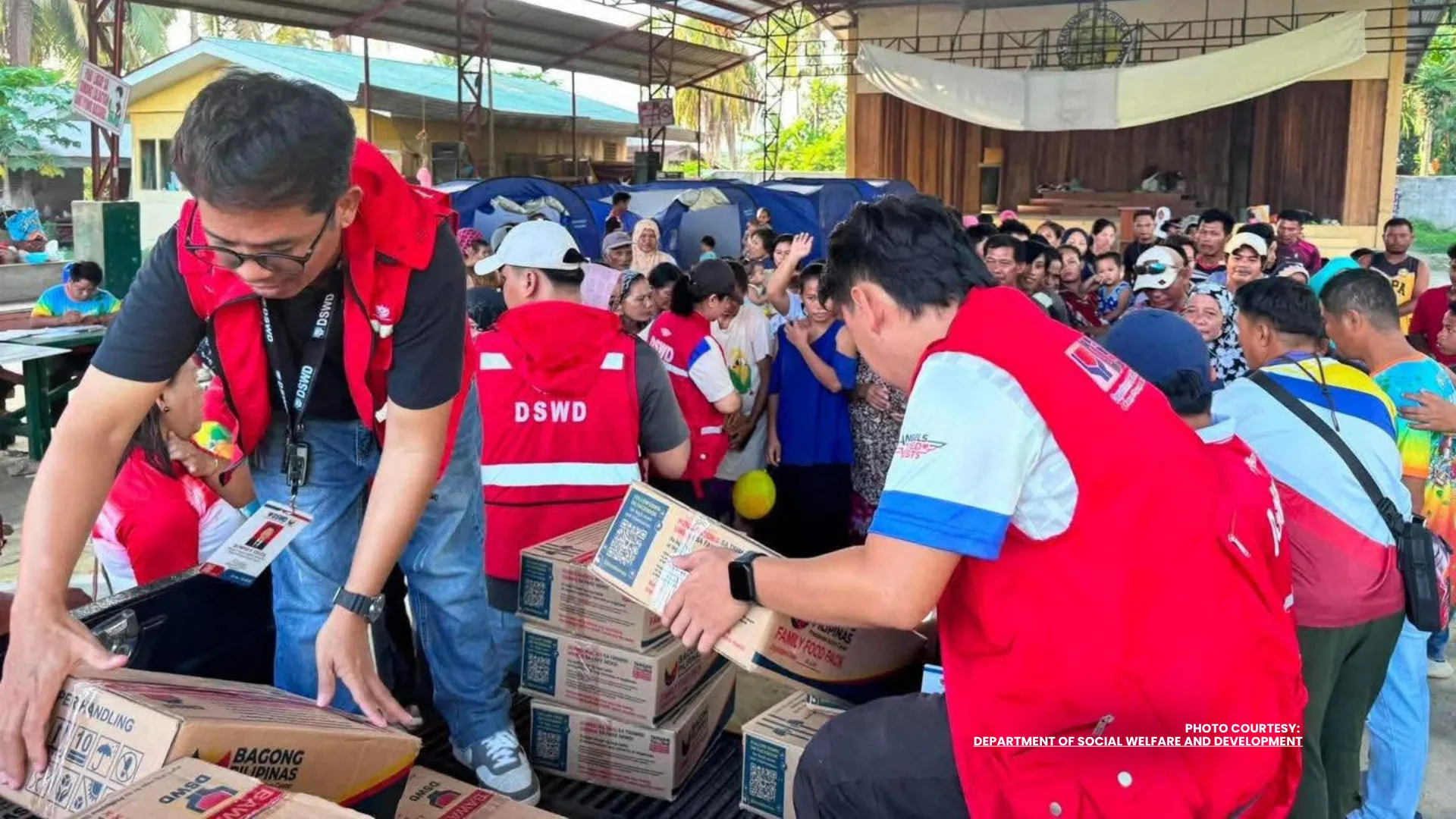
More than 40,000 residents displaced by the strong earthquake in Mindanao are receiving food, shelter, and other emergency assistance as government response teams continue relief operations in affected communities, the Office of Civil Defense (OCD) said Tuesday.
OCD spokesman Junie Castillo said 8,725 families, or about 31,700 individuals, are staying in 54 evacuation centers, while another 1,804 families, or around 8,900 individuals, are taking shelter outside evacuation sites.
The OCD said the earthquake affected 32,926 families, or about 145,000 individuals, across 163 barangays in Regions 9, 11, 12, and the Bangsamoro Autonomous Region in Muslim Mindanao.
The agency also reported 37 fatalities, 488 injured individuals, and four missing persons as of 11 am Tuesday. Search and rescue operations were continuing for those still unaccounted for in Region 12.
Castillo said Regions 11 and 12 sustained the most serious impact, particularly General Santos City and Sarangani province.
The Department of Social Welfare and Development (DSWD) has released 2,045 family food packs, 2,705 ready-to-eat food packs, and more than 300 non-food items for affected residents.
The cost of DSWD humanitarian assistance has reached more than P4 million, while response vehicles, mobile kitchens, and mobile command centers have also been deployed to support operations on the ground.
Castillo said assistance is being extended not only to evacuees inside evacuation centers but also to families staying outside the facilities.
“Kasama po sila sa tinutugunan yung mga pangangailangan nila dahil ang utos na nasa ating direktiba ng Pangulo, lahat po, no one will be left behind,” Castillo said during the Bagong Pilipinas Ngayon public briefing.
The OCD said 47 infrastructure facilities were damaged, along with 2,505 houses. Of the damaged homes, 460 were totally destroyed while more than 2,000 were partially damaged.
Six landslide incidents were also reported, prompting authorities to advise residents in landslide-prone areas to temporarily evacuate as aftershocks continue.
Castillo said the government’s 15 response clusters have been activated to address the needs of affected communities. Local government units and regional offices of national agencies are leading the response, with national agencies ready to provide augmentation when needed.
Hospitals in affected areas are also receiving support after some facilities dealt with structural concerns and power outages. Generator sets and fuel supplies have been provided, while the Department of Health is leading medical response operations.
Castillo said long-term recovery efforts would focus on rehabilitating damaged infrastructure, especially critical facilities, while also strengthening the implementation of building and structural standards.
He said the government would continue damage and needs assessments to determine the assistance required by communities recovering from the earthquake.