
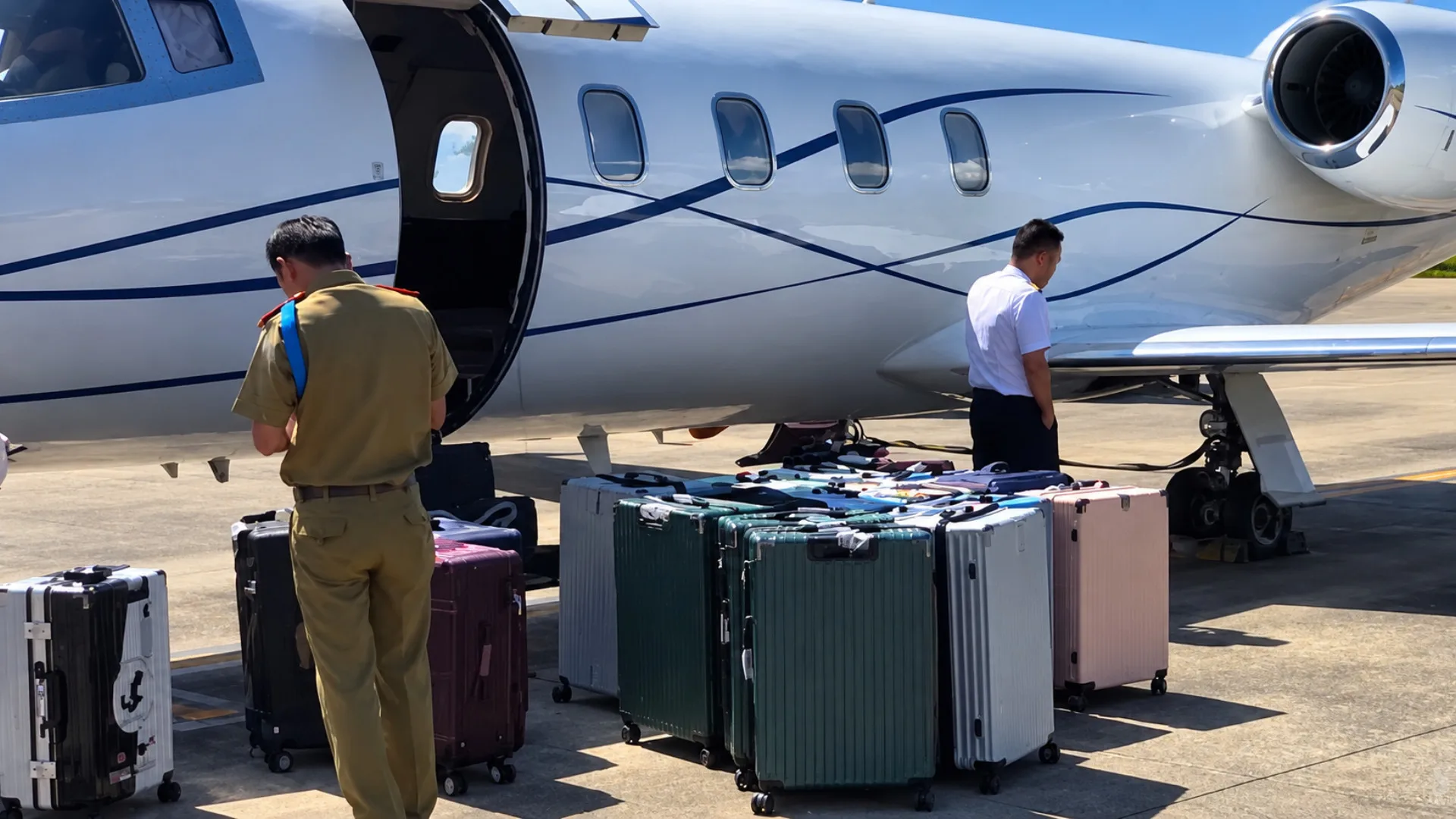
The seizure of 521 kilograms of suspected shabu in Laos points to a distribution network operating inside the Philippines, the National Bureau of Investigation (NBI) told the House Committee on Dangerous Drugs.
NBI Dangerous Drugs Division chief Atty. Ross Jonathan V. Galicia said the volume of the shipment and the use of a private aircraft showed the resources needed to move the drugs and deliver them to their intended market.
“It would take a number of people to move these illegal drugs,” Galicia told the committee chaired by Las Piñas Rep. Mark Anthony G. Santos.
“There is a local crime group that is operating within the country,” he also added.
According to Galicia, investigators must look beyond the drugs intercepted at Luang Prabang International Airport on October 1 and examine the network that would have received and distributed them.
“Destination is the Philippines. We have established that,” Galicia said.
“There’s a big market in the Philippines,” he also admitted.
Galicia drew attention to the transport arrangement, saying those behind the operation had the funds to hire an aircraft and move the shipment quickly.
“They’re using a private jet,” he said.
Philippine Drug Enforcement Agency (PDEA) Director General Undersecretary Isagani R. Nerez separately told the committee that PDEA and the Philippine National Police (PNP) were building a case against individuals allegedly involved in financing, arranging, and receiving the shipment.
Nerez said investigators were gathering transaction documents covering the aircraft charter and seeking official investigation records from foreign counterparts.
The Bureau of Customs (BOC), however, said its own records had not yet established a Philippine recipient or importer.
Deputy Commissioner for Intelligence Emmanuel Luis D. Licup reported that Customs had found no notice of arrival for the aircraft and was still awaiting aviation, customs, and investigation documents requested from Lao authorities.
“No verified Philippine consignee identified,” Licup said, presenting the bureau’s assessment.
“The alleged Philippine destination remains under validation pending receipt of documentary evidence from foreign counterparts,” he also added.
The presentations showed that investigators were working from different sets of information: NBI and PDEA described findings from their investigations, while Customs outlined the limits of the documents available to the bureau.
The Civil Aviation Authority of the Philippines (CAAP) also reported that an entry and exit permit had been requested for the aircraft, but the flight was never activated, and the aircraft did not enter Philippine airspace.
The committee’s briefing covered both the alleged Philippine network behind the Laos shipment and measures to improve border checks and information exchange among agencies.