
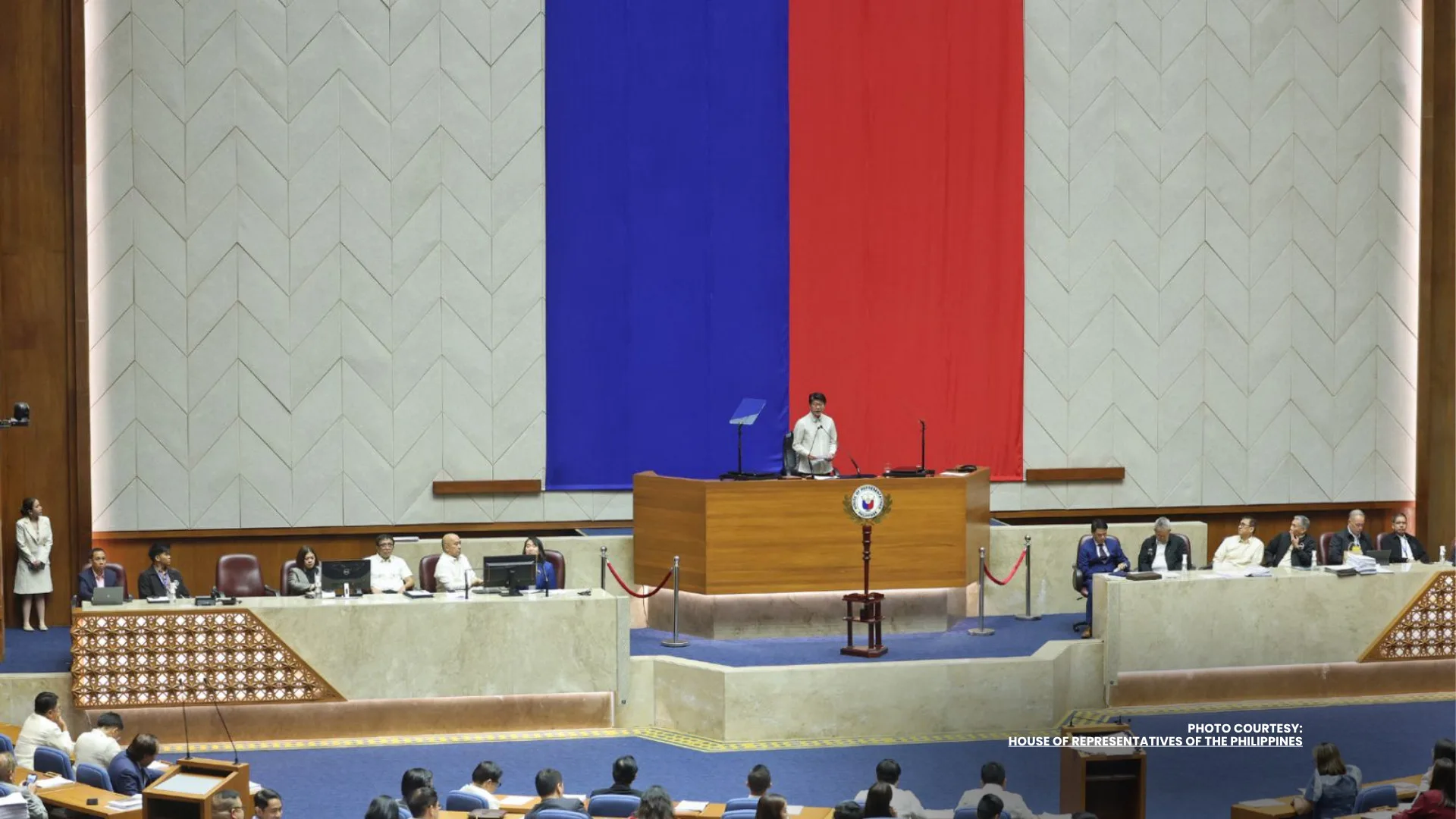
With the threat of drought from El Niño looming over the country, a lawmaker has urged the government to accelerate farmland leveling to promote more efficient water use among farmers.
Abra lone district Rep. JB Bernos said land leveling could help farmers make better use of available water, especially during periods of reduced irrigation.
“With the threat of drought once again upon us, we must implement measures that would allow our farmers to utilize resources more efficiently and effectively. Land leveling is one intervention that could benefit our farmers and help them weather the loss or lessening of irrigation,” Bernos said.
His statement came after the Department of Agriculture and the National Irrigation Administration presented planned interventions for the agriculture sector during a briefing before the House Committee on Agriculture and Food.
Among the strategies cited by the DA and NIA were rainwater harvesting, rehabilitation of irrigation systems, including the installation of solar-powered irrigation systems, rotational water distribution, and “double dry” cropping schemes.
The NIA also said it is encouraging farmers to adopt water-saving practices in field preparation, including land leveling.
Bernos, however, said small farmers may find it difficult to undertake land leveling on their own due to a lack of resources, particularly machinery, making government support necessary.
“Mahihirapan ang mga maliliit na magsasaka na patagin ang lupang sinasaka nila sa kabila ng kawalan ng makinarya. Kaya mahalagang suportahan sila ng pamahalaan sa layuning ito,” he said.
Bernos, along with Solid North Party-list Rep. Ching Bernos, authored House Bill No. 6516, or the Bangod Bukid bill, which seeks to establish a National Farm Land Leveling and Reconstruction Program to speed up the adoption of land leveling practices nationwide.
He said the measure would restructure uneven or degraded farmland to enable efficient irrigation and drainage, integrate mechanized farming systems to reduce post-harvest losses and labor inefficiencies, and strengthen farmers’ productivity and resilience to climate-induced risks such as droughts and flooding.
The bill would also establish engineering standards for farm reconstruction, promote contiguous and block farming, and ensure that small farmers gain access to modern machinery and financial assistance.