
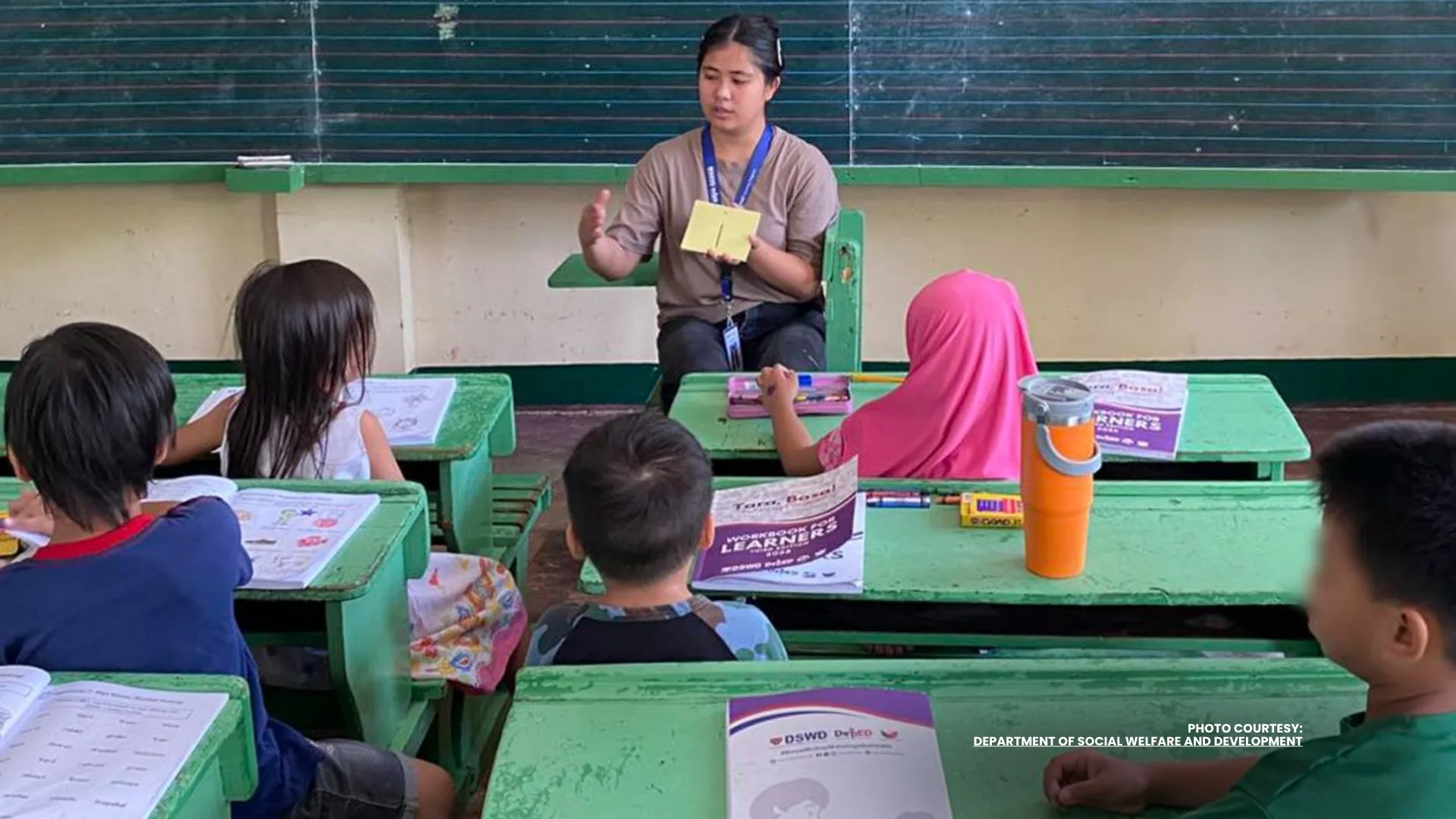
The Department of Social Welfare and Development is pushing for the institutionalization of the Tara Basa Tutoring Program to ensure its continuity and expand its reach to more beneficiaries nationwide.
DSWD Assistant Secretary and spokeswoman Irene Dumlao said Sunday that about 130,000 beneficiaries benefit from the program every year, including more than 50,000 Grade 2 pupils and their parents, over 11,000 college students serving as tutors, and more than 7,000 college students working as youth development workers.
In an interview with radio DZBB, Dumlao said institutionalizing the program would allow it to receive a regular annual budget and potentially serve more beneficiaries across the country.
“Isinusulong din natin…iyung institutionalization nitong sa tutoring program para mapaglaanan talaga ito ng pondo… So imagine kung madadagdagan yung ilang na iyan. Mas marami tayong masaserve. Mas marami tayong matutulungan ng mga mahihirap natin mga kababayan (We are also pushing for… the institutionalization of this tutoring program so that it can actually be funded… So imagine if that number were increased. We would serve more people. We would be able to help more of our poor countrymen),” she said.
“So we’re really pushing for the institutionalization of this program,” Dumlao added.
She said the 20-day tutorial and parenting sessions will run from May until September, depending on the schedules chosen by beneficiaries in each participating region.
The same period also covers the cash-for-work payouts for tutors and youth development workers.
DSWD Undersecretary Edu Punay, whose Innovations and Program Development Group oversees the implementation of the Tara Basa program, said 133,620 beneficiaries benefited from the 20-day tutorial program, which began last May 4.
Now in its fourth year, the program covered incoming Grade 2 learners, parents, tutors, and youth development workers across the country.
Of the total beneficiaries, at least 57,291 child learners and parent beneficiaries were served this year.
The program also involved 11,468 tutors and 7,570 youth development workers, all of whom were college students from various state universities and colleges and were paid daily wages for the 20-day sessions.
Under the program, college student tutors teach struggling or non-readers, while youth development workers help parents of Grade 2 learners become primary educators at home through targeted parenting sessions.
Dumlao said the Tara Basa program differs from the DSWD’s previous educational assistance program because it is conditional, with college tutors and youth development workers paid for their services instead of merely receiving dole-outs or cash aid.
She said the program also helps prepare young college students for future employment, noting that some college tutors and youth development workers later passed the Licensure Examination for Teachers. Details on the number of LET passers were not available.
Dumlao said the program also benefits younger pupils who are struggling to read and learn their lessons, helping them better prepare for the new school year.