
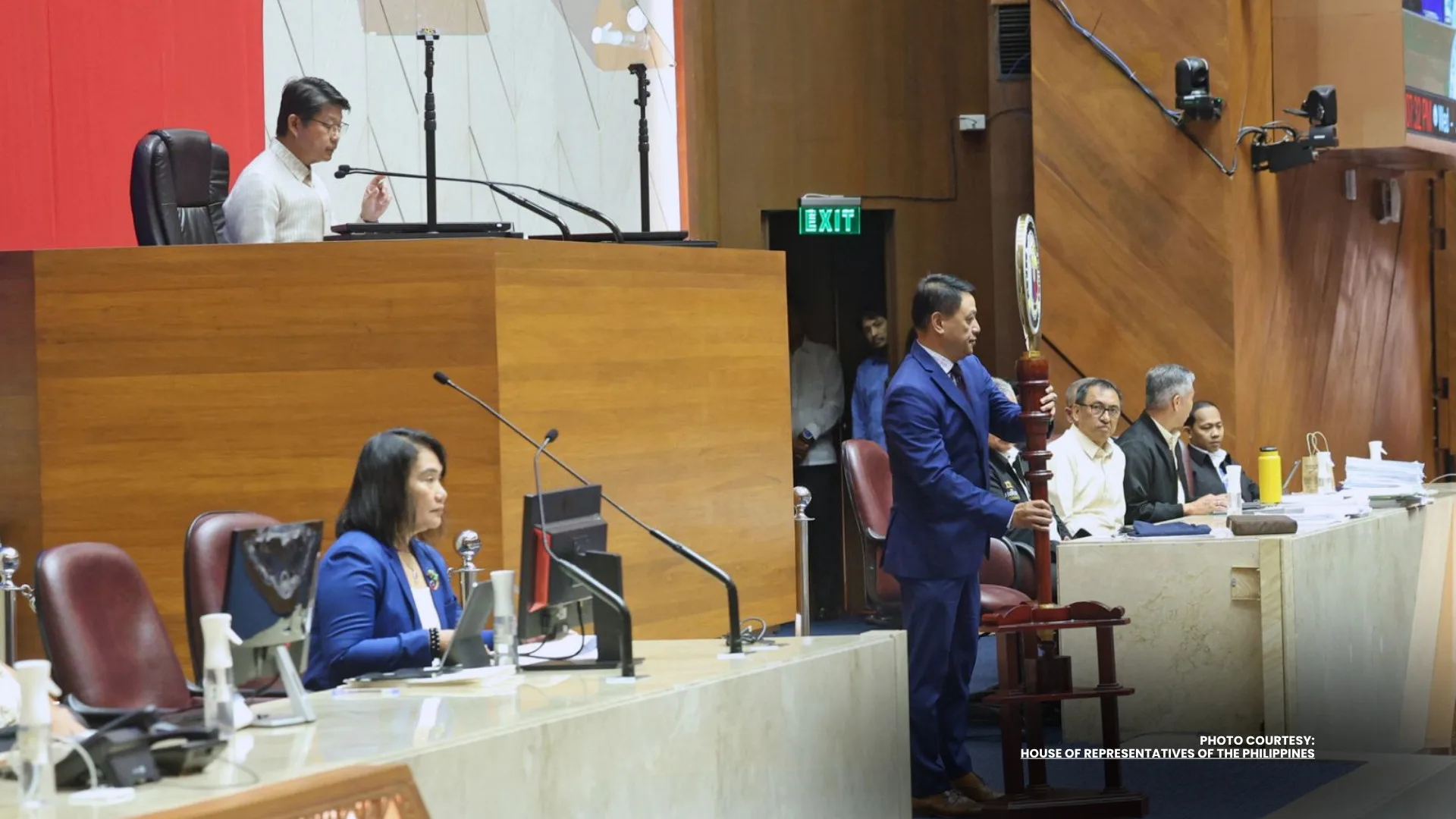
The House of Representatives has approved on third and final reading a priority measure seeking to combat organized disinformation, troll farm operations and malicious falsehoods online while protecting freedom of expression.
House Bill 9465, or the proposed Digital Media Anti-False Information Act, was approved with 286 affirmative votes, three negative votes and seven abstentions.
The measure, identified as a Legislative-Executive Development Advisory Council priority, was sponsored by House Committee on Public Information Chair Lordan Suan of Cagayan de Oro City.
Speaker Faustino “Bodjie” Dy said the bill responds to the growing threat of deliberate disinformation campaigns that undermine public trust, distort public discourse and threaten democratic institutions.
“Disinformation has evolved into a powerful weapon capable of misleading communities, destroying reputations, disrupting democratic processes and threatening national security. Government cannot simply stand by while malicious actors exploit digital platforms to spread deliberate falsehoods and cause real harm,” Dy said.
The bill imposes penalties of six to 12 years of imprisonment and fines ranging from ₱500,000 to ₱2 million on persons found guilty of knowingly and willfully spreading false information with intent to cause verifiable public harm or threaten national security.
It targets coordinated troll farms, bot networks, fake account syndicates and foreign-backed influence operations designed to manipulate public discourse and deceive the public.
The measure also covers artificial intelligence-generated or manipulated images, videos and audio released without proper disclosure and intended to mislead the public.
Dy stressed that the bill was crafted to protect constitutional freedoms and should not be used to punish legitimate expression.
“It does not punish criticism, dissent, political opposition, journalism or honest mistakes. What it targets are deliberate and coordinated efforts to deceive the public and inflict harm,” he said.
The bill sets a high threshold for criminal liability and expressly protects political opinion, criticism of government and public officials, satire, journalism, whistleblowing, academic discourse, artistic expression and religious expression.
It also provides that merely liking, sharing, forwarding or reposting content is not punishable unless prosecutors prove beyond reasonable doubt that a person knowingly and materially participated in prohibited disinformation activities.
The measure requires digital platforms operating in the Philippines to establish a legal presence in the country and comply with transparency, disclosure and user protection standards.
It also seeks to strengthen media and digital literacy education through the Department of Education and the Commission on Higher Education, while directing government agencies to improve public access to information and promptly correct inaccurate public statements.
“Truth remains the foundation of informed decision-making, accountable governance and a healthy democracy. This measure seeks to ensure that technology is not abused to undermine those foundations,” Dy said.