
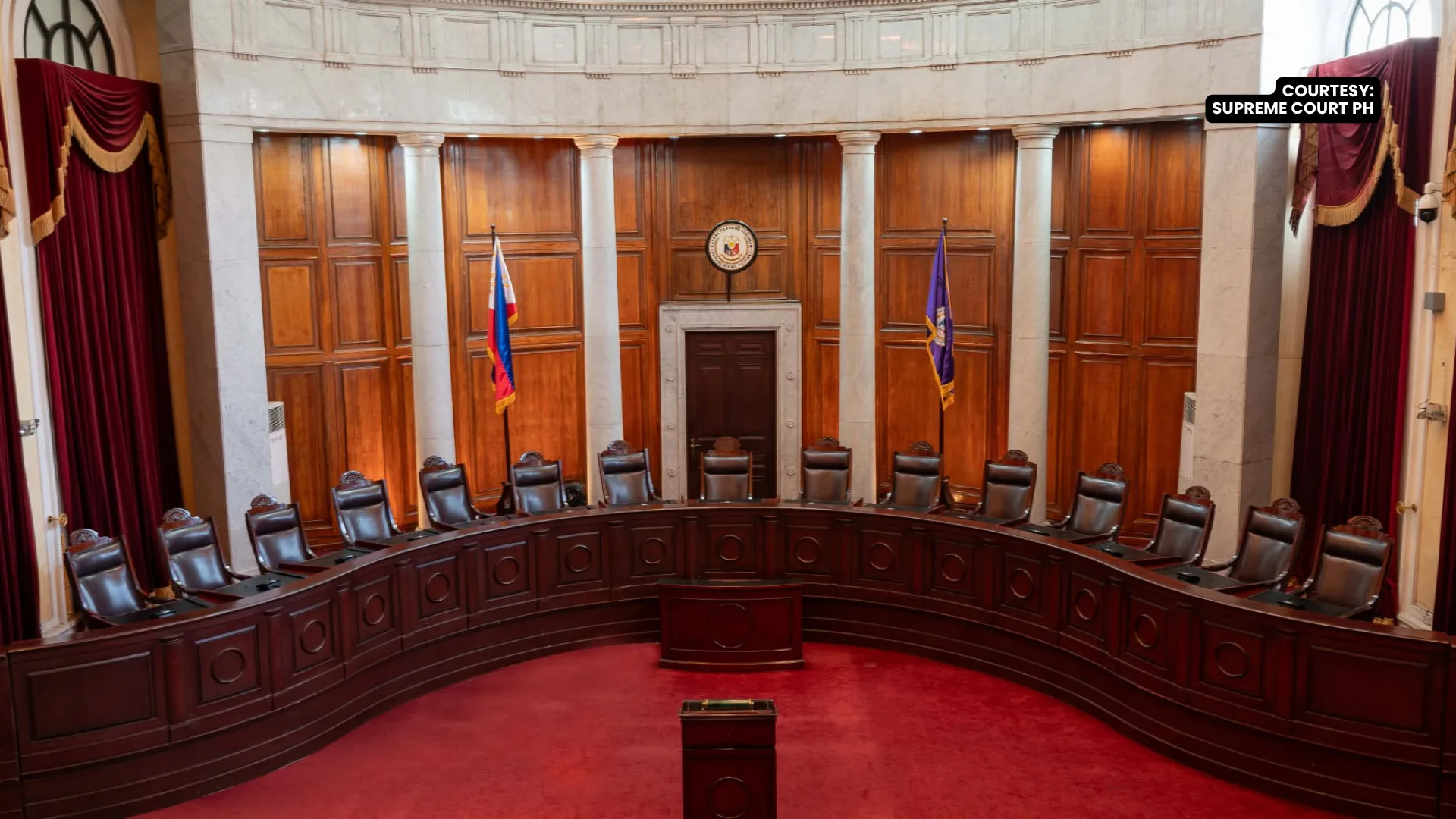
The pending petitions before the Supreme Court challenging the Senate Impeachment Court’s revised two-thirds conviction threshold will serve as a definitive test of how the nation’s constitutional accountability mechanisms operate when individual senator-judges face legal or physical limitations.
Speaking at the Saturday News Forum, House prosecution panel spokesperson and Lanao del Sur Rep. Zia Alonto Adiong underscored that the ongoing proceedings present rare circumstances likely unforeseen by the framers of the 1987 Constitution.
“This is the first time, actually, that an impeachment trial happens when there are few sitting senators who are legally incapable of attending an impeachment trial,” Alonto Adiong explained.
The Senate impeachment court recently ruled that the two-thirds conviction threshold will be calculated based solely on members who remain legally and factually capable of participating when judgment is rendered. Legal petitions filed before the High Tribunal argue that the constitutional requirement must consistently reflect the full 24-member Senate roster, seeking to restrain the implementation of the new rule.
Alonto Adiong noted that while invited amici curiae provided differing perspectives on the term “all members of the Senate,” three retired chief justices agreed that the required denominator is flexible rather than fixed at 24 under extraordinary circumstances.
“It is very clear also by the explanation of the former chief justices, iyong kanilang interpretation doon sa all members, two-thirds threshold on all members,” he said, noting that the Constitution’s provisions are both textual and contextual.
While acknowledging the right of petitioners to seek judicial intervention, Alonto Adiong affirmed that “anybody can go to the Supreme Court and probably seek clarification on the Court’s official interpretation of this particular subject matter.”
He emphasized that the Supreme Court’s eventual ruling carries institutional significance that extends far beyond the current trial, directly touching on the Senate’s sole authority to try impeachment cases and enforce public accountability.
“What is also important is that this is also a litmus test,” Alonto Adiong stated. “The Constitution is very expressive, explicit on how we can actually act on the accountability mechanism of the Constitution.”
Addressing the procedural timing of the legal challenges, Alonto Adiong reiterated the prosecution’s stance that a justiciable controversy arises only after a final vote is cast and a party suffers actual injury.
“Kung ako po ang tatanungin ninyo, the controversy should begin when there is an actual voting, when, for example, the Senate will reach its final verdict,” he said.
The prosecution panel confirmed it will continue submitting its evidence to the Senate tribunal while the petitions remain pending, unless the Supreme Court explicitly issues an order instructing otherwise.
“Let’s see how the Supreme Court will respond to the filing of the petition,” Alonto Adiong concluded.