
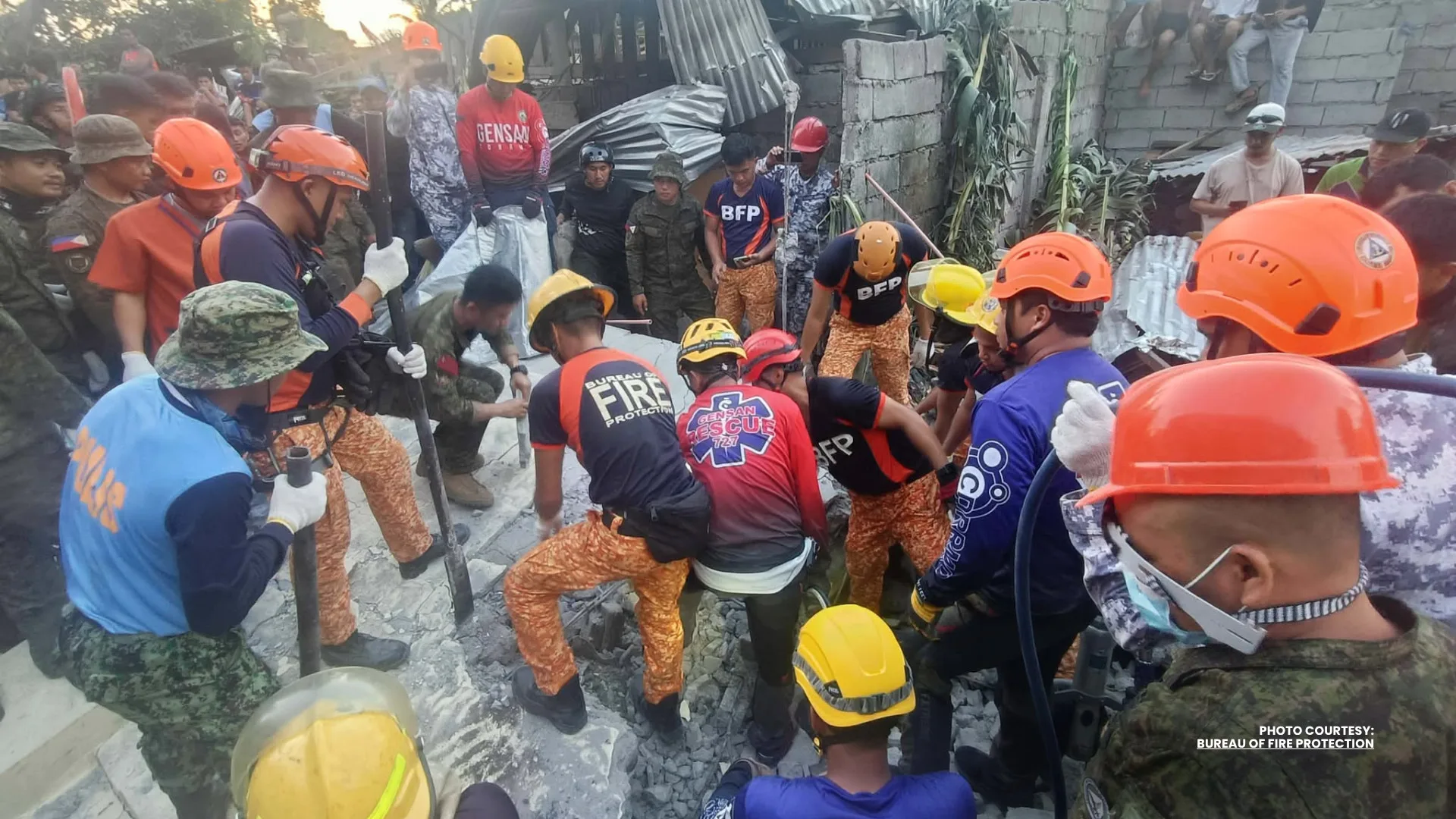
The Department of the Interior and Local Government (DILG) has ordered local governments in quake-hit areas of Mindanao to immediately inspect buildings, public infrastructure and homes before allowing people to return, as aftershocks continue following the magnitude 7.8 and 6.7 earthquakes that struck the region.
In an advisory, the DILG directed governors, mayors and local officials in Regions IX, XI and XII to conduct rapid structural assessments, especially in heavily affected communities and in buildings with visible cracks or other signs of damage.
The directive covers building officials, city and municipal engineers and other concerned local offices tasked with checking whether public and private structures remain safe for use.
The DILG said structures must first be assessed and cleared before residents, workers and other occupants are allowed to go back.
For buildings found unsafe, local governments were told to immediately implement protective measures, including evacuation and temporary relocation, to prevent further injuries or casualties.
The department also directed LGUs to coordinate with the Department of Public Works and Highways, the Philippine Institute of Volcanology and Seismology, the Bureau of Fire Protection and local Disaster Risk Reduction and Management Offices in inspecting structures, validating damage reports and carrying out necessary interventions.
The DILG said the order is aligned with its Infrastructure Audit Program, which helps local governments evaluate the structural integrity of public facilities and identify safety risks before they worsen.
The program uses the Harmonized Infrastructure Audit Tool, a standardized and science-based framework developed with stakeholders to guide LGUs in assessing the condition and safety of government buildings.
To date, the DILG said 854 LGUs nationwide have been trained on the use of the tool, including 208 in Mindanao.
As of May 15, 2026, the program had recorded 3,302 LGU-owned buildings across Mindanao, most of which had undergone rapid visual screening and detailed inspections.
The DILG said these assessments help local governments determine which facilities need further structural evaluation, corrective maintenance or other measures to ensure public safety and the continued delivery of essential services.
“While earthquakes cannot be predicted, their impacts can be reduced through sound engineering, proactive governance, and regular infrastructure assessments,” the department said.