
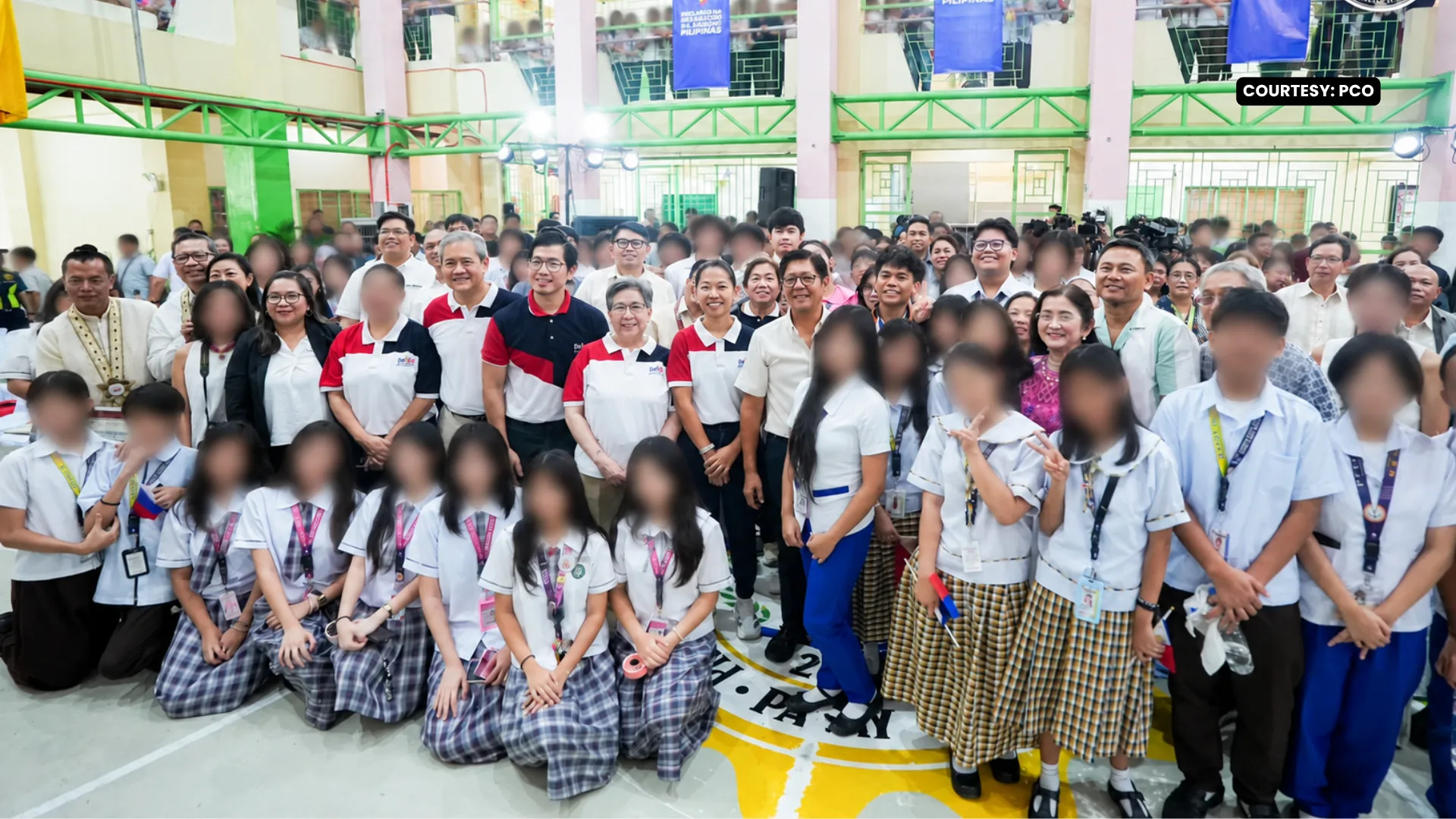
President Ferdinand Marcos Jr. called on Filipino students on Monday to strive for the top rank in the Programme for International Student Assessment (PISA), expressing full confidence in the capabilities of local learners and the dedication of educators.
Speaking during a recognition ceremony for PISA-participating schools and education partners at the President Corazon ‘Cory’ C. Aquino National High School in Pasay City, the President highlighted recent gains in Reading, Science, and Mathematics as proof that Filipino students are capable of achieving academic excellence.
“Pagpatuloy natin, marami pa tayong kailangan gawin, hindi pa tayong number one, habulin natin yung pagka-number one at kayang-kaya dahil napakagaling ng ating mga estudyante, napakagaling ng ating mga guro, napakabait at napakasipag ng ating mga magulang,” Marcos said.
The President attributed the rising test scores to ongoing education reforms and the collective support of teachers, families, and community partners. He pledged that the government will sustain and refine these interventions, reaffirming that education remains the administration’s top budgetary and policy priority.
“We appreciate our teachers who have spent long hours in the classroom, guiding our learners so that they can perform well in this assessment,” Marcos said, while also recognizing private sector partners including Frontlearners, Khan Academy Philippines, ConnectEd by Her Legacy, the IT and Business Process Association of the Philippines (IBPAP), Rebisco Global Food Ventures, and One Meralco for supporting students during the PISA 2025 preparations.
Marcos emphasized key government initiatives aimed at strengthening the education sector, such as the Academic Recovery and Accessible Learning (ARAL) Program under Republic Act No. 12028. Coupled with the revised K to 10 Curriculum, the program focuses on building core literacy, numeracy, and foundational skills among students from Kindergarten to Grade 10.
Additionally, the President pointed to early childhood interventions like the First 1,000 Days Program, which supports maternal and child health and nutrition to prepare children long before they enter formal schooling.
Underscoring the long-term impact of quality education, Marcos stated that preparing today’s youth is crucial for securing the nation’s future.
“These students that we see here, this is nothing less than the future of the Philippines. And how that is the most important thing, the most important contribution that we can make to our country, to make to the future of our country, and to make to the future generations of Filipinos is to provide them with a good education,” Marcos said.