
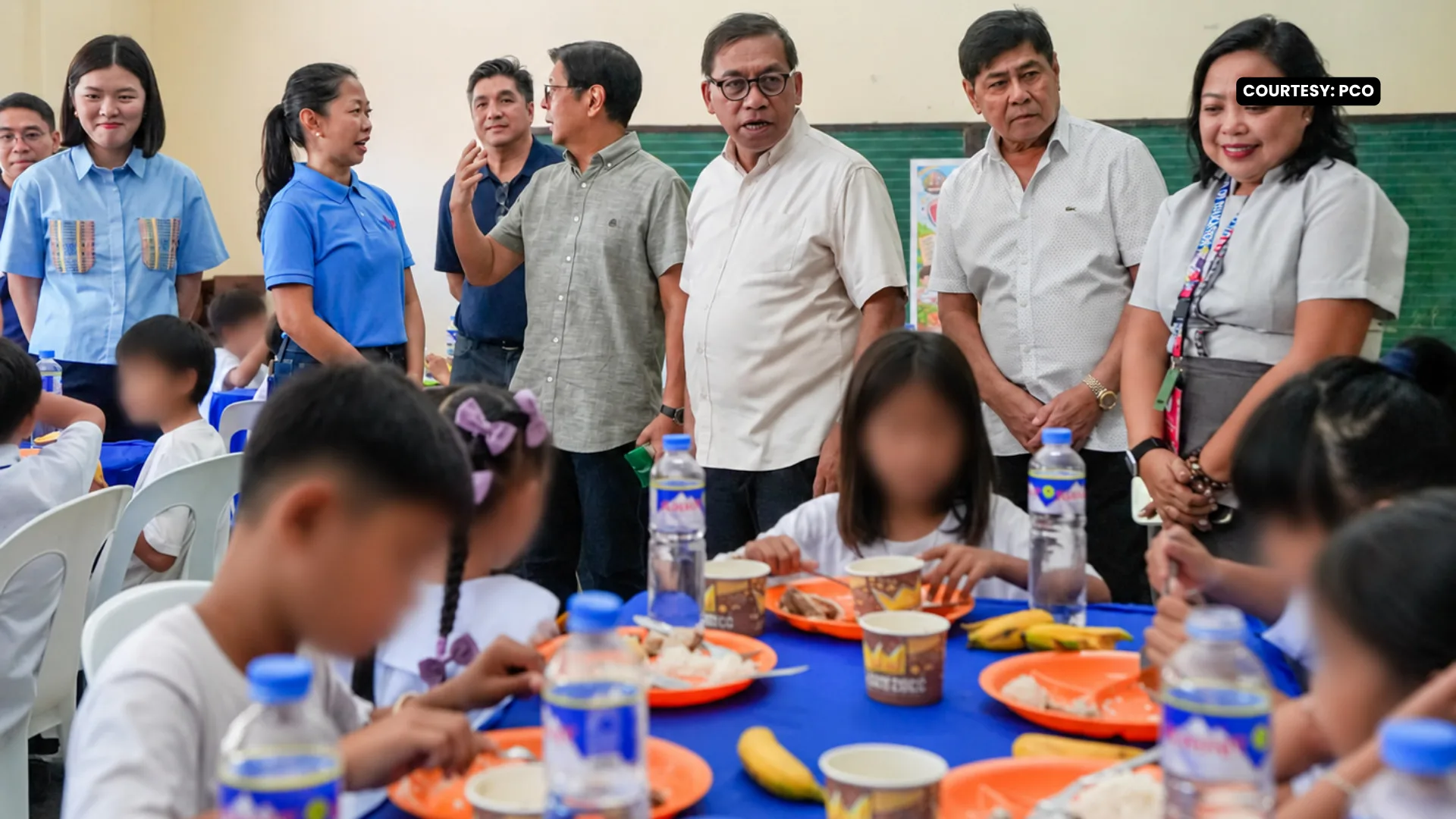
The Philippine government reaffirmed its zero-tolerance stance on national food insecurity as President Ferdinand Marcos Jr. visited Pangasinan to monitor expanded health and nutrition initiatives aimed at public school students.
Palace Press Officer Claire Castro underscored the administration’s core directive during the President’s visit to Sta. Barbara Central School, noting that hunger and malnutrition have no place in the country. The Pangasinan visit showcased the Department of Education’s (DepEd) Yaman ng Kalusugan Program (YAKAP) at Kalinga Caravan, an initiative merging primary healthcare services, feeding programs and heritage preservation.
DepEd’s school-based feeding program currently targets 4.6 million public school students for the 2026–2027 academic year.
“Layunin ng mga ito na wakasan na ang pagkagutom ng mga mag-aaral para makapag-focus sila sa eskuwela (the aim is to end hunger among students to enable them to focus in school),” Castro stated.
During the visit, Marcos observed ongoing classes, interacted with Grade 5 students, and distributed 1,194 school bags from the Office of the President. Simultaneously, the School-Based Feeding Program (SBFP) provided targeted hot meals to 50 severely wasted and undernourished students in Grades 2 through 6. The caravan also offered PhilHealth enrollment, medical and dental exams and basic pharmaceutical distributions.
The President later inspected NutriDense Food Manufacturing Corporation, a local facility utilizing Department of Science and Technology (DOST) technologies to produce fortified items like the enhanced Nutribun, iron-fortified rice, and high-protein snacks. Assisted by P3.10 million in equipment grants through DOST’s Small Enterprise Technology Upgrading Program (SETUP), NutriDense has adopted around 40 FNRI-developed technologies since 2015.
Marcos highlighted that while the nation boasts talented scientists and researchers, bringing laboratory innovations to commercial scale remains a primary obstacle. Partnering with private manufacturers bridges this gap, creating stable markets for local farmers through contract farming while delivering nutrient-dense foods to nationwide nutrition drives. The administration plans to replicate similar manufacturing facilities across other regions to broaden access to fortified food products.