
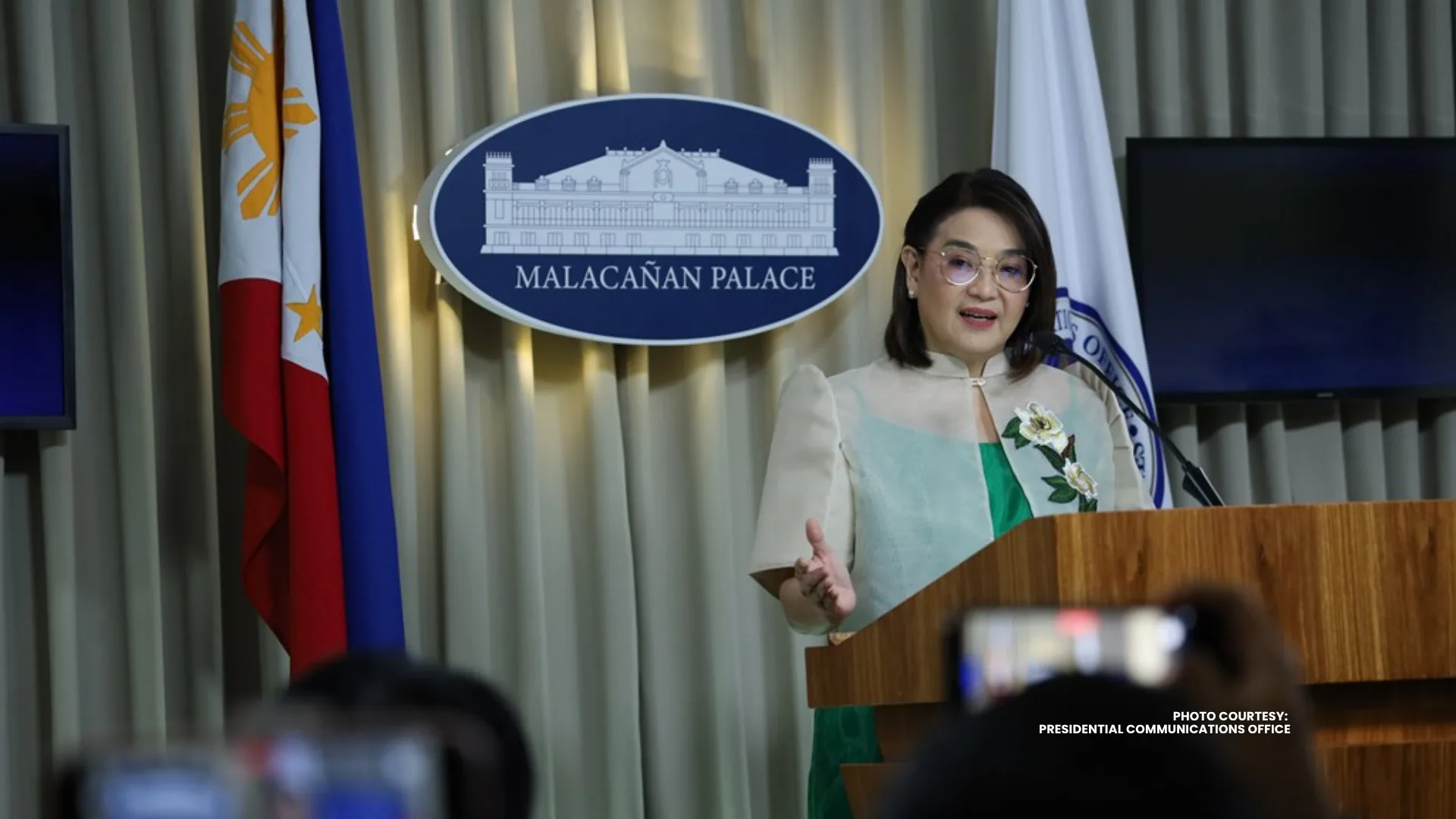
Malacañang on Tuesday said the Senate must recognize the limits of its authority and ensure that its actions remain within the law amid questions surrounding its decision to place Senator Ronald “Bato” dela Rosa under protective custody.
Palace Press Officer Claire Castro issued the statement after former senator Antonio Trillanes IV warned that the Senate should not become a sanctuary for individuals facing legal charges, particularly those accused before an international tribunal of crimes against humanity.
“We do not want to preempt the senators, but they should know what the law is because they are lawmakers,” Castro said in Filipino. “They know their limitations, their authority, and their powers, but they should not go beyond the law.”
The issue emerged after dela Rosa resurfaced at the Senate following months of absence, amid reports that the International Criminal Court (ICC) had issued a warrant for his arrest in connection with alleged extrajudicial killings linked to the Duterte administration’s anti-drug campaign.
The Senate later placed dela Rosa under protective custody. On Monday, Trillanes and alleged agents of the National Bureau of Investigation (NBI) reportedly attempted to take custody of the senator based on the supposed ICC warrant.
Castro declined to speculate on how the executive branch would respond in the event of a standoff between the Senate and authorities seeking to serve the reported warrant, stressing that all institutions must operate within their legal mandates.
“I do not want to place the government in a situation where this kind of chaos could happen,” Castro said. “No one should abuse their power.”
She added that President Ferdinand Marcos Jr. had already been informed of developments involving dela Rosa, including the reported attempt to serve the warrant at the Senate.
According to Castro, the President’s standing directive to law enforcement agencies is to follow the law at all times.
“The President heard about what happened yesterday,” she said. “His instruction to all enforcement agencies, not only in relation to Senator Bato, is to follow what the law says.”
Asked whether dela Rosa could be arrested based on an ICC warrant despite questions over the tribunal’s jurisdiction in the Philippines, Castro cited Republic Act No. 9851, or the Philippine Act on Crimes Against International Humanitarian Law, Genocide, and Other Crimes Against Humanity.
She said Section 17 of the law allows Philippine authorities to defer to an international tribunal if proceedings or investigations have already been initiated.
Castro also said Trillanes may have obtained a copy of the reported warrant because he is among the complainants in the case.
On dela Rosa’s appeal for protection from the Marcos administration, Castro said the senator’s rights would be respected if he is arrested.
“If he is arrested, all his rights as an accused will be given to him,” she said.
However, Castro stressed that alleged victims of extrajudicial killings and their families are likewise entitled to protection under the law.
“The accused, like Senator Bato, is asking for protection. But the EJK victims are also asking for protection from the government. Everyone will be given protection according to the law,” she said.
Castro also dismissed dela Rosa’s suggestion that Marcos could face a similar situation after leaving office, saying the senator should specify what case could supposedly be filed against the President.
She added that, in her view, Marcos would be unlikely to face ICC proceedings because “he has not committed any EJK.”