
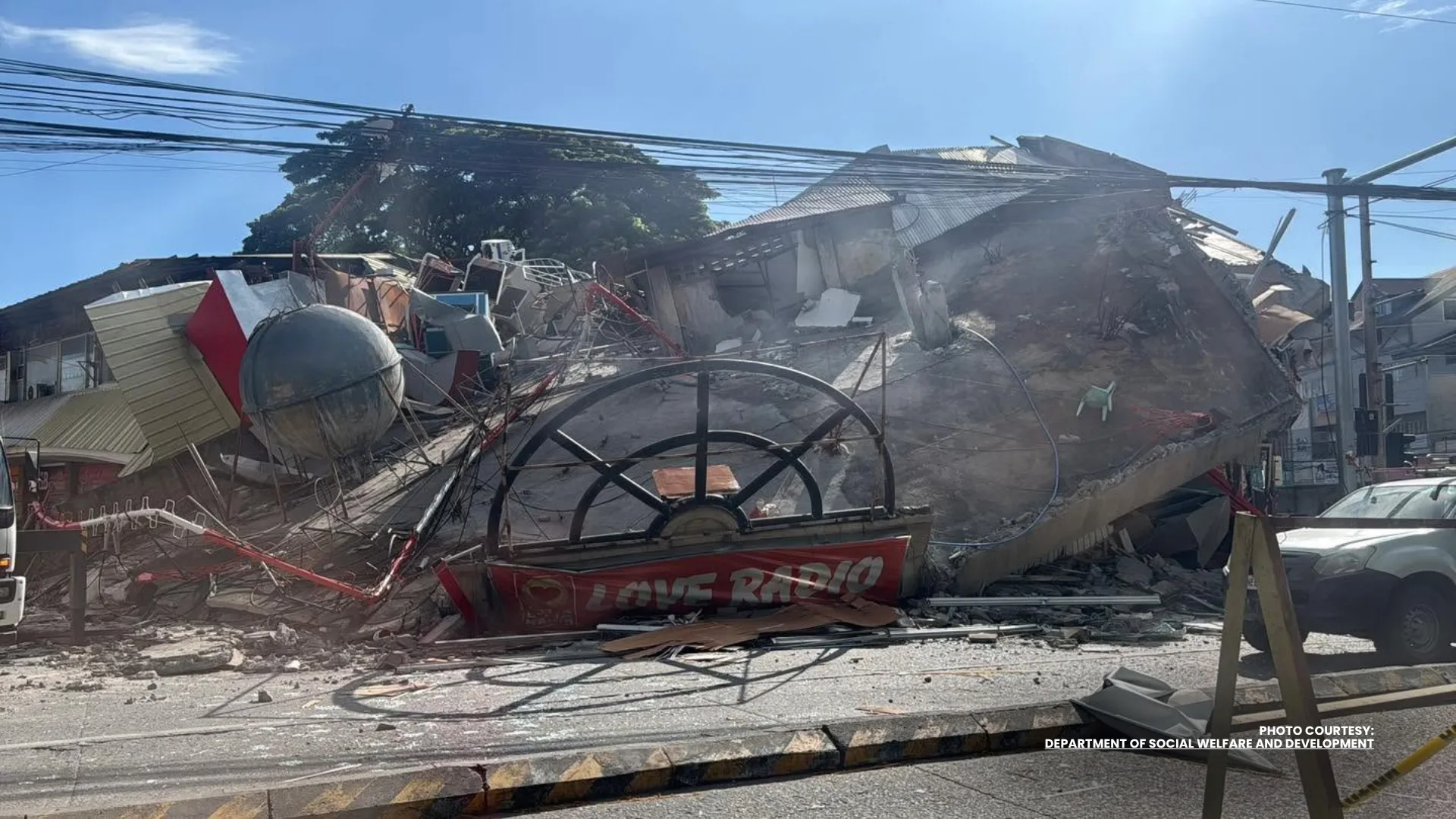
At least 36 people died, 167 were injured, and four others remained missing after a magnitude 7.8 earthquake struck Maasim, Sarangani, on Monday morning, according to the latest government situation report.
The National Disaster Risk Reduction and Management Council (NDRRMC) said the figures were reported as of 8 am Tuesday and remain subject to validation.
The earthquake occurred at 7:37 am on June 8, with a depth of 33 kilometers and tectonic in origin. It was felt across several regions, with reported intensities ranging from I to VIII in Eastern Visayas, Zamboanga Peninsula, Northern Mindanao, Davao Region, Soccsksargen, the Bangsamoro region, and Caraga.
Of the reported fatalities, 32 were recorded in Region XII, while four were reported in Region XI. The NDRRMC also reported 144 injured and four missing in Region XII, while 23 injuries were recorded in Region XI.
The quake affected 19,529 families, or 88,000 individuals, across 51 barangays in Regions IX, XI, XII, and the Bangsamoro Autonomous Region in Muslim Mindanao (BARMM).
Of the affected population, 5,343 families, or 19,635 individuals, were staying inside 39 evacuation centers, while 264 families, or 1,055 persons, were being served outside evacuation centers.
Authorities also recorded five earthquake-induced landslides and one tsunami-related incident in Regions XI and XII.
The Philippine Institute of Volcanology and Seismology (Phivolcs) earlier issued a tsunami warning after the quake. The warning was later canceled after sea level monitoring stations confirmed tsunami heights of 1.48 meters in Kiamba, Sarangani; 0.84 meters in Kalamansig, Sultan Kudarat; 0.48 meters in Maasim, Sarangani; 0.25 meters in Zamboanga City; 0.21 meters in Mati, Davao Oriental; and 0.09 meters in Tandag, Surigao del Sur.
As of 2 am Tuesday, authorities recorded 840 aftershocks, of which 240 were plotted, and 19 were felt. The aftershocks ranged from magnitude 1.3 to 6.7.
The NDRRMC said 10 road sections and two bridges were affected, but all were reported passable. Six cities and municipalities experienced power interruptions, while power supply had been restored in six others.
General Santos City International Airport remained non-operational, while two seaports in the Bangsamoro region had resumed operations after earlier disruptions.
The government also reported 10 damaged houses in Regions IX, XI, and BARMM, including seven totally damaged and three partially damaged houses.
Damage to infrastructure was estimated at P15 million, covering 127 damaged structures in Regions IX, XI, and XII. Region XII accounted for the bulk of the reported infrastructure damage at P14.5 million, while Region XI recorded P500,000 in damage.
Classes were suspended in 182 cities and municipalities across affected regions, while work was suspended in 123 cities and municipalities.
Authorities said response, monitoring, validation, and search and rescue operations were continuing in affected areas.