
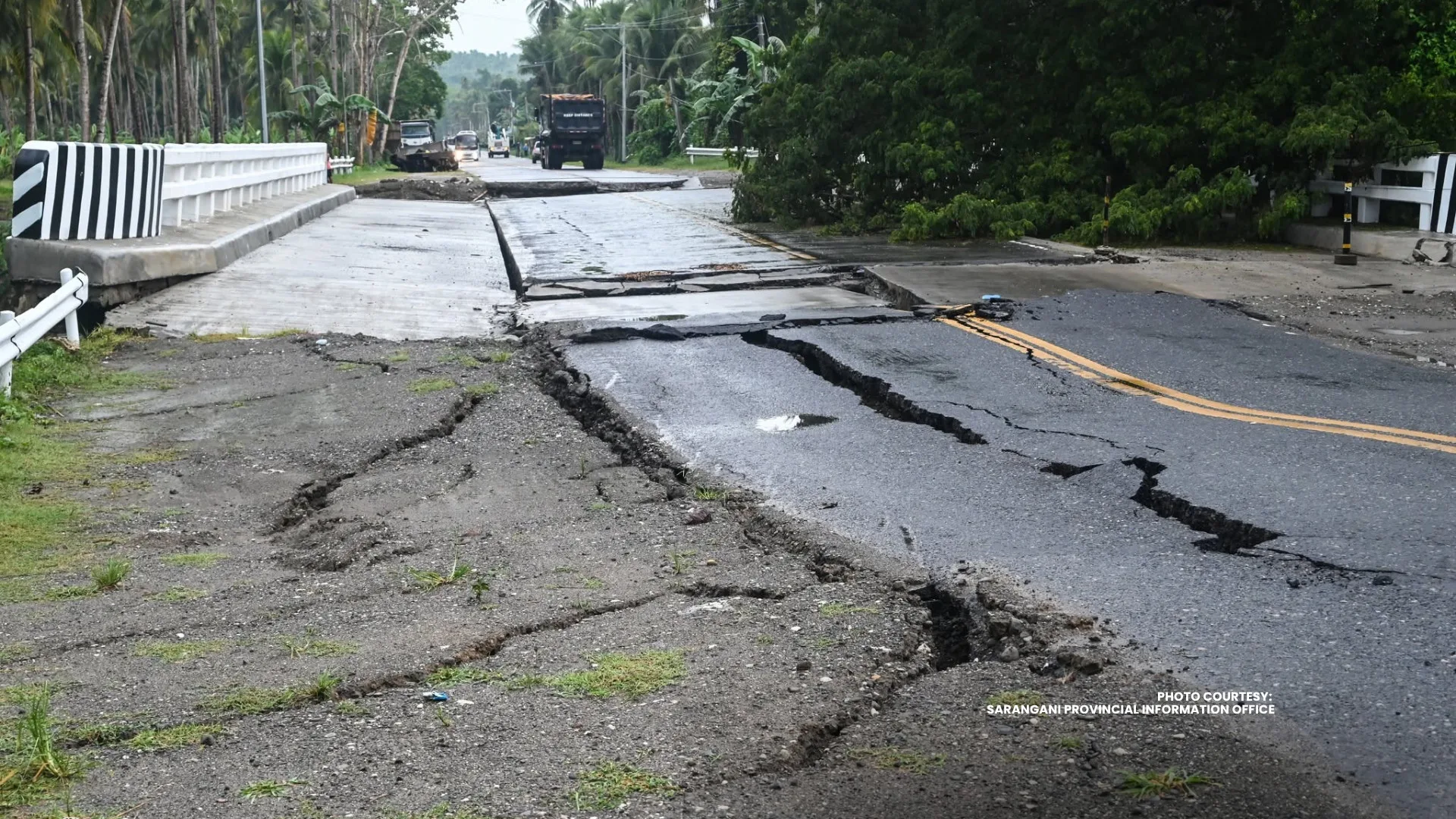
Lawmakers have renewed calls to strengthen disaster preparedness and improve risk-based planning in local government units following the recent earthquake that struck parts of Mindanao, emphasizing the need for more localized and science-driven hazard assessments.
During an assessment visit in General Santos City, a delegation from the House of Representatives led by Speaker Faustino “Bojie” Dy III examined the extent of damage caused by the quake and underscored the importance of preparedness measures in areas vulnerable to earthquakes, landslides, and flooding.
He noted that while earthquakes cannot be predicted in the same way as tropical cyclones, their impacts can be significantly reduced through proper hazard mapping, infrastructure planning, and localized risk evaluation.
Local officials were urged to consider overlapping hazards in their development plans, particularly in communities exposed not only to seismic activity but also to landslides and flood risks, in order to reduce casualties and property damage in future disasters.
The congressional delegation also reiterated its commitment to ensure that medical expenses of earthquake victims, whether treated in public or private hospitals, will be shouldered through government assistance mechanisms.
Lawmakers from affected regions are likewise expected to participate in the ongoing assessment of damaged infrastructure for possible inclusion in the proposed 2027 national budget, particularly for rehabilitation of hospitals, roads, bridges, airports, and other critical facilities.
Restoration of access routes was also identified as an urgent priority, with damaged road networks reported to be slowing down the delivery of relief goods and complicating response operations in several affected areas.
Dy said they remain committed to supporting both immediate humanitarian response and long-term recovery efforts, alongside local governments and national agencies.