
President Ferdinand Marcos Jr. on Thursday reaffirmed the Philippines’ deepening strategic partnership with Japan, saying both countries remain firmly committed to defending international law, preserving stability, and keeping the seas open, secure, and governed by rules rather than force.
Speaking before a joint session of Japan’s National Diet, Marcos said Manila and Tokyo share a common duty to uphold a rules-based order in an increasingly tense Indo-Pacific region, where maritime disputes continue to test international norms.
“In an increasingly complex Indo-Pacific, where tensions test the resilience of a rules-based order, our two nations remain unwavering in our commitment to uphold international law, promote stability, and advocate for the peaceful settlement of disputes,” Marcos said.
The President said the Philippines and Japan, as maritime democracies, stand by the principles of sovereignty, territorial integrity, and equality among nations regardless of size or power.
His remarks came as both countries continue to face maritime tensions with China. Beijing has asserted sweeping claims in the South China Sea based on its 10-dash line and historical rights, claims that overlap with waters within the Philippines’ exclusive economic zone.
Marcos said the Philippines remains at the forefront of efforts to uphold the rules-based maritime order, particularly under the United Nations Convention on the Law of the Sea.
He also cited the upcoming 10th anniversary in July of the 2016 arbitral ruling, which rejected China’s expansive historical claims and upheld the Philippines’ maritime entitlements in the South China Sea.
Beyond maritime security, Marcos recognized Japan’s contributions to peace and development in Mindanao, saying Tokyo’s long-standing support has helped uplift communities in the region that have endured decades of instability and conflict.
The President also pointed to the two countries’ expanding defense and security cooperation, including the Reciprocal Access Agreement, the Acquisition and Cross-Servicing Agreement, and Japan’s Official Security Assistance program, which supports the Philippines’ maritime domain awareness and defense capabilities.
“Our cooperation is also clearly demonstrated in humanitarian assistance and disaster response when our nation stands ready to help one another in times of crisis, as well as in law enforcement collaboration where we work together to combat transnational crime and promote maritime safety,” Marcos said.
“In all these areas, our partnership reflects a shared commitment not only to security, but to being responsible members of the international community. We are duty-bound to preserve a peaceful world where nations can thrive and our peoples can realize their full potential,” he added.
Marcos, accompanied by First Lady Liza Araneta-Marcos, was welcomed at the Japanese parliament by Sekiguchi Masakazu, president of the House of Councilors.
After his address, Marcos met with Japanese Prime Minister Sanae Takaichi at the Akasaka Palace for a bilateral meeting. The two leaders also witnessed the signing and exchange of several agreements covering the sharing of confidential military information, maritime border delimitation, and the avoidance of double taxation.
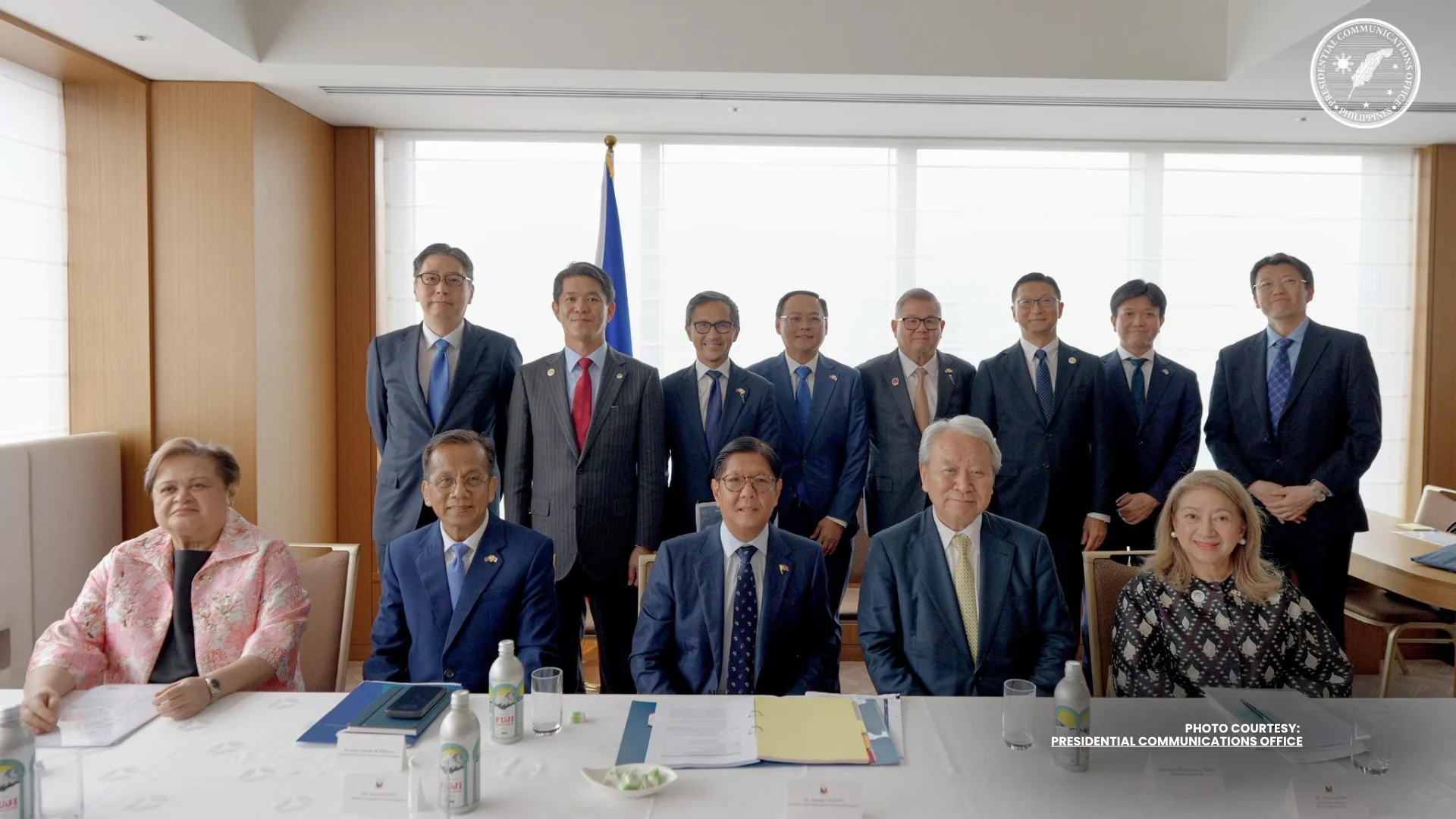
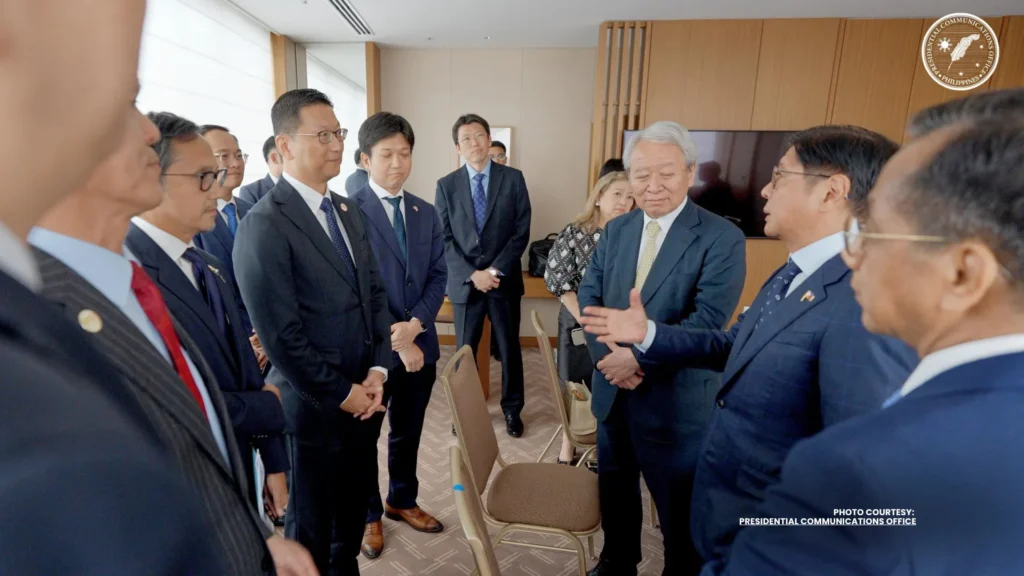
Earlier in the day, Marcos met with Japan International Cooperation Agency President Dr. Tanaka Akihiko to discuss high-impact development cooperation between the Philippines and Japan.
The meeting highlighted JICA’s role in supporting Philippine infrastructure modernization, healthcare, climate resilience, disaster risk management, peace and development initiatives in Mindanao, assistance to the Philippine Coast Guard, and major connectivity projects.
The Presidential Communications Office said Marcos and Tanaka also discussed ongoing and future cooperation programs, including support for universal healthcare and climate action, as both sides reaffirmed their commitment to sustainable development, economic resilience, and shared prosperity.
Marcos also held talks with Nippon Foundation chairman and Sasakawa Peace Foundation honorary chairman Yohei Sasakawa, thanking the foundations for their support for Filipino maritime professionals, peacebuilders, and healthcare initiatives.
Their discussions also explored possible cooperation in critical minerals, digital innovation, artificial intelligence, and sustainable ocean governance, reflecting the two countries’ shared interest in regional stability and people-centered progress.