
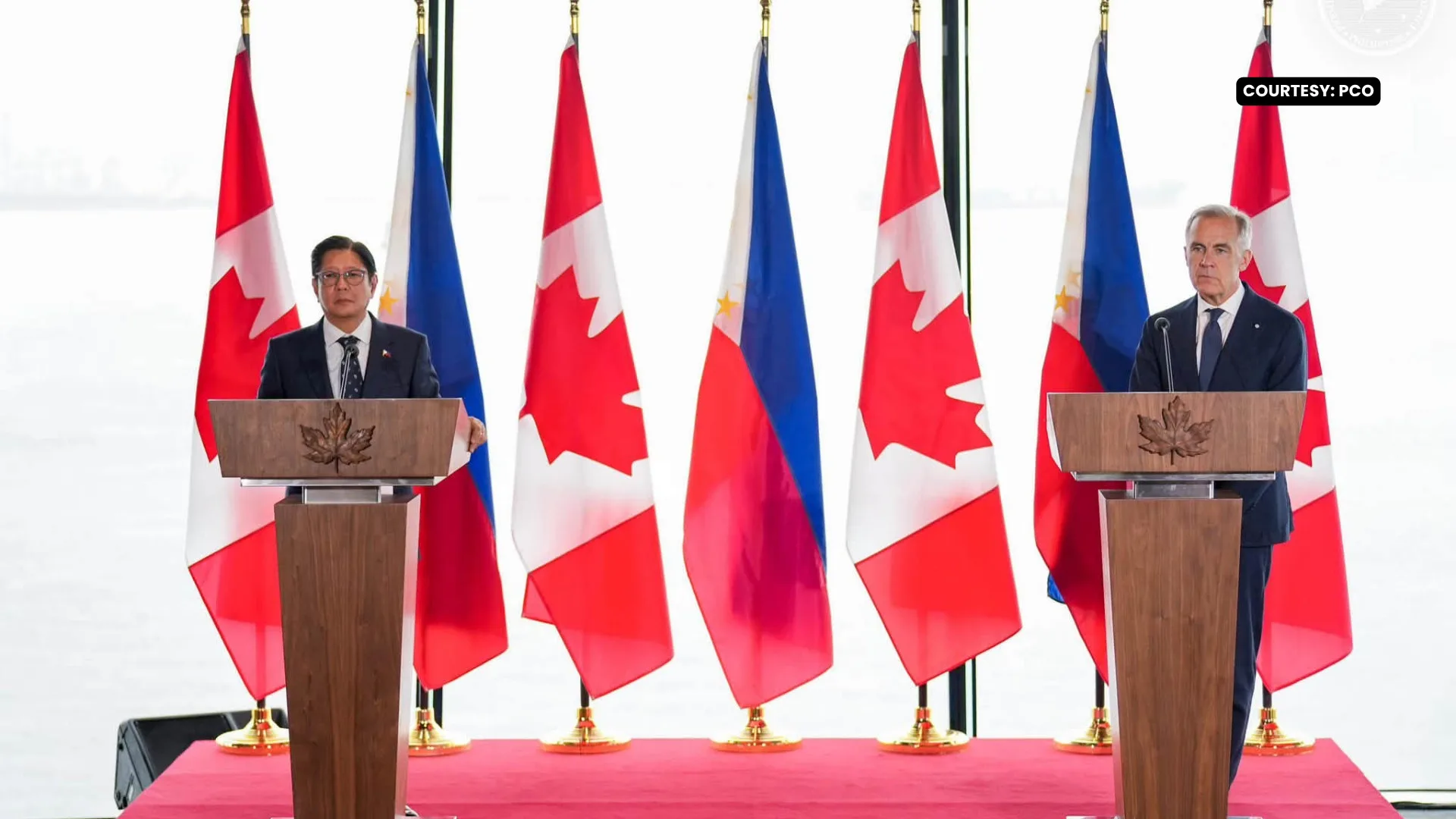
President Ferdinand R. Marcos Jr. and Canadian Prime Minister Mark Carney underscored the private sector’s role in sustaining economic momentum as the Philippines transitions to upper-middle-income status.
Speaking during a joint press statement at the Vancouver Convention Centre on Thursday, Canada time, Marcos said his administration’s economic strategy has been anchored on making the Philippines more attractive to both local and foreign investors.
The World Bank, in its latest income assessment, said the Philippines has reached upper-middle-income country status after recording a gross national income per capita of USD4,850, exceeding the USD4,636 threshold.
For Marcos, the milestone reflects the government’s push to recognize businesses as active partners in national development.
“And that it derived from that was our very early decision, very early on in my administration, that the private sector is recognized as a full partner in national development,” President Marcos said.
“And that has led us to the FTA (free trade agreement) now that we are talking about with Canada, and to the other 20-plus FTAs that we have been able to come and sign in the last four years,” he added.
While welcoming the country’s economic progress, Marcos said the government must continue pursuing reforms to sustain growth and modernize key sectors.
“We certainly still have a ways to go. But I think that, again, in terms of economic growth and in terms of being able to identify the sectors in our economy, and in our government as well, that need to be amended, that need to be modified, that need to be modernized,” President Marcos noted.
The President said the country’s transition would make it less dependent on foreign grants, adding that he does not believe the shift would necessarily lead to higher interest rates for loans.
Carney echoed Marcos’ position, saying private sector participation is also essential in advancing broader development goals.
“And if I may suggest as well, it is also the recognition of the importance of the private sector as a partner in overall development,” the Canadian leader said.
Carney also cited the rule of law, respect for human rights, and transparency as important foundations for economic development.
“That’s part of the positive aspect. Agreements such as we’re moving forward on today, including the prospect of a free trade agreement, are reinforcing all those factors,” Carney said.
The remarks came as the Philippines and Canada continue talks on deeper economic cooperation, including a possible free trade agreement, following the elevation of their bilateral relations to a Strategic Partnership.