
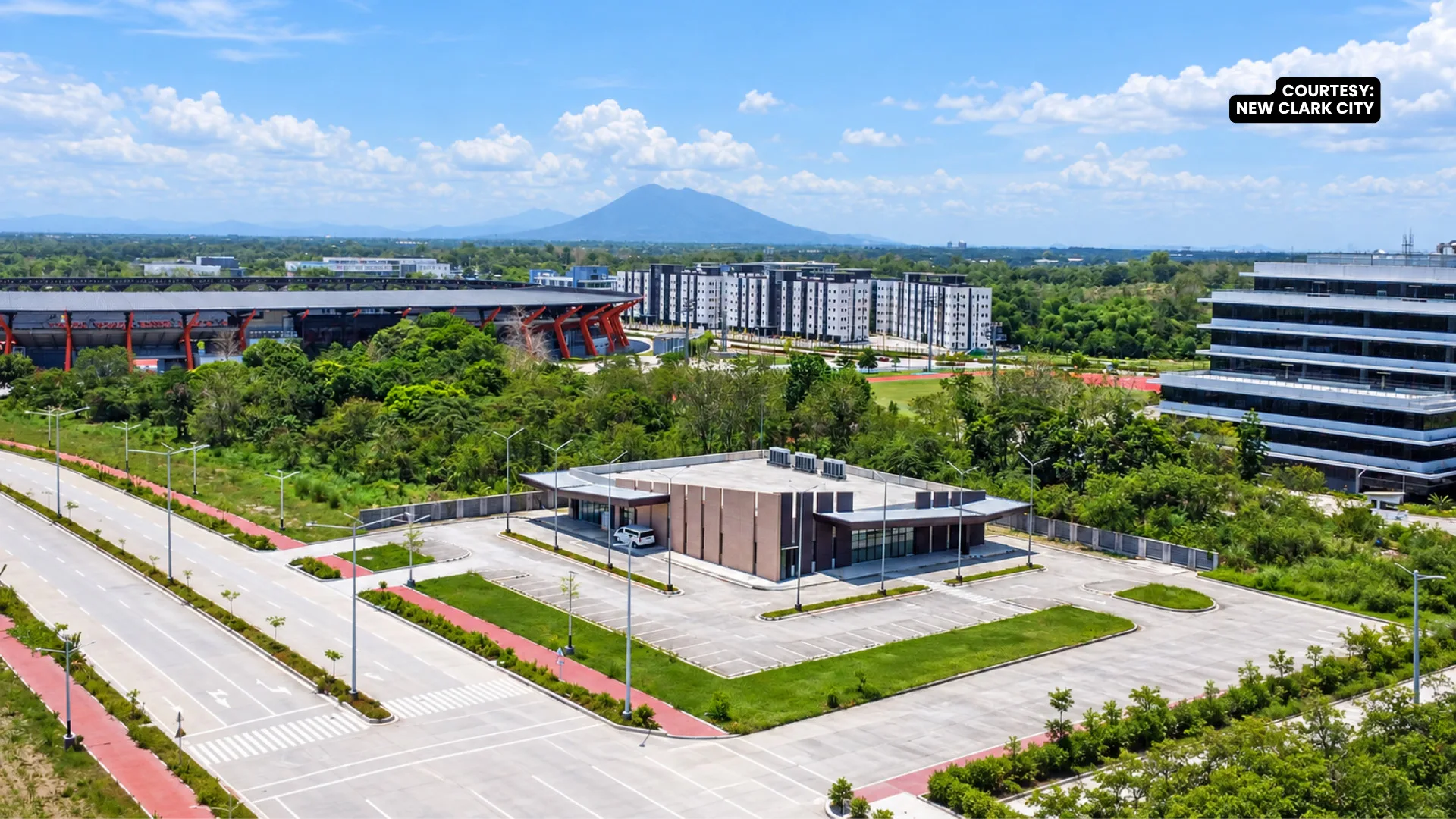
Tensions flared during the House Committee on Appropriations review of the Bases Conversion and Development Authority’s (BCDA) proposed P1.983-billion budget for 2027, as legislators probed the agency’s land allocation plans for the U.S.-led Pax Silica initiative and the 1,620-hectare Clark Advanced Manufacturing Park (CAMP) in New Clark City.
BCDA President and CEO Joshua Bingcang, alongside agency representatives, appeared before lawmakers to defend the allocation detailed under House Bill No. 10858.
Defending the budget proposal, Bataan 3rd District Representative Maria Angela Garcia pointed out that the agency’s 2027 targets include generating 1,500 jobs, completing several facilities for the Armed Forces of the Philippines, and constructing crucial access roads connecting New Clark City to public offices, educational institutions, and healthcare centers.
However, lawmakers raised sharp questions regarding BCDA’s premature administrative actions for Pax Silica and CAMP when binding commercial contracts with international investors have yet to be executed.
Akbayan Party-list Representative Dadah Kiram Ismula criticized the agency for issuing formal notices to local governments and residents in potential project zones while negotiations remain open-ended.
“In the past months, Pax Silica is touted as the economic miracle of the country pero wala pa palang malinaw na agreement. It’s extremely concerning na naghard launch na ang BCDA, nagnotify na sa LGU, at sa mga residenteng maaapektuhan. Pero ang sagot lagi ay wala pa palang malinaw na konkretong agreement,” Ismula said.
“Hindi po yata tama na inonotify na natin ang mga residente para sila ay makaalis na pero wala pa palang agreement.”
In response, Garcia conceded that talks are still ongoing. “Sa ngayon, nothing is final yet… Wala pa po tayong final reply dyan kasi nothing is final as of the moment,” she said.
The debate further intensified when Kabataan Party-list Rep. Renee Co challenged a proposal offering up to 4,000 acres in the Luzon Economic Corridor rent-free for two years as an “in-kind contribution” to establish the Pax Silica Coordination Office.
“Ano pong awtoridad or propriety na meron ang BCDA to commit up to 4,000 acres of sovereign state land to a foreign coalition the Philippines had not yet formally joined,” Co asked.
Garcia countered that the land offer was a preliminary concept framed within BCDA’s operational authority, backed by a Department of Justice clearance and an endorsement from the Department of Foreign Affairs (DFA).
Socio-environmental impacts were also brought to the forefront, as lawmakers voiced anxieties over the displacement of local farming families and Aeta communities in Capas, Tarlac. Garcia disputed reports that 20,000 farmers and 20,000 Aeta individuals face eviction, adding that the designated CAMP territory lacks a formal Certificate of Ancestral Domain Title (CADT).
“Ito pong pinag-uusapan nating area para po sa CAMP, wala pong ancestral domain dito,” Garcia said. “Hindi po ito ancestral domain kaya hindi po required sa aming pananaw yung FPIC,” she added.
This position was disputed by ACT Teachers Party-list Representative Antonio Tinio, who noted that the Aeta Hungey community maintains an active CADT application over the location, meaning mandatory consultations under National Commission on Indigenous Peoples (NCIP) guidelines must take place.
Garcia pledged that BCDA would engage with the NCIP and municipal leadership to address the grievances of indigenous residents.
The House appropriations panel ultimately suspended proceedings on the BCDA’s 2027 budget, directing the authority to submit required documentation, including historical tech-transfer data and environmental compliance certificates from the Department of Environment and Natural Resources (DENR).