
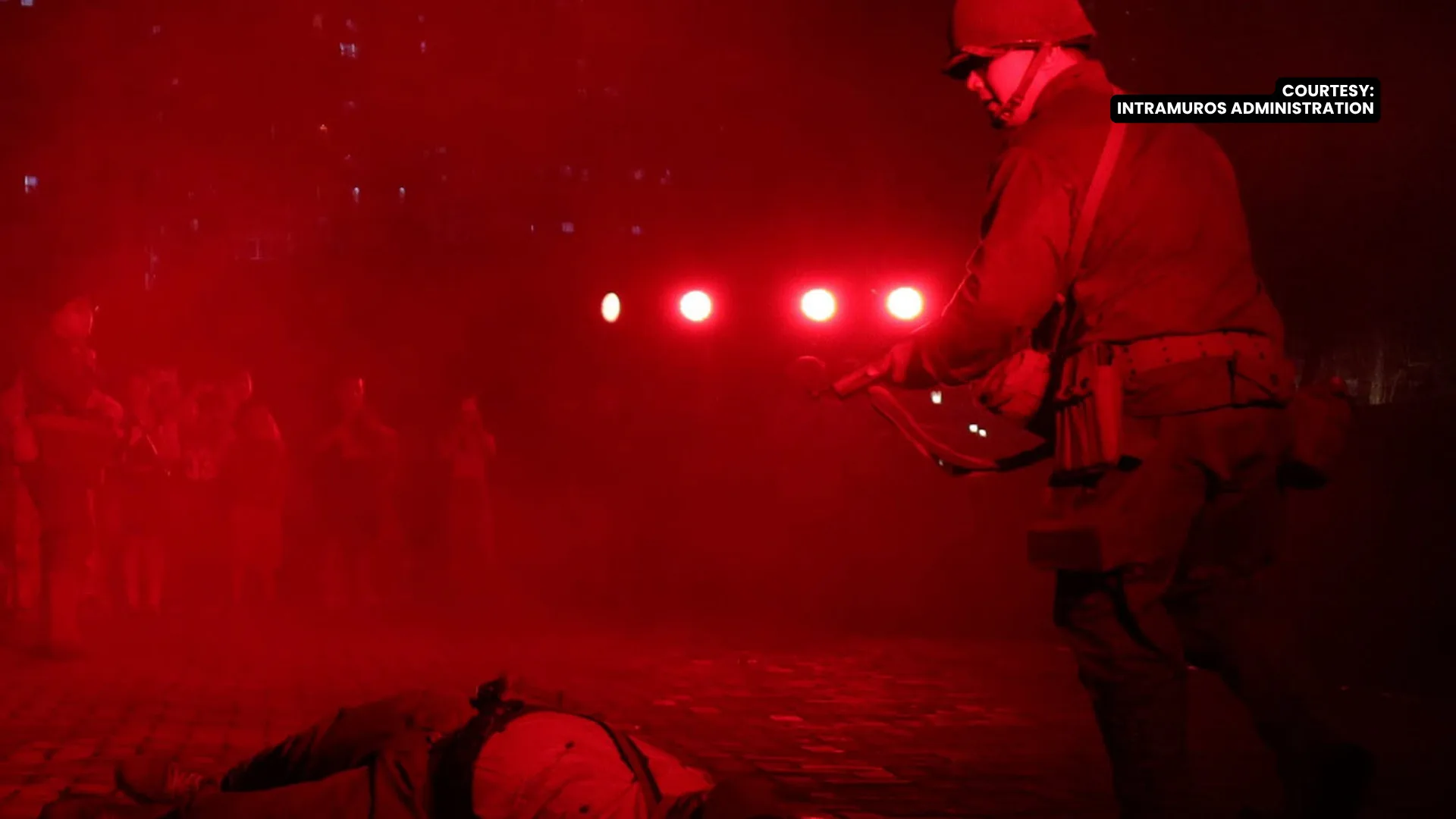
You have probably seen Intramuros under the Manila sun. Now imagine seeing it after dark, aboard a rolling tranvia, while characters from centuries past begin appearing around the Walled City.
That is the idea behind the Intramuros Night Tour, a new immersive heritage experience from the Intramuros Administration that combines nighttime site activations, guided storytelling, live reenactments and a tranvia ride through some of the district’s historic spaces.
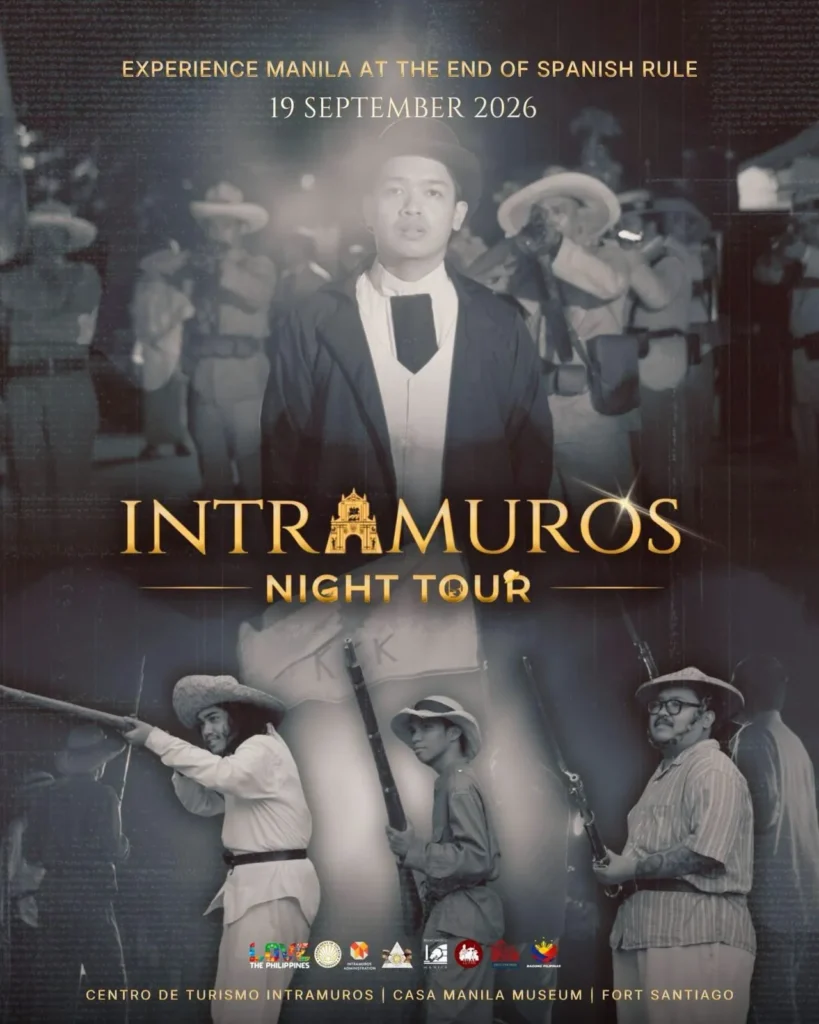
The inaugural tour was held on September 19 from 6 p.m. to 8 p.m., following months of historical research, planning, rehearsals and coordination among the Intramuros Administration, cultural groups and reenactors.
And this is not simply sightseeing with the lights turned down.
The experience moves through different chapters of Manila’s history, using actors, theatrical presentations and historic locations to put visitors closer to the people and events they may have previously encountered only in textbooks and museums.
One night, centuries of Manila
The journey begins at Centro de Turismo Intramuros, where the story reaches back to the precolonial settlement of Rajah Soliman before moving into the founding of Spanish Manila under Miguel López de Legazpi.
Then comes a change of scenery.
At Casa Manila, visitors are transported to the 1890s through a dinner party staged inside a bahay na bato residence.
From there, the tour heads to Fort Santiago, where the scale and historical stakes get considerably bigger.
Presentations cover everyday life in 1890s Manila as well as major events that shaped the country, including the execution of José Rizal, the Spanish-American War, the Declaration of Philippine Independence, the Japanese Occupation and the Battle of Manila.
The locations are more than backdrops.
Fort Santiago itself was where Rizal spent his final days before his execution in 1896. Decades later, the fort became the site of imprisonment and death during the Japanese Occupation and the Battle of Manila.
Putting historical performances within the places connected to these events gives the tour something a conventional history lesson cannot easily reproduce.
You are standing where parts of the story actually happened.
Don’t expect to just stand and watch
One of the more interesting twists is that visitors are not always kept safely on the audience side of the performance.
During selected scenes, participants are invited to take part and become active witnesses to the historical retelling.
That participatory approach is central to the Night Tour. Instead of presenting Intramuros as a collection of monuments to observe from a distance, the experience places visitors inside recreated moments from different periods of Manila’s past.
Helping bring those scenes to life are several cultural and reenactment organizations.
The Intramuros Administration partnered with Renacimiento Manila, Historia Viviente Manila, Republica Filipino Reenactment Group and Wartime Heritage Guild Philippines for the project.
Together, the groups take on personalities, periods and events stretching across centuries of Manila history.
The Walled City gets a night shift
Intramuros is hardly unfamiliar territory for tourists.
Fort Santiago, Casa Manila, Plaza Roma, San Agustin Church and the district’s walls and plazas have long been staples of Manila heritage itineraries. Visitors can already explore the area through walking tours, cycling tours and other guided experiences.
The Night Tour adds another format to that landscape.
The Intramuros Administration says the project is intended to bring history closer to the public through creative interpretation, offer visitors new ways to experience the Walled City after sundown and expand Intramuros’ tourism offerings.
It also creates another platform for cultural and historical reenactment groups to share their research, knowledge and performance work with the public.
The timing changes the mood too.
Without the midday heat, an evening tour gives visitors a chance to encounter Intramuros when its stone walls, plazas, courtyards and old structures look markedly different from their daytime selves.
Add a tranvia rolling through the Walled City and historical characters appearing along the journey, and your old school field trip suddenly feels very far away.
Regular tickets for the Intramuros Night Tour are priced at P1,000.
A discounted P800 ticket is available for students, senior citizens and persons with disabilities.
The inaugural experience ran for two hours, from 6 p.m. to 8 p.m., and included Centro de Turismo Intramuros, Casa Manila Museum and Fort Santiago among its selected sites.
For the Intramuros Administration, the project is part of its continuing effort to present the district as a living heritage site rather than history frozen behind museum glass.
And perhaps that is the Night Tour’s most interesting proposition.
You can visit Intramuros for the architecture. You can come for the museums, churches, cobblestones and photographs. You can certainly come for the history.
But after sundown, you might just find that history walking beside you.