
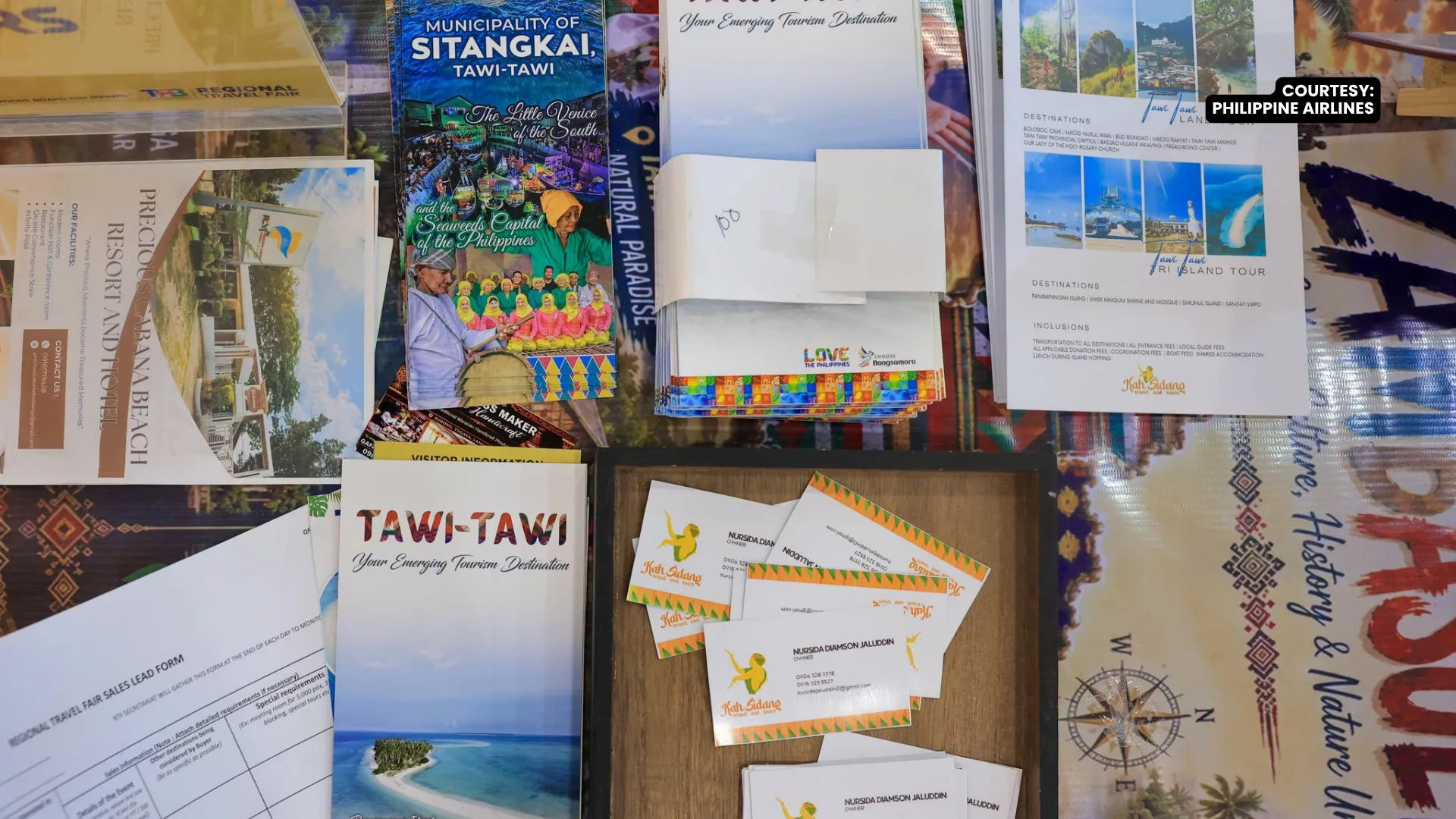
For many travelers, the Bangsamoro Autonomous Region in Muslim Mindanao remains one of the Philippines’ less explored destinations. But behind that relative unfamiliarity is a region with a tourism story built around Islamic heritage, centuries-old weaving traditions, distinctive landscapes and communities increasingly looking to tourism as a source of livelihood and economic opportunity.
That potential came into sharper focus in Cotabato City this August, when tourism buyers, operators and industry representatives from across the country converged on the Bangsamoro region for the 18th Regional Travel Fair.
Held from August 14 to 16 at the Alnor Hotel and Convention Center, the gathering produced more than P46.9 million in sales leads and nearly P2.5 million in actual sales — figures that suggest growing commercial interest in destinations that have traditionally received less attention from the mainstream Philippine travel market.
A total of 1,680 business appointments were conducted, bringing together 60 sellers and exhibitors and 42 buyers.
But beyond the transactions, the fair offered a closer look at what BARMM can bring to the country’s tourism map.

A region told through its communities
Basilan, Lanao del Sur, Maguindanao del Sur, Maguindanao del Norte and Tawi-Tawi presented their destinations and tourism products alongside Cotabato City.
Their participation placed some of Mindanao’s culturally distinct communities before travel buyers who could eventually package and market these destinations to a wider audience.
Tourism sellers from 12 other regions also joined the event, creating connections between Bangsamoro tourism enterprises and operators elsewhere in the Philippines.
For Tourism Promotions Board Chief Operating Officer Maria Margarita Montemayor Nograles, those connections are central to developing destinations and ensuring that tourism benefits reach local communities.
“Tourism thrives when people connect. Through the RTF, we are opening doors for destinations, empowering local businesses, and creating opportunities that translate into jobs, investments, and inclusive growth for communities,” Nograles said.
Perhaps some of the clearest expressions of that community-based tourism potential could be found not in conventional attractions, but in BARMM’s weaving traditions.
Yakan weavers from Basilan demonstrated a craft renowned for its intricate geometric patterns. Among those representing the community was an eight-year-old weaver — a striking illustration of how textile traditions continue to be passed from one generation to another.
Maguindanaoan artisans, meanwhile, showcased Inaul, the traditional handwoven textile historically associated with royalty.
Also represented was Al-Jamelah, an all-women-led weaving center in Maguindanao whose locally produced textiles connect cultural preservation with livelihoods.
The artisans offered travelers another way of understanding the Bangsamoro: through the objects its communities continue to make, wear and preserve.

Cotabato Beyond the Convention Hall
The travel fair extended beyond meetings and exhibition booths.
Familiarization activities brought media representatives and invited participants to several Cotabato City destinations, allowing them to experience some of the tourism products that industry players had been discussing.
Among them was the Sultan Haji Hassanal Bolkiah Mosque, commonly known as the Grand Mosque, one of Cotabato City’s most recognizable landmarks.
Its architecture and importance to the local Muslim community provide visitors with an entry point into the Islamic heritage that distinguishes the Bangsamoro region from many other Philippine destinations.
The Bangsamoro Museum offered another perspective, using its collections and exhibitions to introduce visitors to the history, communities and traditions that shaped the region.
Participants also explored Kutawato Cave and visited the People’s Palace before heading to the Al-Jamelah Weaving Center, where artisans demonstrated the painstaking work behind traditional woven pieces.
Taken together, the stops illustrated the range of experiences that BARMM tourism officials and enterprises hope to develop: heritage, culture, craftsmanship, community encounters and local history rather than tourism built around a single attraction.

Turning culture into sustainable opportunity
That presents both an opportunity and a challenge.
As destinations become more accessible to the broader travel market, tourism development must find ways to generate income without reducing living traditions to commodities or separating cultural products from the communities that created them.
The Regional Travel Fair attempted to address some of those broader issues through discussions on gender equality, inclusive tourism development, disaster preparedness and environmental stewardship.
Its Tourism Marketing Educational Seminar also provided tourism stakeholders with a venue to exchange ideas on developing and promoting destinations.
For travelers, meanwhile, the business-to-consumer portion provided direct access to destinations, tourism enterprises and special travel offers. Regional offices of the Department of Tourism presented attractions from around the country, while tourism-related government agencies discussed their respective programs.
Philippine Airlines, one of the fair’s organizing partners, also participated in the event.
The gathering was supported by the BARMM Ministry of Trade, Investments and Tourism, Bureau of Tourism, Cotabato City Tourism Office and Cotabato City Tourism Council.
BARMM Interim Chief Minister Abdulraof Macacua and Minister of Trade, Investments and Tourism Farserina A. Mohammad were among the regional officials who participated in the event, alongside tourism officials from the national government and different regions.

BARMM’s next tourism chapter
The P46.9 million in prospective business generated in Cotabato City is significant, but the longer-term measure of the fair will be what happens after the buyers and sellers return home.
Travel leads still have to become bookings. New itineraries have to reach travelers. Tourism enterprises need sustainable markets. And communities must ultimately benefit from increased visitor activity.
For BARMM, however, the gathering offered something equally important: visibility.
The region’s tourism identity is not limited to a single landmark or experience. From the Islamic architecture of Cotabato City and the textiles of Maguindanao to the Yakan weaving traditions of Basilan and the destinations of Lanao del Sur and Tawi-Tawi, the Bangsamoro offers travelers a cultural landscape markedly different from the country’s more established tourism circuits.
The next Regional Travel Fairs are scheduled for the National Capital Region and Caraga.
But in Cotabato City, this year’s gathering made a case for looking south — and for seeing BARMM not simply as an emerging destination, but as a place whose communities already have stories worth traveling for.
