
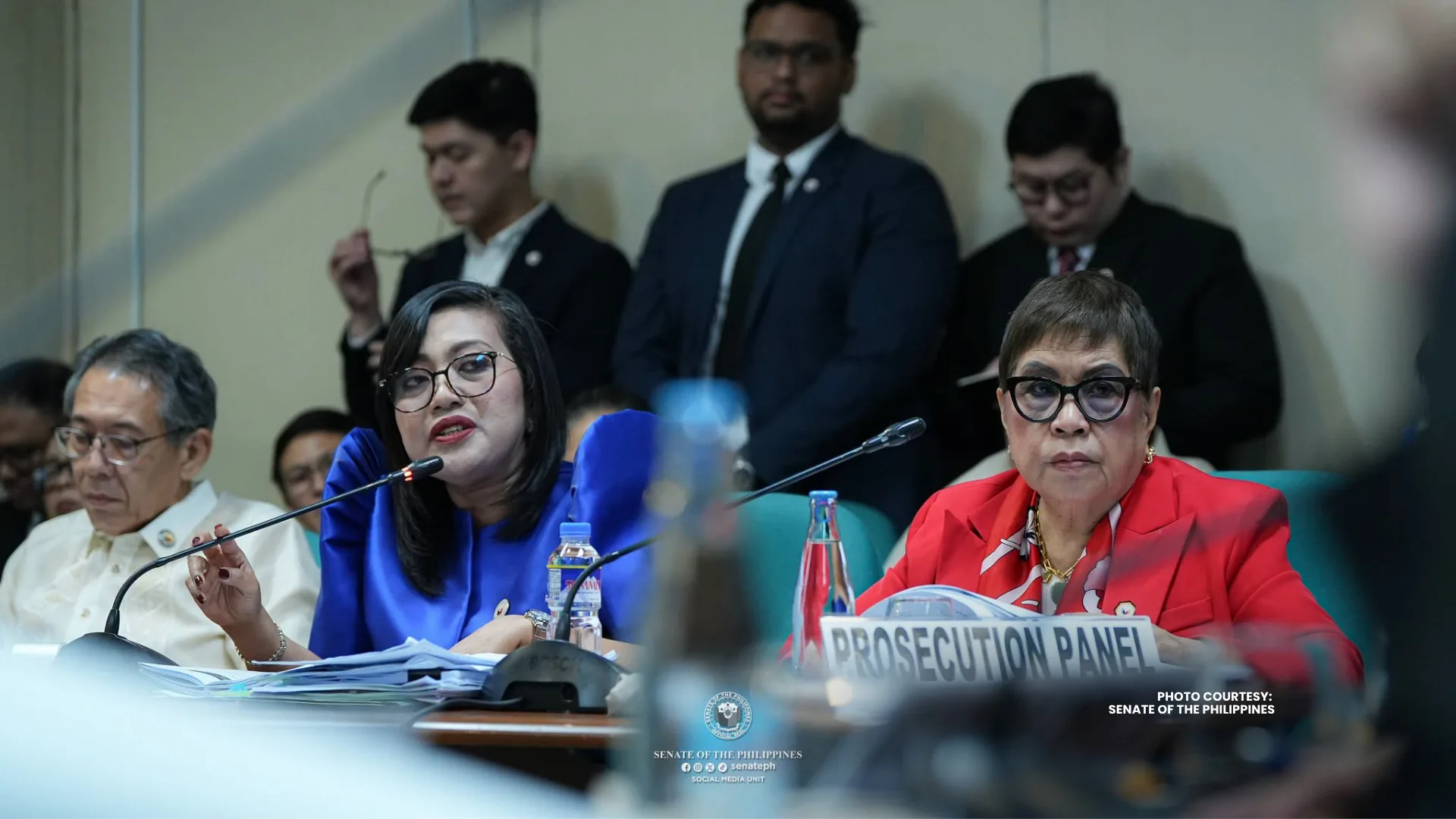
The House prosecution panel is studying whether it may take steps to clarify the vote threshold required for conviction in the impeachment trial of Vice President Sara Duterte before the case reaches judgment.
Lead prosecutor and Batangas Rep. Atty. Gerville “Jinky Bitrics” Luistro said the matter is being considered alongside ongoing pre-trial proceedings, although no final position has been reached.
“We will look into that. Pag-uusapan natin ‘yan kung anong magandang action ng prosecution para pagdating ng conclusion ng trial ay wala nang mga question about how we are going to interpret the two-thirds of all, ano,” she said in a radio interview.
The issue has gained attention amid differing views among prosecutors and senators on whether the two-thirds requirement for conviction should be based on the full 24-member Senate or only those senators considered effectively present and able to participate in the proceedings.
Luistro said the prosecution will announce its position once internal discussions are completed.
“Babalitaan natin ang ating mga kababayan kung ano ang magiging position ng prosecution kaugnay nyan,” she said.
When asked whether the matter could eventually be brought before the Supreme Court, Luistro said it was possible but stressed that the timing and legal basis would require careful evaluation.
“That is correct Ka Gerry ano pero duon sa puntong meron na bang na-impringed na right, meron na bang irreparable damage na masu-sustain considering na nandito palang tayo sa PTC,” she explained.
“Wala pa tayo sa rendition ng judgment,” she added.
Luistro said the prosecution would first determine whether such a legal action is feasible at this stage of the proceedings.
“Let us see kung viable ba? Feasible ba itong ganitong action at this stage Ka Gerry,” she said.
The 1987 Constitution provides that no impeached official may be convicted without the concurrence of two-thirds of all members of the Senate.
However, Luistro maintained that the phrase should be interpreted in relation to senators who remain within the Senate’s coercive authority.
“Ako? Two-thirds of senators within the Senate’s coercive power,” she said.
“Ang verbatim na provision sa Constitution: two-thirds of all the members of the Senate. Hindi naman sinabing 24,” she added.
She stressed that the Constitution uses the phrase “all the members of the Senate” rather than a fixed numerical count.
“Ang sabi two-thirds of all the members of the Senate,” she said.
Luistro also linked her position to the senators’ representative function in impeachment proceedings.
She said members who are unable to attend or participate effectively cannot fully exercise their constitutional role in the impeachment court.
“Of course, the answer is clear – No! And if the answer is no, it means the 24 numbers should be adjusted – adjusted and lowered to a number which is or which are within the coercive power of the Senate,” she said.
The Supreme Court ruling in Avelino v. Cuenco (1949) has been cited in discussions of Senate quorum, particularly regarding the chamber’s ability to act despite the absence of members beyond its coercive reach.
Luistro said this doctrine supports her interpretation.
“Gusto kong gamitin ang coercive powers sapagkat ito ang doktrina sa Avellino v. Cuenco,” she said.