
The House of Representatives maintained that the impeachment case against Vice President Sara Duterte is supported by evidence, rejecting claims from her legal team that there was no “smoking gun” linking her to the allegations.
House officials said the complaint was not based on speculation or partisan attacks, but on sworn testimony, official records, financial documents, Commission on Audit findings, certifications, and public statements made by the Vice President herself.
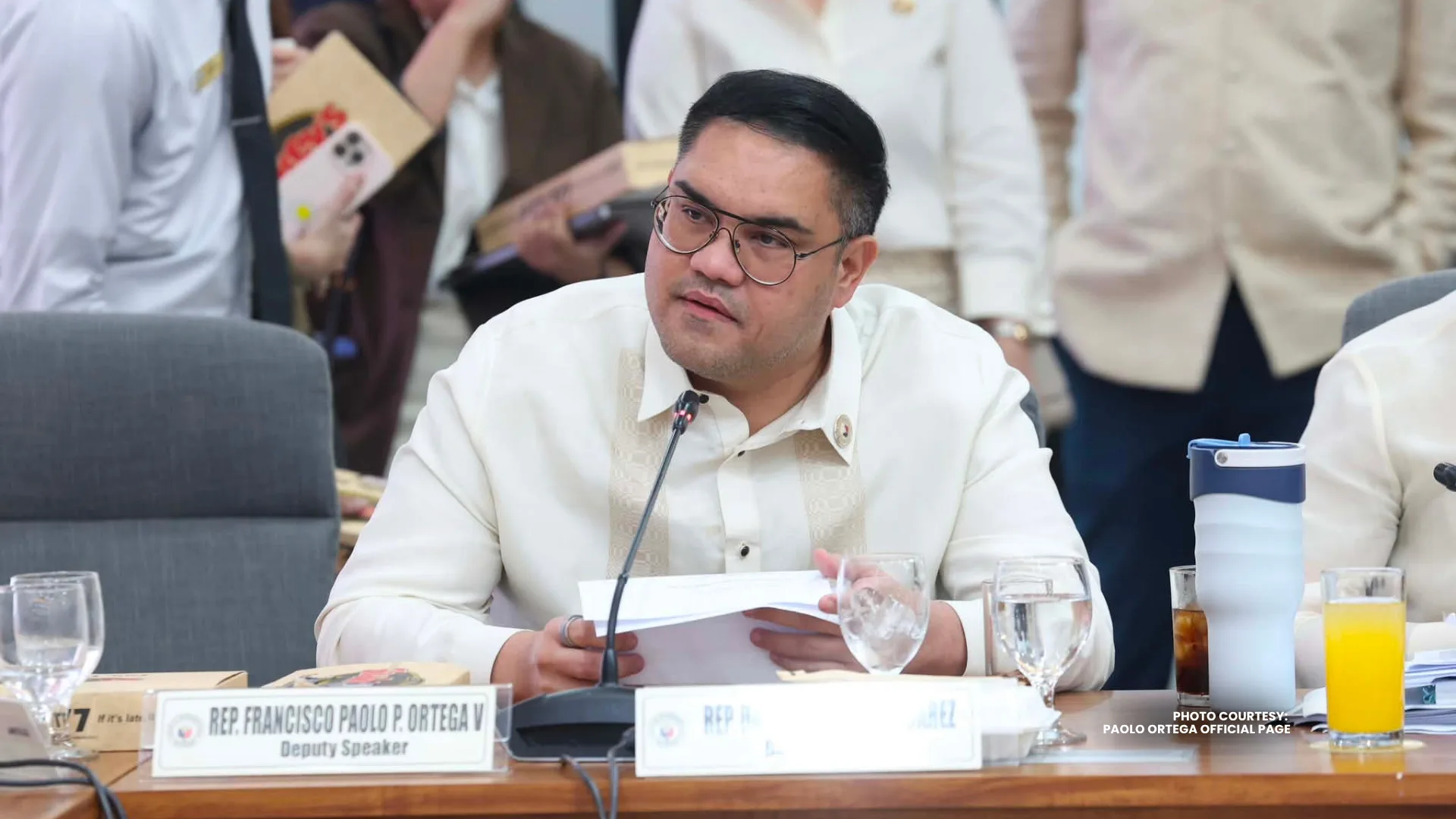
Deputy Speaker and La Union Rep. Paolo Ortega V the evidence had already been discussed in several House hearings and would now be tested in the Senate impeachment court.
The House voted on Monday to impeach Duterte, with 257 lawmakers approving the Committee on Justice report transmitting the Articles of Impeachment to the Senate for trial. Only 106 votes, or one-third of the 318-member chamber, were needed to impeach her. Twenty-five lawmakers voted against the move, while nine abstained.
The approved articles contain four major charges: alleged misuse of confidential funds, unexplained wealth, bribery, and grave threats tied to public statements against top government officials.
The first article focuses on the alleged misuse and irregular liquidation of P612.5 million in confidential funds under the Office of the Vice President and the Department of Education (DepEd). The allegations stemmed from House inquiries in 2024 and Commission on Audit notices of disallowance involving P73 million in OVP confidential funds in the last quarter of 2022 and P375 million in the first three quarters of 2023.
Lawmakers also cited National Bureau of Investigation findings that showed similarities in handwriting on multiple acknowledgment receipts supposedly signed by different beneficiaries. The Philippine Statistics Authority also certified that several names listed in the records, including “Mary Grace Piattos” and “Kokoy Villamin,” do not appear in the civil registry.
The second article covers allegations of unexplained wealth and discrepancies in Duterte’s Statements of Assets, Liabilities and Net Worth, as well as her alleged continued business interests while serving as vice president.
House members noted that Duterte’s declared net worth increased from P7.2 million in 2007 to more than P88.5 million in 2024, which they said appeared disproportionate to her estimated government salary earnings of around P30 million during the same period.
They also cited Anti-Money Laundering Council records reflecting P6.77 billion in covered and suspicious transactions involving Duterte and her husband since 2006.
The third article accuses the Vice President of bribery over the alleged distribution of cash envelopes to senior DepEd officials when she was Education secretary. The allegation was based on testimonies and statements from former Undersecretary Gloria Jumamil-Mercado, former Bids and Awards Committee chairperson Resty Osias, and former chief accountant Rhunna Catalan.
The fourth article involves alleged grave threats and inciting to sedition arising from Duterte’s public statements. Central to the charge was her November 2024 video press conference, where she said she had contracted an assassin to kill President Ferdinand Marcos Jr., First Lady Liza Araneta-Marcos, and former Speaker Ferdinand Martin Romualdez.
Ortega said the Senate trial would be the proper venue to test the evidence and determine whether the charges should stand.
“The Senate impeachment court is precisely the proper forum to test the evidence. If they truly believe the case is weak, then they should welcome the trial instead of repeatedly trying to discredit the process before it even begins,” he said.
All House members were given electronic copies and USB storage devices containing Committee Report No. 261 and the Articles of Impeachment, along with the attached evidence. The complainants, Duterte, and her legal counsel were also furnished with the same materials.