
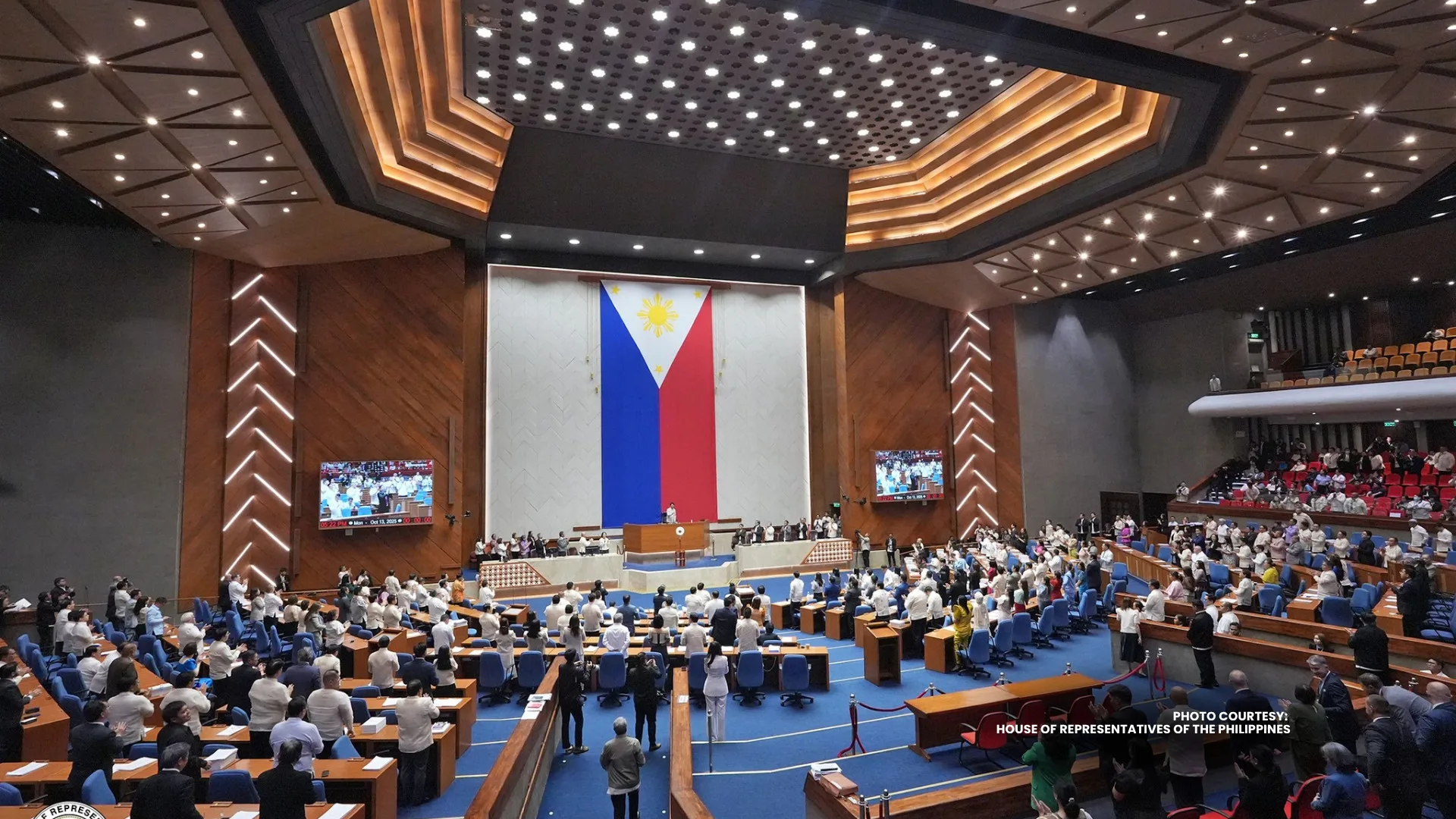
The House of Representatives has approved on second reading a bill seeking to penalize the deliberate spread of false information online when it causes verifiable public harm or poses a serious threat to national security.
House Bill No. 9465, or the proposed Digital Media Anti-False Information Act, was approved during the May 26 plenary session as one of the priority measures under the Legislative-Executive Development Advisory Council (LEDAC) agenda.
The measure seeks to address organized and intentional disinformation while preserving legitimate criticism, public debate, journalism, satire, academic discussion, advocacy, and other forms of protected expression.
Under the bill, a person may face six to 12 years in prison and fines ranging from P500,000 to P2 million if found guilty of knowingly and willfully publishing, financing, directing, or materially assisting false information with actual knowledge of its falsity or reckless disregard for the truth.
The proposed penalty would apply only when there is specific intent to cause verifiable public harm or a serious threat to national security.
The bill also targets coordinated inauthentic behavior, troll farms, bot networks, fake account networks, and deceptive digital operations designed to manipulate public discourse, mislead the public, or create concrete harm.
It covers synthetic or materially manipulated media, including AI-generated or altered images, videos, and audio, if released without proper disclosure and with knowledge of their deceptive nature.
Foreign-backed covert influence operations would also be penalized when conducted on behalf of a foreign state, intelligence service, military actor, or foreign-funded operation to spread disinformation that threatens national security.
The measure also prohibits impersonating government agencies, election bodies, emergency-response authorities, courts, law enforcement agencies, public-health offices, educational institutions, media organizations, or real persons to spread harmful disinformation.
Lawmakers stressed that the proposal is not meant to criminalize disagreement or criticism of the government.
The bill expressly protects political opinions, criticism of public officials and candidates, satire, journalistic inquiry, investigative reporting, editorial judgment, whistleblowing, public interest advocacy, commentary, academic discourse, artistic expression, and religious expression.
It also provides that merely liking, sharing, forwarding, or reposting content will not be punishable unless prosecutors prove beyond reasonable doubt that the person knowingly and materially participated in the prohibited act with the required intent.
Digital platforms operating in the Philippines would be required to establish a legal entity or permanent representative office in the country for service of official communications.
Platforms must also disclose sponsored content, political advertisements, and paid campaigns; submit annual transparency reports; maintain notice-and-action systems for unlawful content; explain content restrictions or takedowns; and provide users with appeal and redress mechanisms.
Very large online platforms, or those reaching at least 10 percent of the national population in average monthly active users, would have additional obligations, including annual risk assessments, mitigation plans, independent audits, local compliance officers, and data access for vetted researchers.
The bill also requires the Department of Education and the Commission on Higher and Technical Education to integrate media and digital literacy into curricula at all levels.
Government agencies would likewise be required to maintain open data portals and correct erroneous public statements within a reasonable time.
A Joint Congressional Oversight Committee would monitor implementation, with a sunset review to be conducted within two years.