
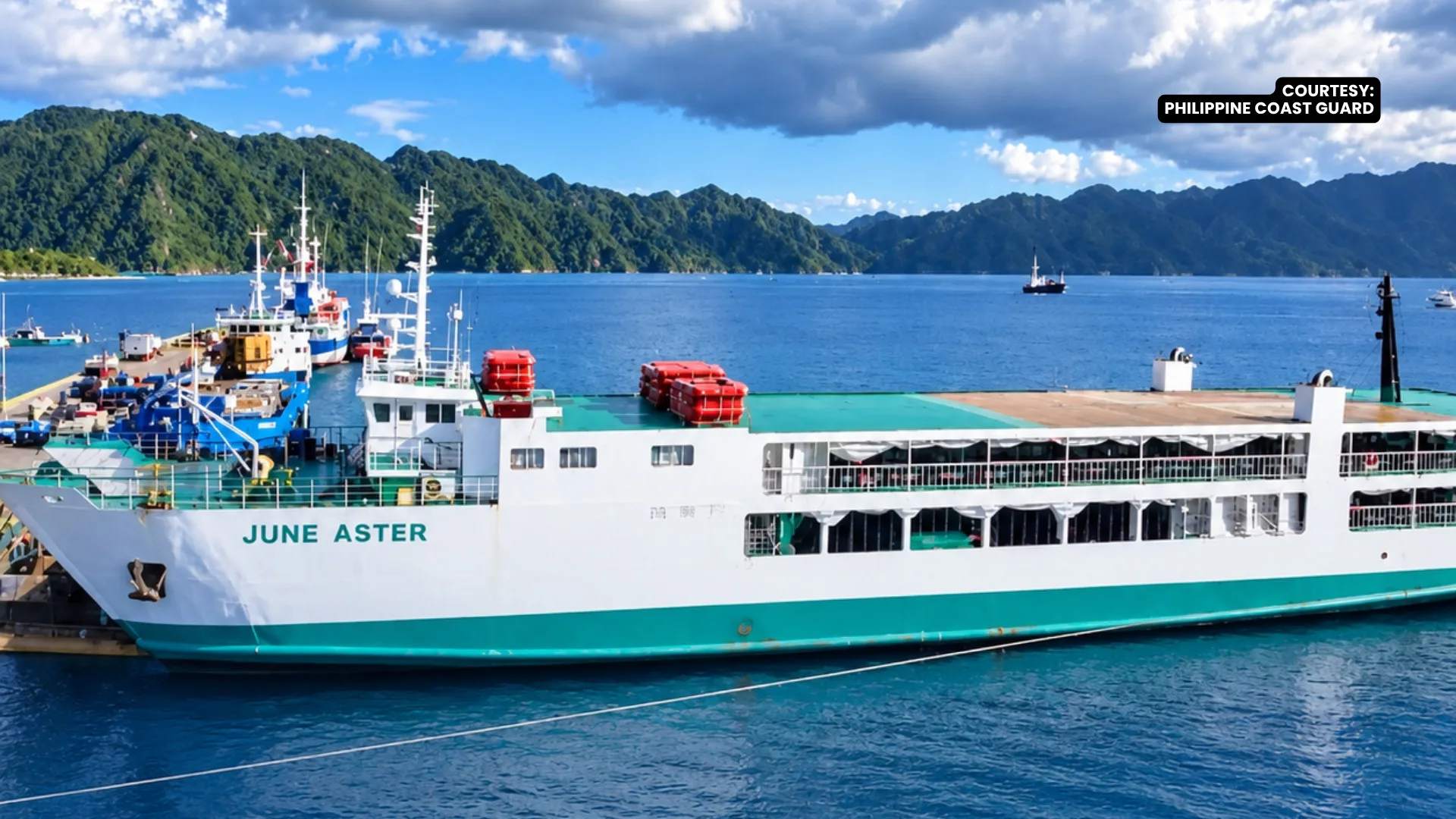
Energy officials confirmed Thursday that government agencies are crafting updated safety protocols for shipping electric vehicles (EVs) by sea following a deadly vessel fire on a trip bound for Coron, Palawan.
Patrick Aquino, Director of the Department of Energy’s (DOE) Energy Utilization Management Bureau, revealed during Senate hearings for the agency’s proposed P5.57-billion 2027 budget that the department is actively collaborating with the Maritime Industry Authority (MARINA) to overhaul current maritime rules.
“We already coordinated with MARINA on the matter. There’s an ongoing review, at the interagency level, to update the rules and regulations with respect to the transport of electric vehicles,” Aquino stated.
He further noted that current maritime policies lack explicit guidance regarding battery-powered transport.
“Right now, the existing regulations do not specifically prohibit the transport of electric vehicles. So we are now working with MARINA with the issuance of specific regulations, so our shipping lines will be properly guided,” he added.
Figures from the Philippine Coast Guard (PCG) place the casualty count from the Sept. 9 disaster at 77 confirmed dead, eight missing and 43 survivors. Manifest logs show the vessel was transporting a mix of cargo alongside five motorcycles, a pickup truck, a forklift, and one electric vehicle.
Despite public speculation, the DOE emphasized that official findings have not confirmed the EV as the source of the blaze.
“There was an electric vehicle in the vessel in Coron. But there were also internal combustion engines. That’s why there’s no finding yet that the fire was caused by the electric vehicle,” Aquino clarified.
In response to the incident, commercial operator Montenegro Lines imposed an immediate prohibition on all fully electric and hybrid vehicles across its fleet for both passenger and cargo shipping.
The ferry operator framed the move as a temporary preventive measure aimed at mitigating potential hazards linked to battery fires, thermal runaway and explosions.
Under the new internal directive, Montenegro Lines instructed shipmasters and port staff to thoroughly screen all boarding vehicles, refuse entry to any electric or hybrid models and report non-compliance immediately.
“The safety and protection of our passengers, crew, vessels, and cargo remain our highest priority. All concerned personnel are expected to exercise vigilance and ensure strict compliance with this directive,” the company announced.