
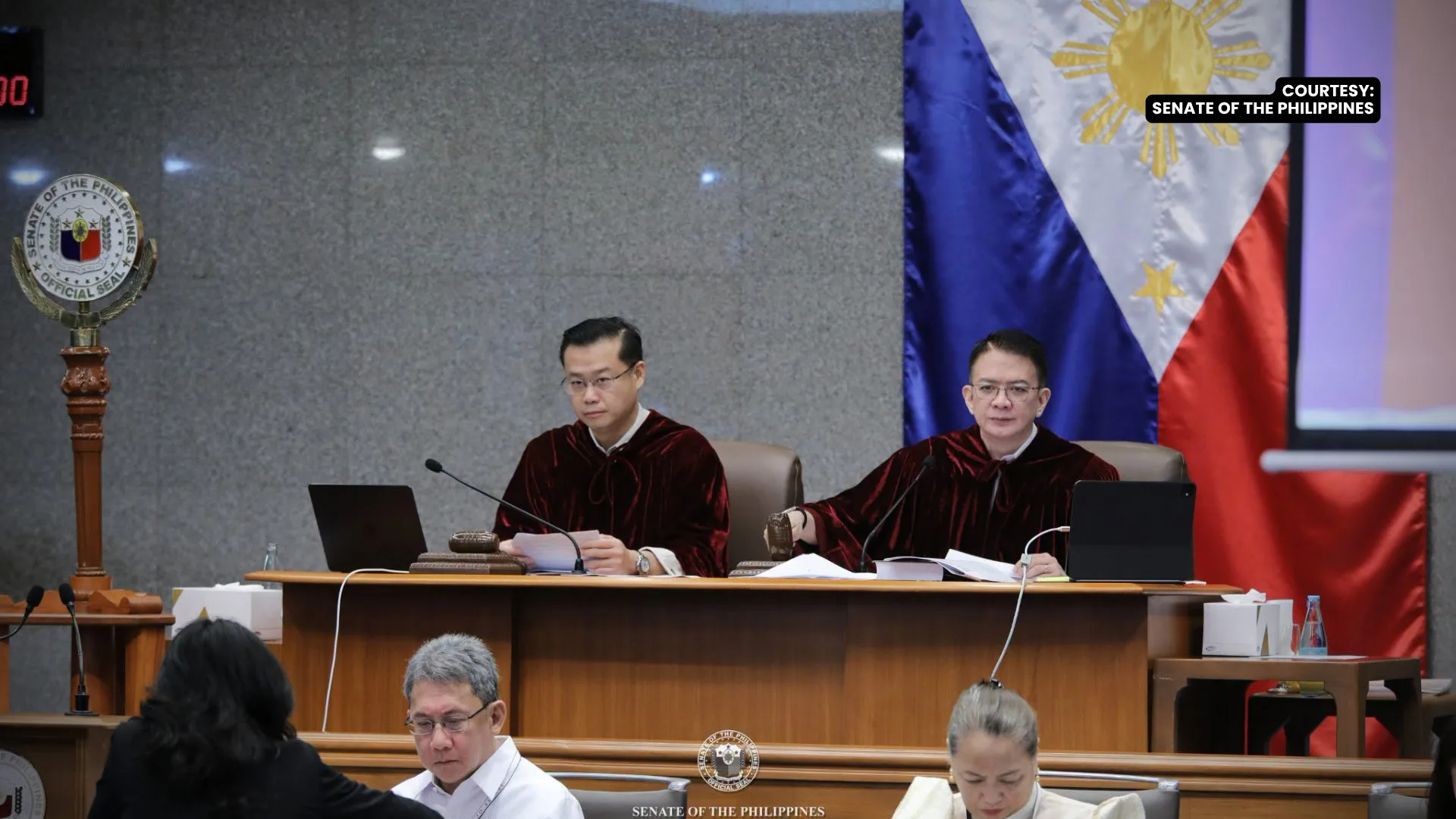
Presiding Officer Senator Francis Escudero has scheduled oral arguments to address the required voting threshold of senator-judges to convict or acquit Vice President Sara Duterte, amid growing questions surrounding the participation of absent and detained members of the chamber.
The procedural move came after Senator-Judge Erwin Tulfo raised concerns on the 23rd day of the impeachment trial regarding how the court will factor in lawmakers who are currently unable to attend physical sessions. Tulfo pointed to several absent colleagues, including Senators Ronald “Bato” dela Rosa, Jinggoy Estrada, Rodante Marcoleta and Loren Legarda. Legarda has been on extended medical leave since August 3, while others face separate legal detentions or are outside jurisdictional control.
Tulfo questioned how their votes will be counted and whether they will be allowed to participate, pointing out that these lawmakers remain members of the Senate since no final judgment has been rendered against them by the Sandiganbayan.
When the trial convened on July 6, Escudero initially stated that conviction would require a two-thirds vote of all 24 Senate members, establishing a baseline requirement of 16 votes. However, Escudero noted that reducing the total number of eligible voting members would automatically shift the required numbers for both conviction and acquittal, changing the calculation on both sides.
Under Rule 22 of the Rules of Impeachment, appeals or reconsiderations of a ruling by the chair are typically decided without debate through a direct vote. However, given the weight of the issue, Escudero announced that the court will invite at least three amici curiae (friends of the court) to render expert legal opinions.
To accommodate the discussions, the court cancelled its scheduled September 16 hearing to evaluate the insights of the amici curiae. The tribunal will hear oral arguments from both prosecution and defense panels on September 23 before putting the baseline issue to a vote on the same day. Each legal team will be granted 15 minutes to present their arguments, while senator-judges and the litigating parties can direct questions to the amici curiae through the presiding officer.
The court affirmed that trial proceedings were suspended on Wednesday (September 9) and Thursday (September 10) to give way to the formal marking of over 1,800 exhibits under Article II, which covers the Vice President’s alleged unexplained wealth.
Escudero also outlined the revised schedule for the tribunal moving forward. From September 8 to 30, trial sessions will run on a hybrid schedule from 10:00 a.m. to around 3:00 p.m., followed immediately by plenary sessions, allowing the Committee on Finance to hold budget hearings simultaneously under suspended Senate rules. Following a single-day pause on September 30, the court will hold full-day trial sessions continuously from October 1 through October 15.
Trial proceedings will then be suspended from October 16 to November 8 to give way to the Senate’s Halloween recess and legislative budget preparations. When regular sessions resume on November 9, plenary floor deliberations on the national budget will take precedence for two weeks, with full regular trial programming expected to resume by November 18.