
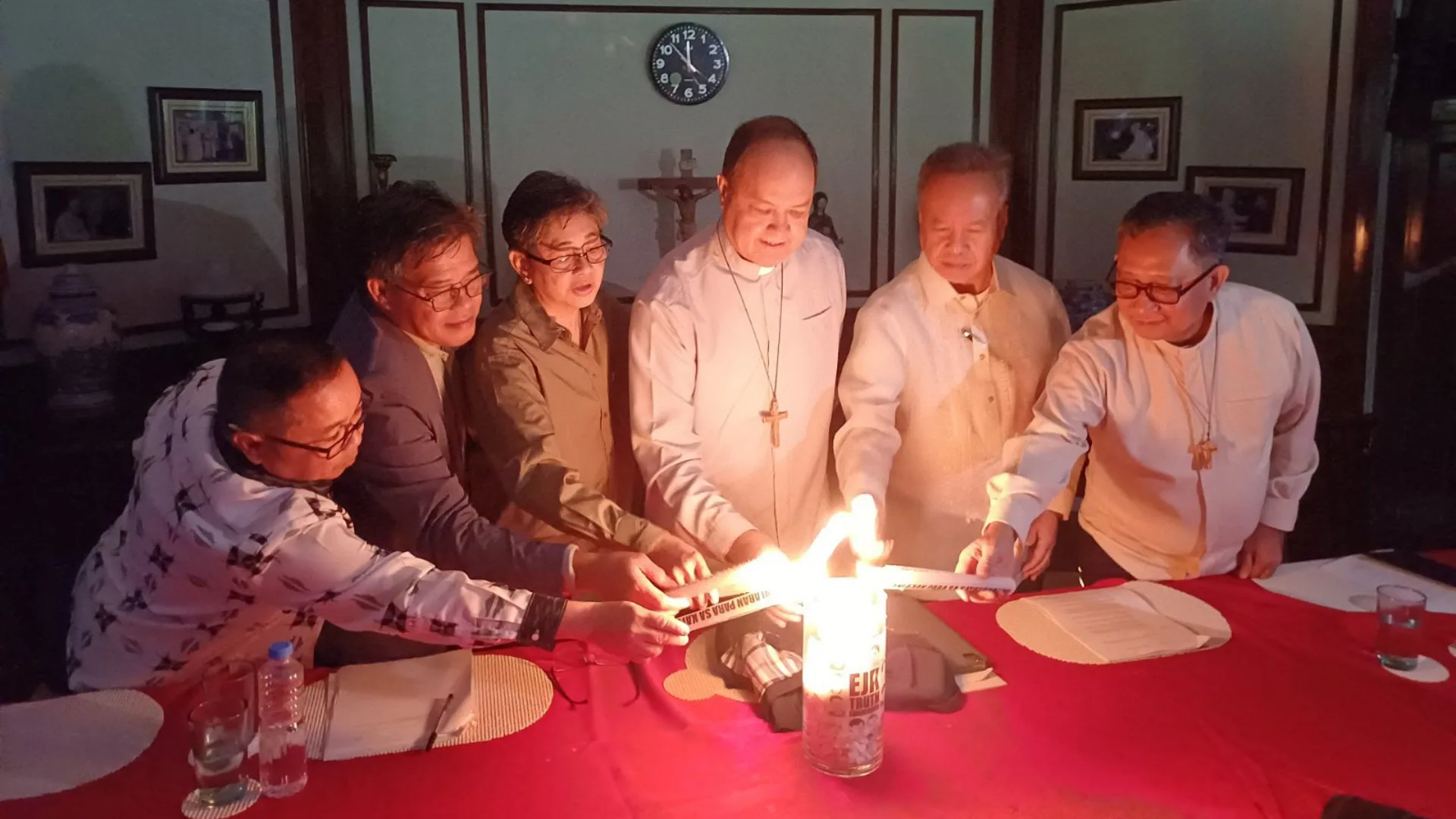
The EJK Truth Commission was formally launched today as an independent, civilian-led body dedicated to establishing a credible public record of extrajudicial killings and related abuses in the Philippines.
The creation of the truth-seeking body comes as the nation marks nearly a decade since drug war-related killings escalated nationwide in 2016.
The primary mission of the Commission is to document extrajudicial killing cases, center the experiences of survivors, and recommend accountability and reparations. It also aims to push for institutional reform and create safeguards to prevent such violence from happening again.
The body recognizes that thousands of families are still seeking truth, justice, and healing after years of persistent violence, and will prepare evidence-based recommendations and referral packages for oversight agencies like the Commission on Human Rights, the Department of Justice, and the National Bureau of Investigation.
To achieve its goals, the Commission will hold National Truth Hearings that can be public, closed, or anonymous depending on the safety and consent of the survivors. These hearings will follow survivor-centered safeguards to document lived experiences, institutional patterns, and the social impact of violence in a safe environment. Participants will include victims, families, community leaders, experts, and even former participants in violence.
A group of civilian experts will provide leadership and overall direction for the Commission while maintaining complete independence from government control. Attorney Raul Pangalangan, a former judge of the International Criminal Court (ICC), will serve as the Chairman and the Commissioner for Legal Affairs and Due Process.
He is tasked with safeguarding the legal integrity, ethical standards, and due process of the Commission’s investigations and outputs. He also clarified that the mandate of the commission is different from the ICC. The goal of the EJK Truth Commission is to establish the truth hand-in-hand with the victims.
“Dati po kasi yung mga biktima ay passive recipients of justice. Papakinggan lang sila kapag meron silang testimonies about the crime pero the whole process is a game of lawyers and judges. Dito po, ang sentro ng ating process is to hear the victims. The approach is that the victims should have an active part in the justice process and their telling the story is part of the justice that they are claiming for themselves,” Pangalagan explained.
Four other prominent Commissioners will lead distinct areas of expertise within the new body. Dr. Raquel Barros del Rosario-Fortun will handle forensic sciences and independent investigation, while Dr. Al Fuertes will guide psychosocial support and trauma healing. Joining them are Father Daniel Franklin E. Pilario for church, education, and institutional reform, and Carlos Conde, who will serve as both the Executive Director and the Commissioner for public documentation and transparency.
Fortun said if the Philippines had been implementing what is called a death investigation system, the series of killings wouldn’t have happened.
“Kasi sa pamamagitan ng siyensya at ebidensya, mabibigyan natin ng linaw, dignidad, at katotohanan ang mga pagkamatay na kadalasan na nababalot ng takot, katahimikan, o paglimot. Naniniwala ako na ang mga yumao ay may karapatan pa rin sa katotohanan at pagkilala,” Fortun added.
Meanwhile, Fuertes said the overall vision of the commission is to prevent the effect of what happened in the past from becoming into transgeneration traumatization. “Hindi matatahimik ang taong sugatan. Unhealed trauma is usually transferred and transmitted.
On the other hand, Conde, a former journalist whose work centered on human rights stories, said when he was assigned in Davao City in the late 90s during the height of the Davao Death Squad, extrajudicial killings became a part of his life.
“Kaya personal sa akin itong misyon na ito,” he said. Noong umalis ako sa media at naging human rights researcher ng halos 14 na taon, puro rin extrajudicial killings ang nakatutok sa akin dahil nga naging Presidente si Rodrigo Duterte.”
The Commission will also be guided by Cardinal Pablo “Ambo” David, who will serve as its official Adviser. In this role, Cardinal David will act as an independent moral and institutional guide to help protect the public trust, confidentiality, and mission of the group.
The Commission will submit periodic reports of its findings every six months to the President, Congress, and appropriate government bodies before releasing a final report.
The Commission emphasizes that its work is focused on restoring dignity and preserving history rather than replacing the functions of traditional courts. Highlighting the spiritual and moral importance of the mission, Cardinal David supported the launch with a powerful reminder of why this record matters.
“The truth must be protected not only as a matter of record, but as a matter of dignity for the families who have carried these stories for years. The EJK Truth Commission exists so these stories can be heard, verified, preserved, and acted upon,” David said.