
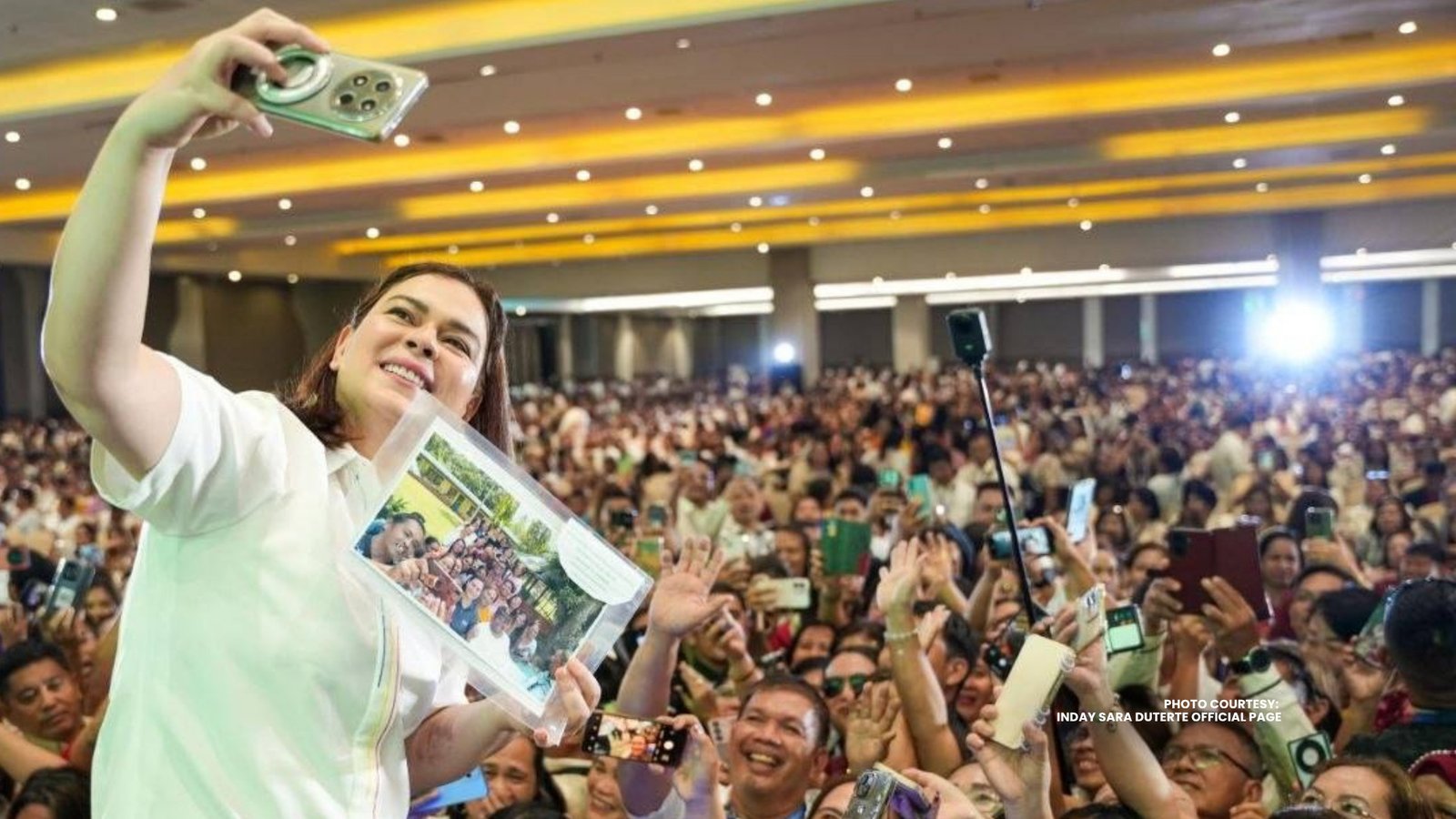
Vice President Sara Duterte and former vice president Leni Robredo emerged as the top choices among Filipinos in a recent survey on potential contenders for the 2028 presidential race, reflecting early but notable public sentiment ahead of the next national elections.
The Pulse Asia survey, conducted from February 27 to March 2 among 1,200 respondents aged 18 and above, with a ±2.8 percent margin of error, asked voters who they would choose if the 2028 elections were held today. The poll included Vice President Duterte, Robredo, Senator Raffy Tulfo, Senator Bam Aquino, Senator Risa Hontiveros, and Interior Secretary Jonvic Remulla.
Commissioned by the office of Senate Majority Leader Juan Miguel Zubiri, the survey showed Duterte leading with 43 percent support, followed by Robredo with 27 percent and Tulfo with 19 percent. The rest of the field trailed, with Aquino at 5 percent, Hontiveros at 2 percent, and Remulla at 1 percent.
Regional breakdowns revealed distinct geographic preferences. Duterte dominated the Visayas and Mindanao, while Robredo led in Balance Luzon. In Metro Manila, the race was tighter, with Duterte, Robredo, and Tulfo all drawing substantial support.
By socio-economic class, Duterte led among respondents from classes D and E, while Robredo performed strongest among class ABC voters. Tulfo also posted notable support across segments, particularly among higher-income respondents.
The survey also examined head-to-head matchups. In a Duterte–Tulfo scenario, both candidates were tied at 46 percent overall, though voting patterns varied by region, with Tulfo performing strongly in Luzon while Duterte maintained dominance in the Visayas and Mindanao.
In a Duterte–Robredo matchup, Duterte led with 51 percent against Robredo’s 43 percent, again reflecting regional divides, with Robredo ahead in Balance Luzon but Duterte leading in the Visayas and Mindanao.
Zubiri said his office has been commissioning quarterly surveys to track evolving voter preferences ahead of 2028. He said the goal is to identify emerging leaders, measure sustained public support, and better understand the qualities voters seek in future national leaders.
He added that regularly monitoring public sentiment provides a clearer picture of the country’s political landscape, helping gauge how preferences may shift as the election period approaches.