
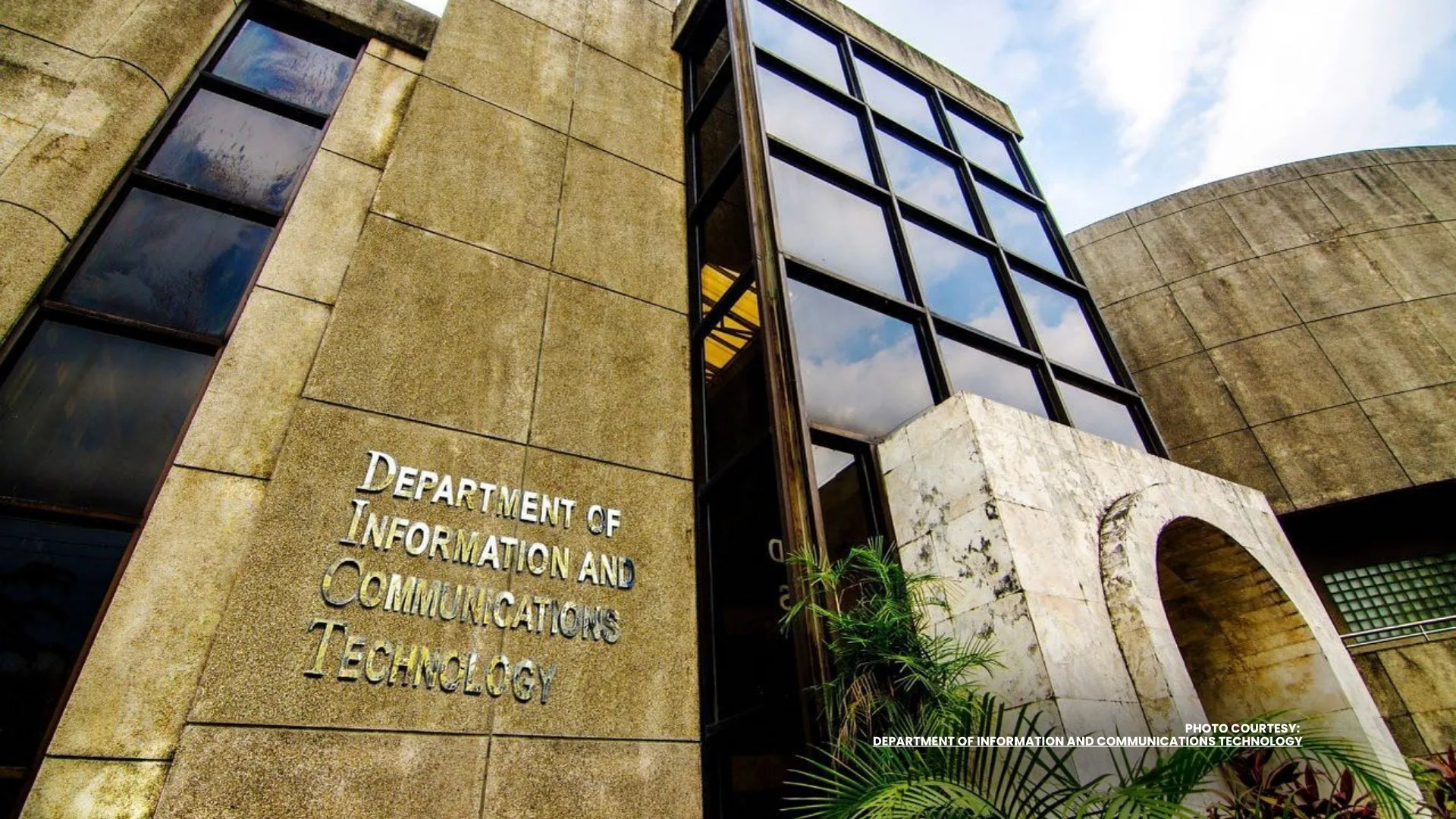
A massive legal and operational firestorm has erupted within the Department of Information and Communications Technology (DICT). Following Malacañang’s termination of Undersecretary Christina Faye Condez-De Sagon and Assistant Secretary June Vincent Manuel Gaudan, newly issued department orders signed by DICT Secretary Henry R. Aguda have exposed glaring statutory violations, illegitimate designations and questionable administrative maneuvering at the highest levels of the agency.
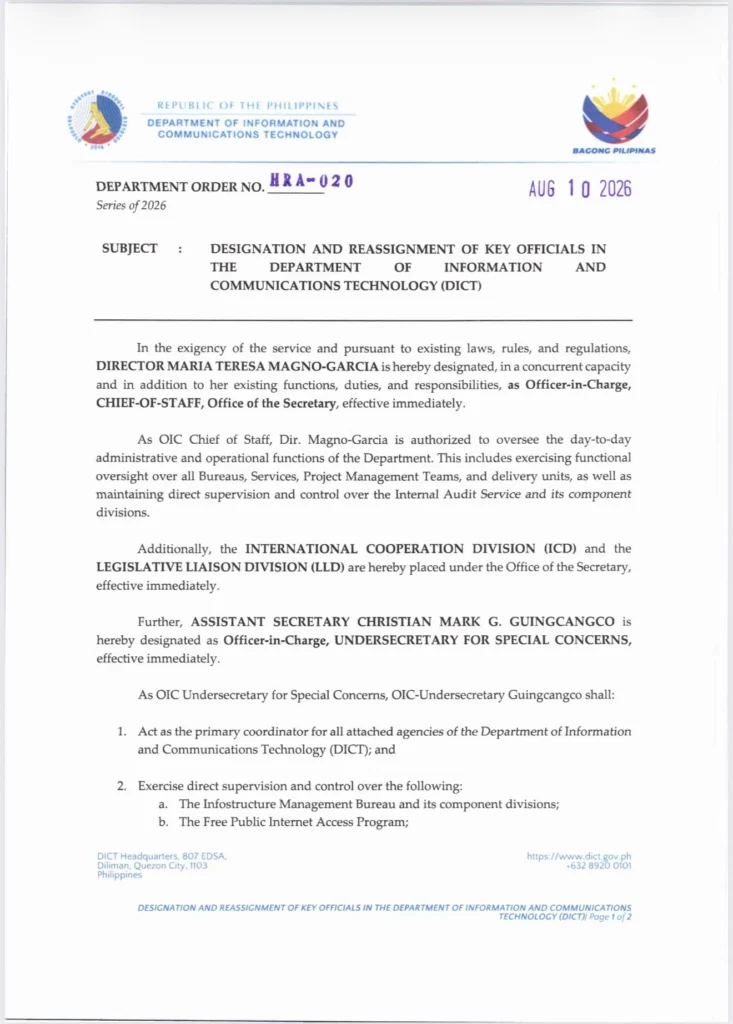
At the epicenter of this is the designation of Assistant Secretary Christian Mark G. Guingcangco as the Officer-in-Charge (OIC) Undersecretary for Special Concerns.
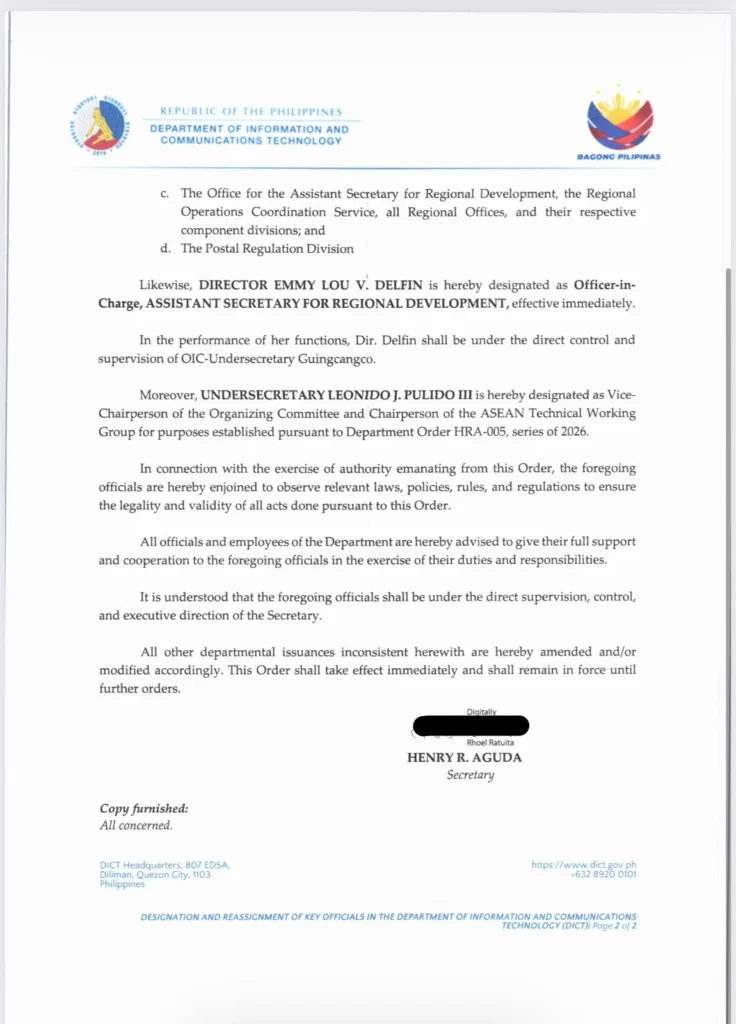
Under Department Order No. HRA-020 (Series of 2026), Secretary Aguda handed Guingcangco authority over critical, highly technical portfolios. These include direct supervision over the Infostructure Management Bureau, direct oversight of the Free Public Internet Access Program and command over the Office for the Assistant Secretary for Regional Development, Regional Offices and the Postal Regulation Division.
However, Guingcangco is legally barred from holding these positions. Section 11 of Republic Act No. 10844 (the DICT Act of 2015) explicitly mandates that, “no person shall be appointed Secretary, Undersecretary, or Assistant Secretary of the Department unless he or she is a citizen and resident of the Philippines, of good moral character, of proven integrity, and possesses at least seven years of competence and expertise in information and communications technology, information technology service management, information security management, cybersecurity, data privacy, e-Commerce, or human capital development in the ICT sector.”
Guingcangco’s background includes having a corporate stint at PwC as an accountant, finance specialist at UniLab, a supervising political affairs officer at the House of Representatives while a law student and passed the bar last year, failing to satisfy the statutory mandatory seven years of specialized ICT domain expertise. By law, Guingcangco is not even qualified to serve as an Assistant Secretary, let alone be elevated to OIC Undersecretary. This as directing core national infrastructure and technical portfolios legally requires high-level technical credentials, including status as a licensed Professional Electronics Engineer.
Compounding the illegal nature of these moves, RA 10844 caps the number of DICT Assistant Secretaries at four. Secretary Aguda has openly defied the law by recommending and maintaining a bloated cadre of Assistant Secretaries far exceeding the statutory limit, disregarding compliant officials who actually meet the rigorous requirements of the law. At one point, Aguda had seven Assistant Secretaries.
Meanwhile, equal outrage surrounds the status of Leonido J. Pulido III. Pulido’s presidential appointment is as an Assistant Secretary to an entirely different government agency, from which he was seconded to the DICT.
Under Civil Service Commission (CSC) Memorandum Circular No. 40, Series of 1998 (the Revised Omnibus Rules on Appointments and Other Personnel Actions), secondment is strictly defined as a temporary movement of an employee from one department or agency to another, which does not involve a reduction or increase in rank, status, or salary. Civil service rules explicitly prohibit secondment from being used as a mechanism for promotion, rank-jumping, or assuming higher executive positions that require distinct presidential appointments.
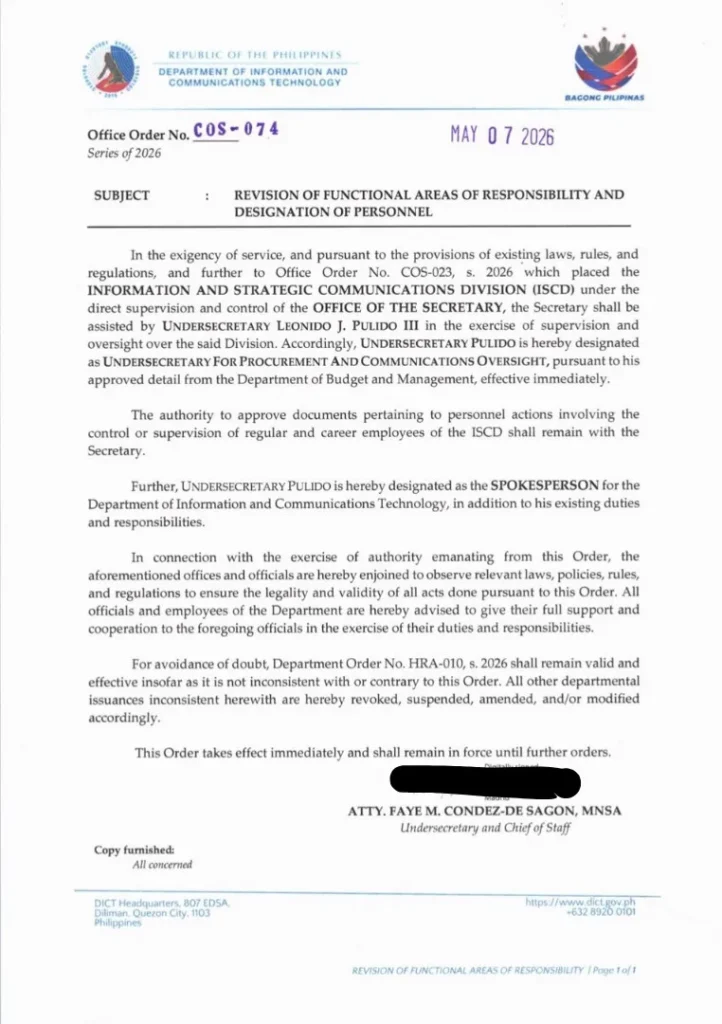
Despite these clear civil service mandates, Aguda has consistently bypassed presidential appointing authority and CSC regulations. Under a prior internal order signed by the former Chief of Staff (Office Order No. COS-072), Pulido was improperly designated as Undersecretary for Procurement and Communications Oversight and concurrently Department Spokesperson, allowing a seconded official from another agency to enjoy the perks, privileges, rank and authority of a higher post without a presidential appointment.
In the latest issuance (Department Order No. HRA-020), Aguda added responsibility to Pulido, still as Undersecretary, as Vice-Chairperson of the Organizing Committee and Chairperson of the ASEAN Technical Working Group pursuant to Department Order HRA-005. Critics point out that acting as though agency head orders can override presidential prerogatives and CSC rules renders Pulido’s high-level designations legally untenable.
The departmental shake-up follows the termination of Condez-De Sagon and Gaudan, who previously appeared on the official DICT website directory as Undersecretary for Special Concerns and Assistant Secretary for Regional Development, respectively. Under Aguda’s new department order, neither ousted official was granted any new duties or reassignments, confirming their total removal from government service amid ongoing whistleblower complaints regarding bid-rigging and verbal abuse to the employees.
Amid the shake-up in the agency officials, the DICT faces imminent legal challenges regarding the legitimacy and validity of every order, contract and official act executed under Aguda’s restructuring.