
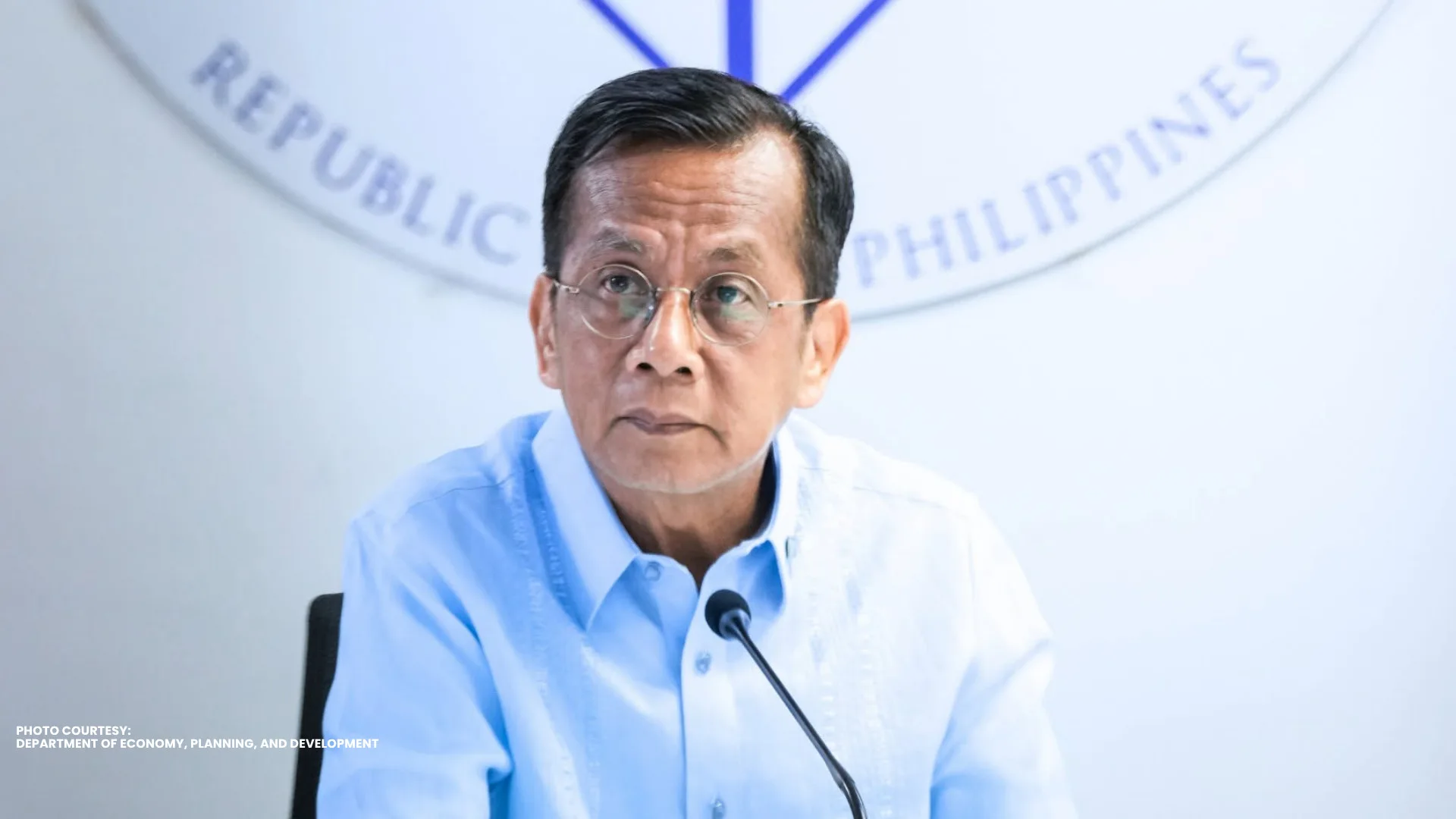
The Department of Economy, Planning, and Development (DEPDev) said building a resilient Filipino middle class is crucial to sustaining poverty reduction and achieving more inclusive economic growth.
DEPDev Secretary Arsenio M. Balisacan made the statement in reference to the World Bank’s Poverty and Equity Assessment (PEA) report titled “Building the Filipino Middle Class: Towards Resilient Futures and Poverty Eradication.”
“This report comes at a critical juncture in the Philippines’ development journey—one marked by meaningful progress in poverty reduction, yet also by persistent vulnerabilities and structural constraints that continue to shape the pace and inclusiveness of this growth,” Balisacan said.
Balisacan said the country has made gains in reducing poverty, with poverty incidence falling to 15.5 percent in 2023 from 18.1 percent in 2021. However, he noted that many households remain vulnerable to various shocks, including food price volatility, health emergencies, climate-related disasters, and labor market disruptions.
“While we remain focused on our efforts to reduce poverty, we acknowledge that recent economic disruptions continue to challenge our economy. The government is carefully calibrating its strategies to ensure that we meet our development objectives,” he said.
Balisacan emphasized that strengthening the Filipino middle class is vital to securing long-term development outcomes for the country.
“Building a resilient middle class is therefore more than a social aspiration. It is a socioeconomic imperative that underpins robust domestic demand, broadens the country’s tax base, supports human capital investment, and strengthens social cohesion and institutional stability,” he said.
To develop a stronger middle class, Balisacan cited four policy priorities aligned with the Philippine Development Plan (PDP) 2023–2028. These include creating high-quality and productive jobs, strengthening service delivery and accelerating spatial convergence, building resilience amid emerging and evolving risks, and strengthening economic governance.
He also underscored the need to sustain inclusive growth by promoting competition and firm dynamism, strengthening innovation and investment, and fostering labor market institutions that balance worker protection with flexibility and adaptability.
The country’s chief economist said persistent disparities in health, education, and nutrition outcomes, particularly in remote areas, must also be addressed through stronger local institutions, more effective fiscal transfers, and improved implementation capacity.
Balisacan likewise stressed the importance of building resilience against climate-related events, health shocks, and economic disruptions through a more agile and forward-looking social protection system.
“Building a predominantly middle-class Filipino society is about creating the conditions for economic security, dignity, and opportunity. By advancing reforms that promote quality jobs, effective institutions, and responsive public services, we can move closer to our vision of a matatag, maginhawa, at panatag na buhay for every Filipino,” Balisacan said.