
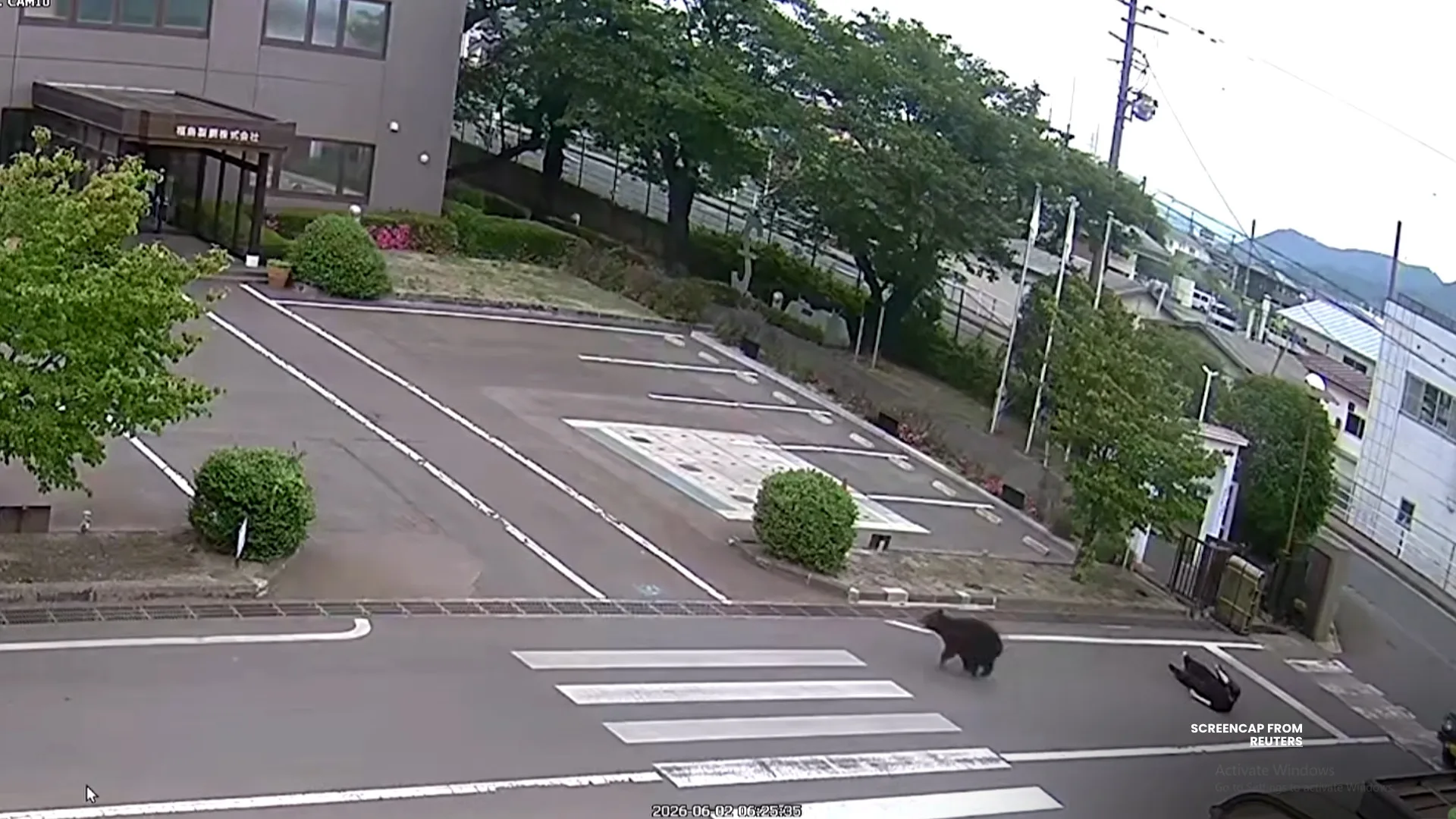
A bear that injured four people after entering a business district in Fukushima City remained at large, leaving residents, workers and authorities on alert as Japan confronts a rising number of dangerous encounters between humans and wild animals.
The attack happened on June 2 in the Sasakino district of Fukushima City, where security footage showed the bear entering the premises of Fukushima Steel Works and charging at a male employee in his 20s. The animal knocked him down before moving through the area and later attacking others nearby.
Authorities said four people were injured, including two Fukushima Steel Works employees, a man in his 20s and another in his 60s, a third man in his 60s from a nearby company, and a woman in her 80s in a residential area. The injuries were not considered life-threatening, but the incident caused alarm because the bear had wandered into an area close to workplaces, homes and schools.
What made the case more unsettling was not only the attack, but the animal’s ability to evade capture.
Local officials said the bear appeared unusually intelligent after reports that it had turned on a faucet to drink water while trapped inside a facility. Fukushima Mayor Yuki Baba described the animal as “extremely intelligent,” according to reports. Authorities also said the bear managed to escape through a locked window, leaving scratch marks behind, despite search and containment efforts.
Police, hunters and local officials launched a search using drones, traps and patrol teams, but the bear had not yet been caught as of the latest reports. Schools in the affected area were temporarily closed or shifted to online classes as a precaution, while authorities urged residents to remain vigilant.
The Fukushima attack came as police in Akita City investigated the death of a 73-year-old woman whose body was found in a mountainous area on the same day. Local media reported that police were looking into the possibility that she had been attacked by a bear after a family member alerted authorities.
The two incidents have renewed concern over Japan’s worsening bear problem. Bear attacks have increased in recent years, particularly in northern and rural areas, where depopulation, an aging population, fewer hunters and changes in food availability have pushed bears closer to communities. Japan recorded 13 deaths and more than 230 bear attacks in 2025, according to reports citing government data.
Officials have responded with expanded bear-control measures, including more traps, more municipal personnel and public safety reminders. Residents in bear-prone areas have been advised to avoid unnecessary outdoor activity during early morning and evening hours, remain calm during encounters and protect the head and neck if attacked.
For Fukushima residents, however, the latest scare was especially disturbing because the bear did not simply appear in a forest trail or farm road. It entered an industrial area, attacked workers, injured an elderly woman and then disappeared again, turning a local wildlife encounter into a citywide security concern.