
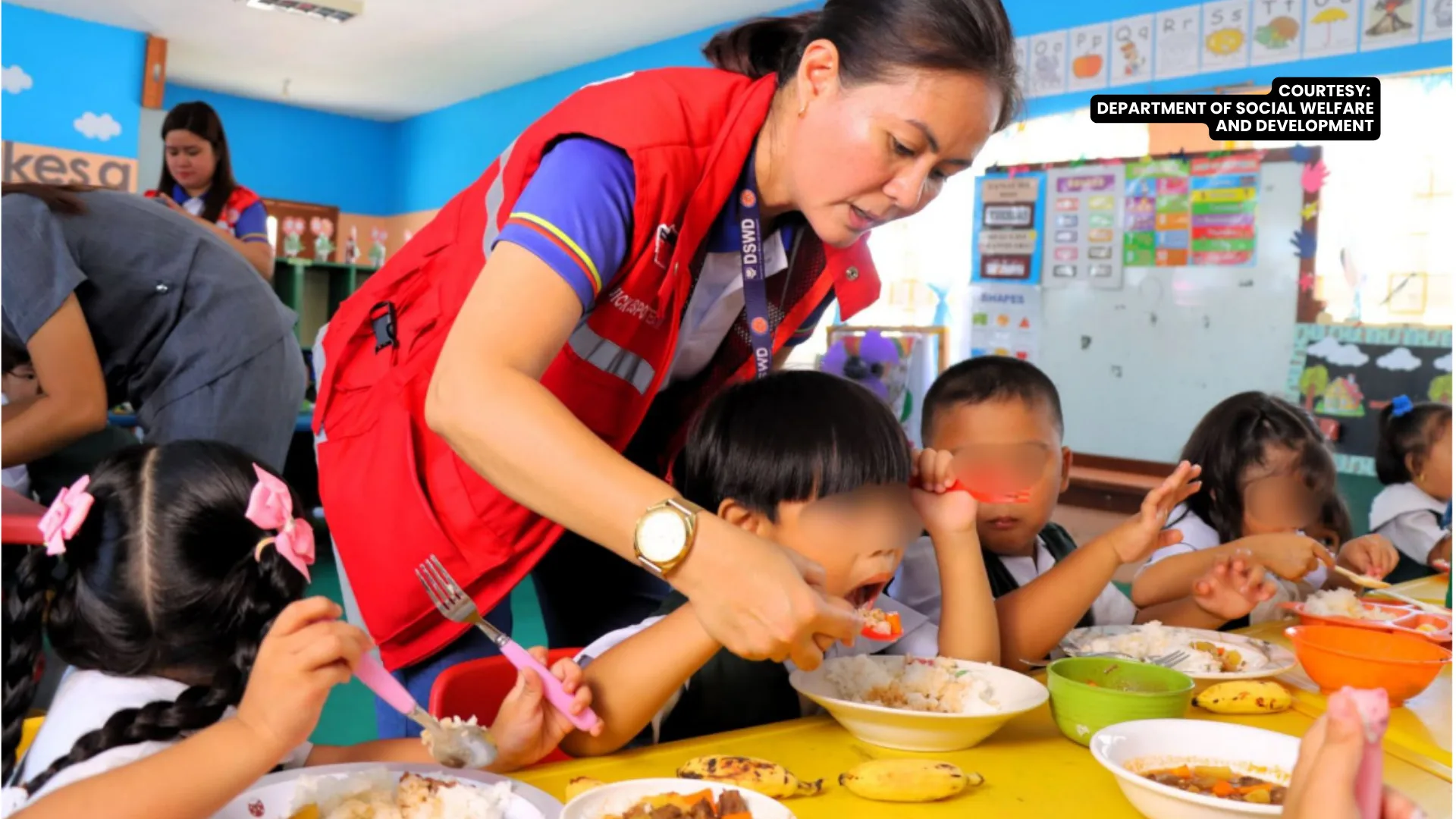
Rising child malnutrition in the Philippines has renewed calls in the House of Representatives for stronger nutrition interventions, after government data showed that stunting among Filipino children climbed to 25.3 percent in 2025.
The latest figures from the Department of Science and Technology–Food and Nutrition Research Institute (DOST-FNRI) underscore the urgency of passing the proposed National Nutrition Program, a measure already approved by the House on third and final reading, according to House Speaker Faustino “Bojie” G. Dy III.
He said the data validates the chamber’s move to prioritize House Bill No. 9466, which seeks to expand and strengthen government nutrition interventions for children, mothers, and other vulnerable groups.
He stressed that malnutrition goes beyond health outcomes and directly affects education and long-term economic productivity.
The Speaker, one of the principal authors of the measure, said hunger and undernutrition during early childhood have lasting effects on learning capacity and future opportunities.
The proposed legislation aims to transform Republic Act No. 11037, or the Masustansyang Pagkain Para sa Batang Pilipino Act, into a broader national framework that will cover learners from Kindergarten to Grade 3, undernourished students in higher grade levels, nutritionally at-risk pregnant learners, children with disabilities, Indigenous learners, and other vulnerable sectors.
It also expands interventions such as maternal nutrition support, micronutrient supplementation, milk feeding programs, sanitation and hygiene initiatives, nutrition education, and stronger linkages with local food producers.
Dy said the worsening nutrition indicators confirm long-standing warnings from educators, health workers, and community leaders that the country cannot address learning gaps without first confronting child hunger.
He emphasized that educational recovery is not possible without early nutritional intervention, noting that deficits in the early years cannot be corrected in later schooling stages.
The House leader also underscored the need for coordinated action among government agencies, local governments, schools, and health systems, aligning with calls from the Second Congressional Commission on Education (EDCOM II) for a more integrated response to the nutrition crisis.
The National Nutrition Program is among the priority measures identified under President Ferdinand Marcos Jr.’s legislative agenda, included in Proclamation No. 1318 calling for a special congressional session to fast-track key social protection, health, and education reforms.