
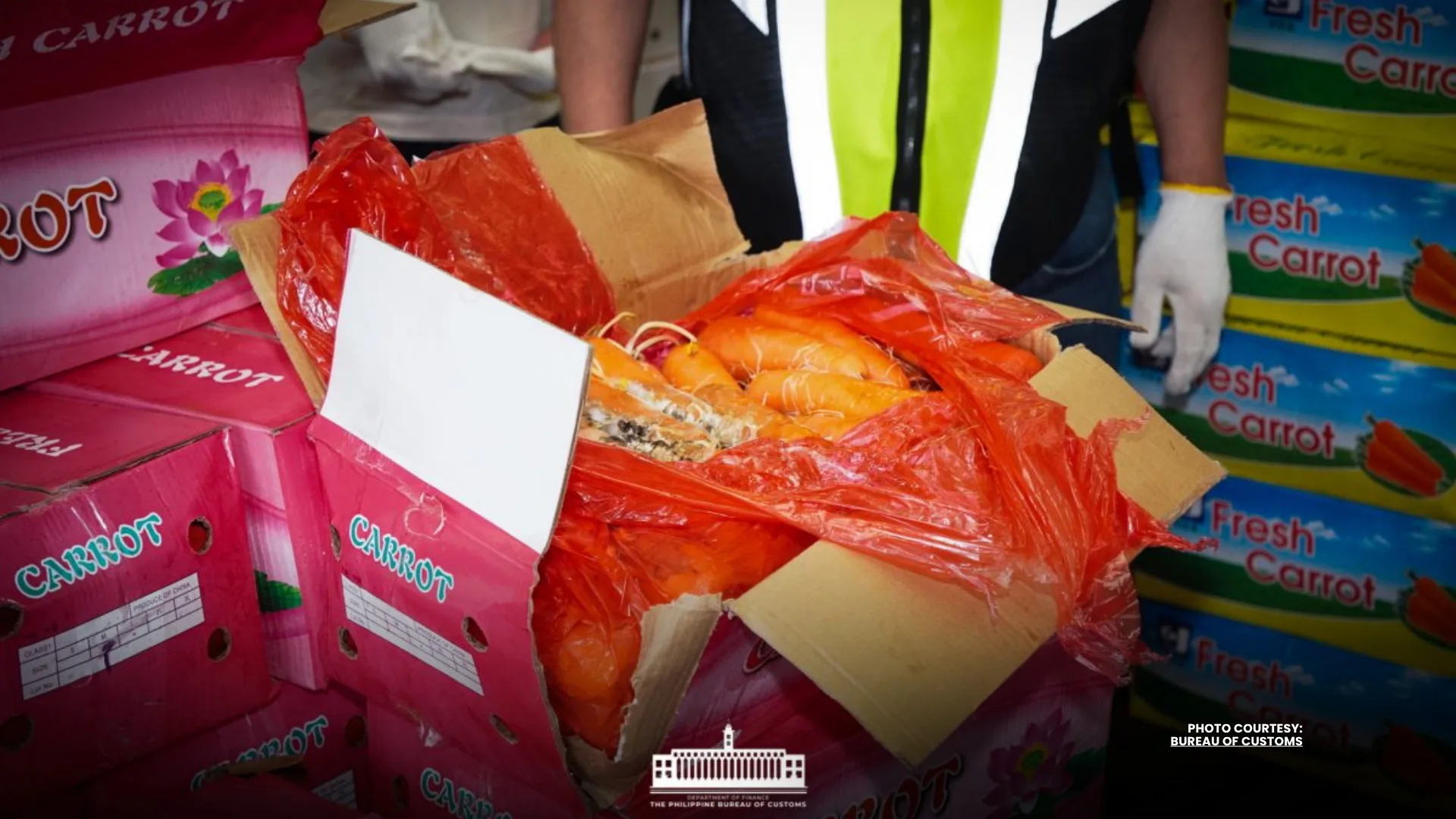
The Bureau of Customs (BOC) has intercepted more than P7.7 million worth of smuggled agricultural products concealed inside four container vans at the Port of Manila.
The shipments arrived in two batches on March 22 and March 25, 2026 and were declared as assorted food products, including egg noodles, flat noodles, soya wrappers, fish tofu, and wakame salad.
But acting on derogatory information, Customs personnel conducted a full physical inspection of the containers and discovered 12,909 boxes of fresh carrots and 1,452 boxes of egg noodles with an estimated value of P7.74 million.
The BOC said the shipment’s contents were misdeclared, allegedly to evade permit requirements and other regulatory processes covering agricultural imports.
Following the inspection, the bureau issued warrants of seizure and detention against the shipments, which were later forfeited in favor of the government.
Authorities said the importation violated Sections 117 and 1400 of the Customs Modernization and Tariff Act, in relation to Section 1113 of the same law, as well as Republic Act No. 10845, or the Anti-Agricultural Smuggling Act of 2016.
The inspection was led by Customs Enforcement Group Deputy Commissioner Nolasco K. Bathan and Intelligence Group Deputy Commissioner Emmanuel Luis D. Licup. Port of Manila District Collector Rizalino Jose C. Torralba was also present.
Representatives from the Department of Agriculture, including Assistant Secretary Willie Ann M. Angsiy, witnessed the opening of the containers.
BOC Commissioner Ariel Nepomuceno warned that the bureau will continue to go after importers using false declarations and other deceptive schemes to bring in agricultural products illegally.
“Hindi natin hahayaan na makalusot ang mga shipment na gumagamit ng misdeclaration at iba pang mapanlinlang na paraan para makaiwas sa tamang pagbabayad ng buwis at mga kinakailangang permit,” Nepomuceno said.
He added that the BOC will further intensify operations against agricultural smuggling to protect government revenue and safeguard the livelihood of local farmers.