
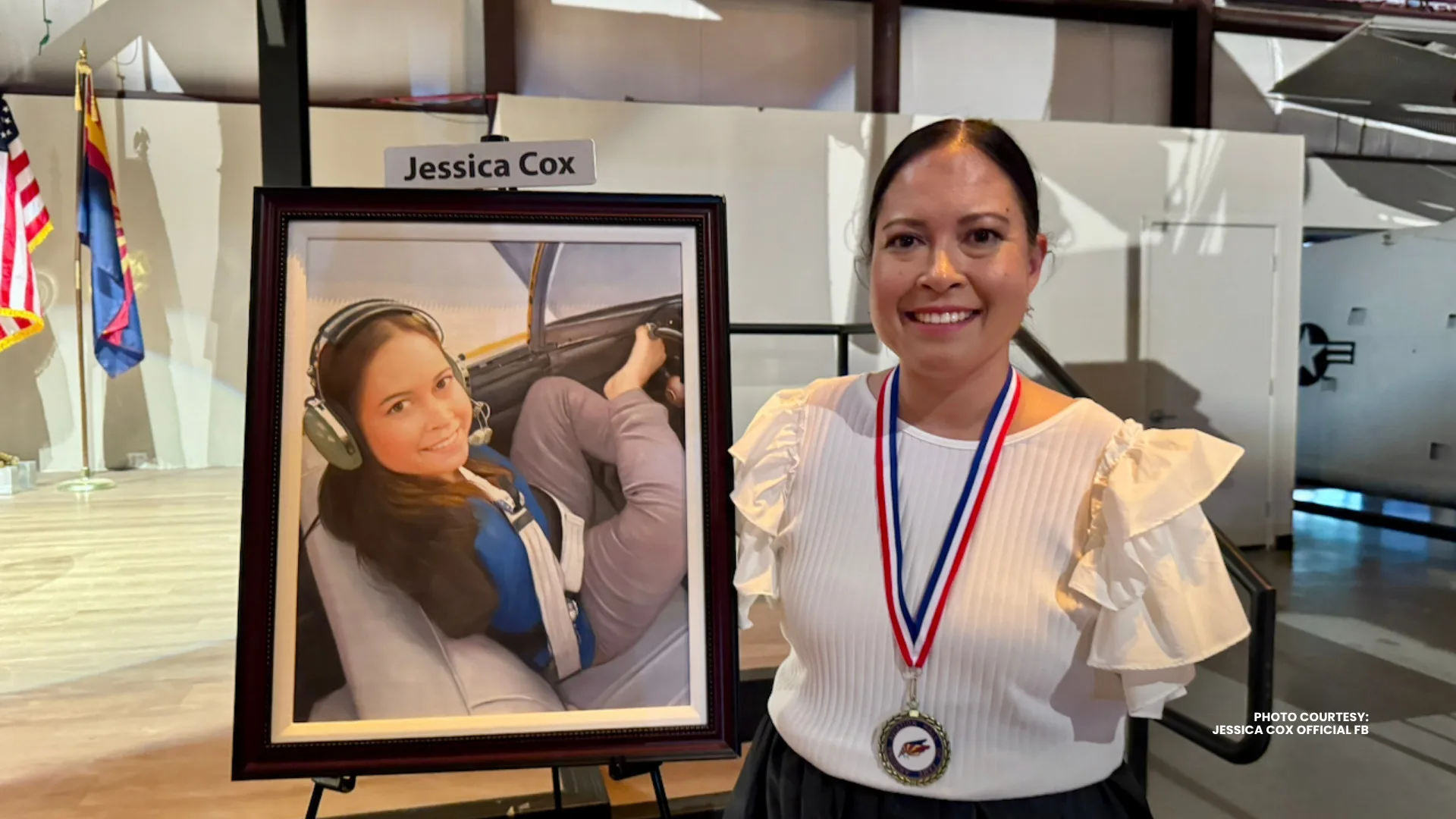
Filipino American pilot and disability rights advocate Jessica Cox has spent much of her life proving that limits are often smaller than they seem.
Born without arms, Cox learned early to use her feet the way others use their hands. She typed, drove, swam, trained in martial arts, and eventually did what many once thought impossible: she learned to fly.
Now, the Arizona-based trailblazer has added another milestone to her long list of firsts after being inducted into the Arizona Aviation Hall of Fame at the Pima Air & Space Museum in Tucson.
Cox, recognized as the world’s first licensed armless pilot, was honored during the May 15 ceremony alongside aviation figures Frank Schiel Jr. and James K. Johnson.
Her induction recognizes not only her place in aviation history, but also her continuing work to expand public understanding of disability, accessibility, and inclusion through the Rightfooted Foundation International.
In 2008, Cox earned her pilot certificate and made history by flying an Ercoupe, a light aircraft designed without rudder pedals. That design allows her to control the yoke and throttle using only her feet.
What began as a childhood dream became a global symbol of possibility. Cox has since brought her story to audiences around the world, encouraging children, families, and aspiring pilots to look beyond disability and focus instead on ability, training, and adaptation.
Her husband, Patrick Chamberlain, who also serves as inclusive engineering director for the Rightfooted Foundation, said Cox’s Hall of Fame recognition reflects both her achievements in the cockpit and the impact of her advocacy.
Cox continued pushing boundaries through the “Impossible Airplane,” a custom aircraft project designed to be flown entirely with her feet. The project aims to inspire children who are often told their dreams are beyond reach.
Her story has also been featured in the award-winning documentary “Right Footed,” which follows her journey as a pilot, speaker, advocate, and Filipino American woman who turned perseverance into purpose.
Cox has credited her Filipino heritage, particularly the values taught by her mother, for helping shape her resilience.
“It did not allow me to give up,” Cox said in a previous film screening, speaking about the spirit of hard work and perseverance she learned from her family.
Beyond aviation, Cox is also a fourth-degree black belt in Taekwondo, another achievement that reflects the same discipline that carried her from childhood challenges to the pilot’s seat.
For Cox, the message behind every milestone remains simple: disability does not mean inability.
Her Hall of Fame induction now places that message inside one of Arizona’s most respected aviation institutions, where her story will stand alongside pilots, veterans, and aerospace pioneers who helped shape flight history.
From learning to reach for toys with her feet as a child to steering an airplane through the sky, Cox has turned adaptation into achievement and achievement into advocacy.