
Public administration standards, compliance enforcement, and institutional service delivery benchmarks have come under strict regulatory review as oversight authorities move to eliminate redundant identity verification requirements and enforce public service mandates.
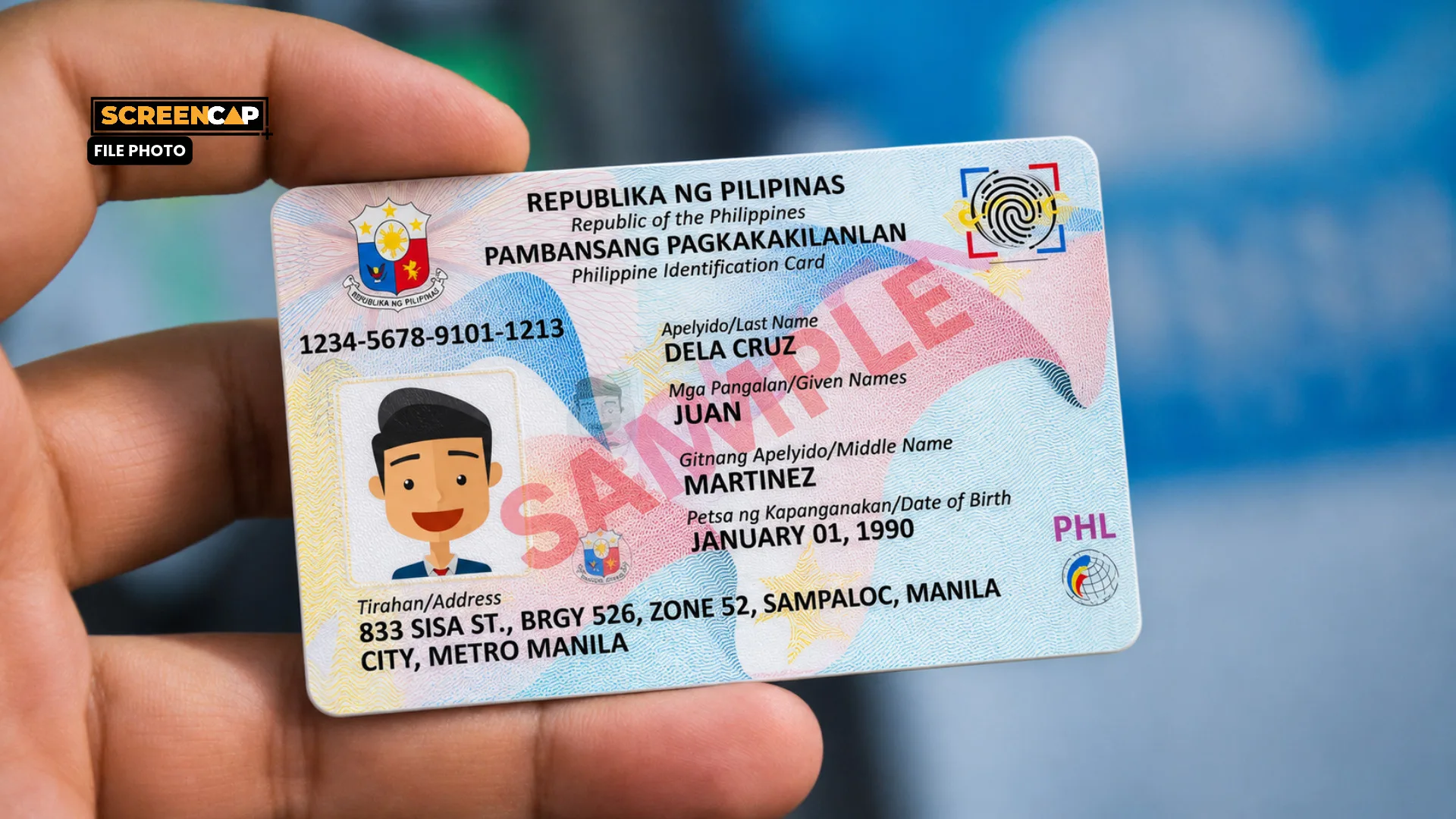
The Anti-Red Tape Authority (ARTA) has reminded government agencies that requiring two valid identification cards for public transactions is no longer allowed, saying one government-issued ID, particularly the National ID, is sufficient.
In an interview on GMA’s Unang Hirit on Friday, ARTA Director General Secretary Ernesto Perez said the agency had already addressed the practice of requiring two valid IDs.
“We have acted on the requirement for two valid IDs. That is no longer allowed. One valid ID is already sufficient, especially the National ID, which is already considered a valid ID,” Perez said.
He urged the public to report government agencies, including banks, that continue to require two valid IDs, assuring complainants that ARTA would act on their concerns.
“If you still experience this, our fellow Filipinos, whether at any government agency or even banks, requiring two valid IDs, please file a complaint, and you can expect that we will resolve it,” Perez also said.
Perez stressed that requiring two valid IDs should already be a “thing of the past,” reiterating that only one valid ID is necessary.
The ARTA chief also addressed other concerns raised by netizens regarding government services, including calls for government offices to operate on weekends to accommodate workers who are unable to process transactions on weekdays.
Perez said some government agencies and local government units have websites or online portals where the public can file complaints even during weekends.
For those dissatisfied with automated or AI-powered virtual assistants, he advised them to send their complaints directly to complaints@arta.gov.ph.
Perez also addressed complaints about expensive photocopying services inside government offices.
He said government agencies may provide photocopying services for public convenience, but the corresponding fees must be clearly stated in their Citizen’s Charter.
“Providing a photocopy machine is part of the services of a government agency for the convenience of the public. They should declare this in their Citizen’s Charter, including the fixed charge, such as P1, P2 or P5 per copy. However, if it is not indicated in their Citizen’s Charter, it is prohibited,” Perez also explained.
On complaints about hot waiting areas, long queues and the lack of shelters, Perez said ARTA had issued a circular through its Compliance Monitoring and Evaluation Office (CMEO) requiring government agencies to provide comfortable and proper waiting areas.
Government offices should also have public assistance and complaints desks, as well as dedicated lanes for senior citizens and persons with disabilities (PWDs).
Perez also added that government employees are also prohibited from being rude to the public under the Code of Conduct and Ethical Standards for Public Officials and Employees.
“Under our Constitution, public service is a right of every citizen, and the government is obligated to provide proper service to our fellow Filipinos,” Perez also said.
The ARTA chief also reported a decline in the number of fixers, particularly at the Land Transportation Office (LTO).
ARTA is mandated to monitor government agencies and ensure that public services are delivered efficiently, properly and without unnecessary difficulty for citizens.