
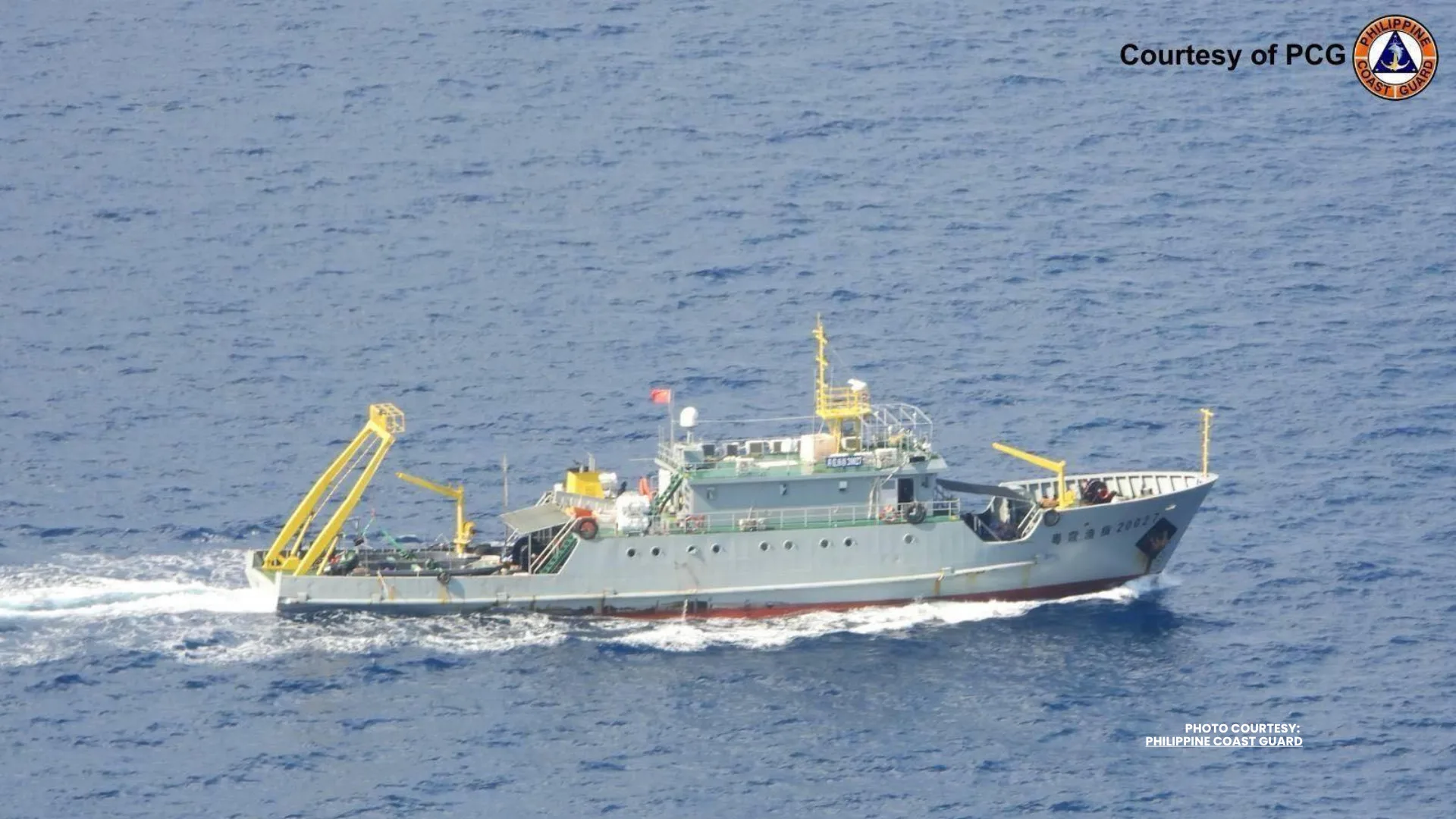
The Armed Forces of the Philippines (AFP) confirmed on Tuesday that there are no verified signs indicating a Chinese survey ship executed physical seabed drilling around Scarborough Shoal during its nearly month-long deployment inside the West Philippine Sea.
Rear Admiral (res.) Roy Vincent Trinidad, the military’s designated spokesperson for West Philippine Sea operations, clarified that the research vessel Haiyang Dizhi Shihao focused on carrying out hydrographic research and maritime surveillance activities instead of seabed extraction.
“The presence and the track would indicate that they were conducting surveillance or research activities,” Trinidad stated during a media briefing at Camp Aguinaldo.
Addressing persistent rumors regarding resource extraction, he added, “As to any report of drilling activities, there was none that was confirmed. Nor were there any reports given by our monitoring capabilities.”
According to tracking records from the Philippine Coast Guard, the survey vessel first crossed into the country’s 200-nautical-mile Exclusive Economic Zone (EEZ) on August 10. The ship maneuvered into the vicinity of Scarborough Shoal on August 11 and remained operating nearby until September 8, finally exiting the Philippine EEZ on September 9.
Trinidad explained that physical drilling requires specific operational positioning that was not observed during the vessel’s movement pattern.
“To be able to conduct drilling activities, the ship would have to be stationary and not moving,” Trinidad noted, stressing that the vessel maintained continuous transit. “To be able to conduct drilling activities, it should be stationary.”
He reaffirmed that defense monitoring assets maintained active coverage throughout the ship’s operational window, stating that “sensors that we have in place” continue to supply defense leadership with “appropriate reports” regarding regional movements.
“In coordination with other government agencies, no such (drilling) activity has been monitored,” Trinidad added.
Scarborough Shoal, locally known as Bajo de Masinloc, sits roughly 124 nautical miles off the coast of Zambales. Beijing seized de facto physical control of the feature following a high-tension standoff with Manila in 2012, subsequently restricting Filipino fishermen from accessing their traditional fishing grounds within the inner lagoon.
Simultaneously, defense authorities reported tracking 48 Chinese naval and coast guard assets deployed across four strategic West Philippine Sea features between September 8 and 14. Scarborough Shoal saw the heaviest concentration with 19 vessels, comprising 15 coast guard units and four navy ships. Elsewhere, 12 Chinese vessels were recorded near Philippine-occupied Pag-asa Island, eight coast guard ships guarded Ayungin Shoal, and seven vessels were logged around unoccupied Escoda Shoal.