
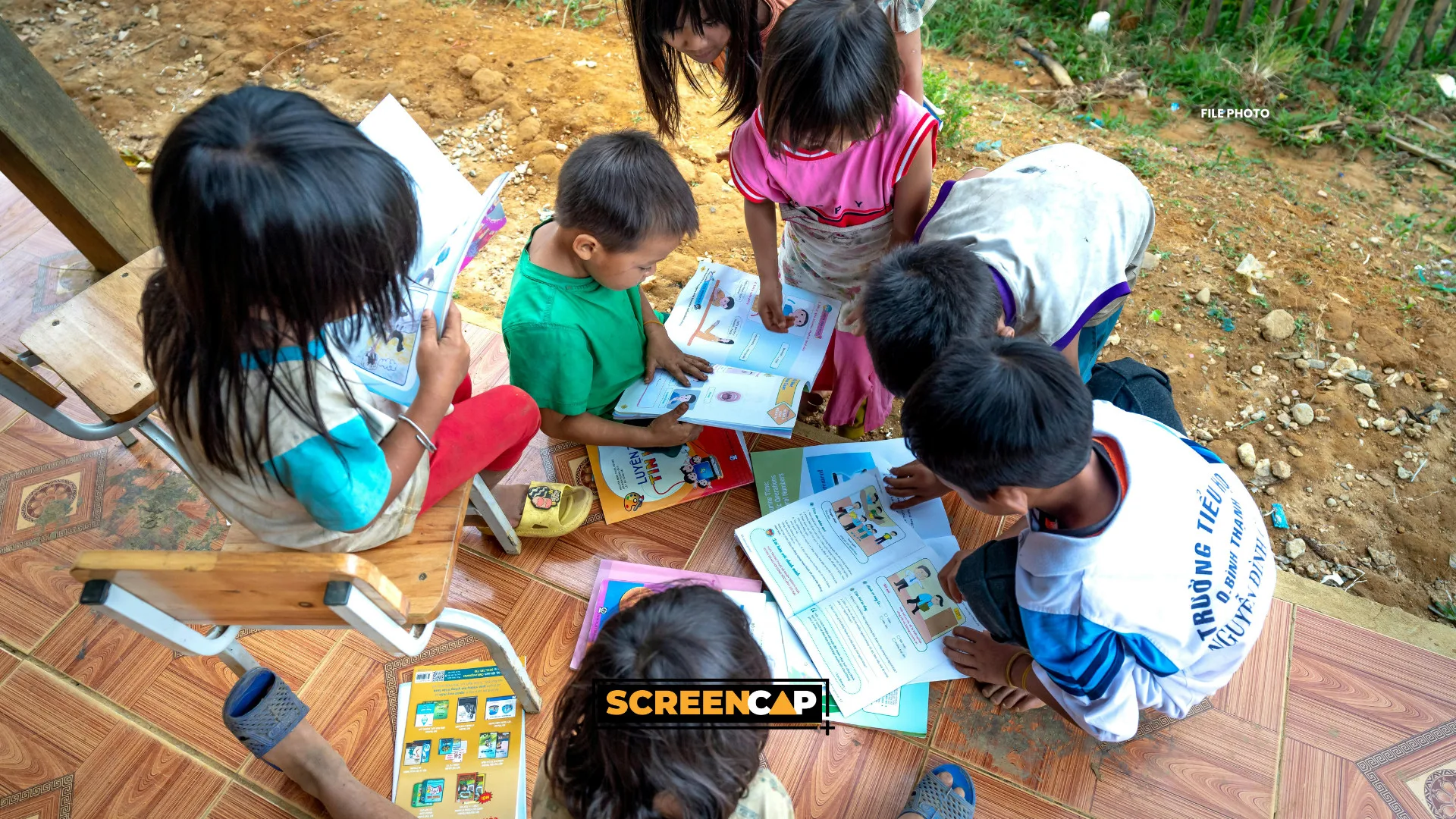
A deepening literacy crisis among Filipino students has prompted renewed calls for urgent reforms in basic education, with congressional education officials warning that too many learners are advancing through school without mastering foundational reading skills.
During the Second Congressional Commission on Education briefing on May 25, officials cited findings showing that many learners remain unable to read by Grade 3, while one in four students at every grade level struggles with reading. The situation worsens in Key Stage 3, covering Grades 7 to 10, where more than 80 percent of students were found to be struggling readers.
The figures were even more alarming in senior high school, with 87 percent of Grade 11 students reportedly unable to read independently.
“This education issue is a national emergency,” Senate President Pro Tempore Loren Legarda said during her first EDCOM II briefing as chairperson of the Senate Committee on Basic Education.
Education reform efforts discussed during the briefing focused on strengthening early-grade reading programs, improving teacher training, ensuring timely delivery of quality learning materials, and bringing culture and history more deeply into foundational learning.
Officials also pushed for a stronger reading culture, including support for local writers, publishers, bookstores, and learning materials that can help children build literacy at an early age.
“Gusto kong bumalik tayo sa pagbabasa ng aklat. Let a thousand bookstores and writers bloom. In doing so, we educate our youth, and at the same time, we also sustain our writers, publishers, and creators,” Legarda said.
The briefing also raised concerns over whether students are developing sufficient understanding of Philippine history, culture, and heritage. One proposal involves strengthening cultural mapping programs with the National Commission for Culture and the Arts, with teachers helping document and teach the history and identity of their own communities.
“By Grade 5, dapat kaya na nilang ipaliwanag ang mga nagawa ni Rizal at ang kanyang mga adhikain. Mahalaga ang kasaysayan at kultura, dapat ito ay buhay sa ating mga paaralan,” the legislator said.
Lawmakers also noted that school observances mandated by law need not result in class suspensions, saying these can instead be integrated into classroom hours to help students learn history, culture, and civic values without disrupting instruction.
Among the reforms cited was the ARAL Law, or Republic Act No. 12028, which seeks to address learning gaps through academic recovery programs. Other proposed measures include amendments to the Expanded Government Assistance to Students and Teachers in Private Education Act, the Classroom Building Acceleration Program, and the Masustansyang Pagkain Bill, which links nutrition to improved learning and cognitive development.
Education officials stressed that literacy, nutrition, classroom access, teacher support, and cultural grounding must be treated as connected priorities rather than separate concerns.
“The solutions are within our reach, but they require urgency, coordination, and sustained political will. We must ensure that every Filipino child can read, understand, and participate meaningfully in nation-building,” she said.
The EDCOM II briefing underscored the scale of the country’s learning crisis and the need for coordinated action to ensure that Filipino children are not merely promoted from one grade level to another, but are equipped with the reading, comprehension, and civic foundations needed to succeed in school and beyond.