
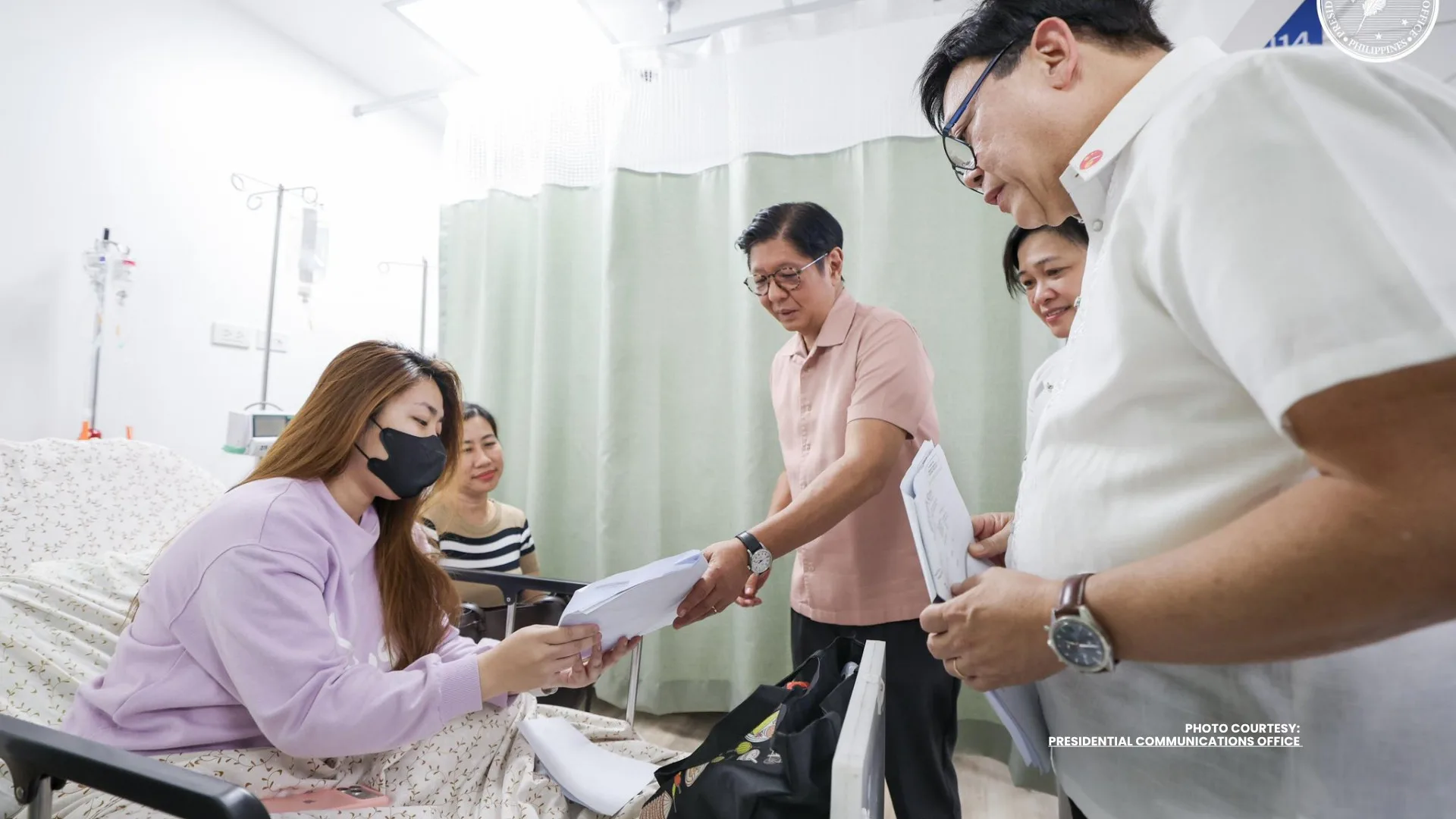
President Ferdinand Marcos Jr. visited The Medical City in Pasig City to assess how expanded Philippine Health Insurance Corp. (PhilHealth) benefits are helping improve Filipinos’ access to healthcare services.
Joining the President during the hospital visit was PhilHealth President and Chief Executive Officer Dr. Edwin Mercado, who accompanied him in inspecting facilities and programs supported by the state health insurer’s expanded coverage packages.
Hospital officials welcomed the delegation led by The Medical City President and Group CEO Dr. Stuart Bennett, who toured them around the Alfredo R.A. Bengzon Patient Access Ward and the hospital’s Emergency Department.
The visit focused on the implementation of enhanced PhilHealth benefits, including expanded maternity care coverage and outpatient emergency care packages aimed at reducing healthcare costs for patients.
During the walkthrough, Marcos and Mercado also met with patients and their families, who shared how PhilHealth assistance helped ease the financial burden of hospitalization and medical treatment.
“The Medical City remains committed to supporting initiatives that improve access to quality healthcare for Filipinos,” Bennett said.
“Through strengthened partnerships with PhilHealth and the government, we are able to extend meaningful healthcare support to more patients and families,” he added.
Officials also discussed efforts to further improve access to critical healthcare services, particularly maternal healthcare and emergency treatment, which remain among the government’s priority health programs.
The Alfredo R.A. Bengzon Patient Access Ward was established to provide more affordable and inclusive healthcare services, while the hospital’s Emergency Department continues to deliver advanced emergency care supported by specialized medical teams and modern facilities.
The Medical City’s emergency services are accredited by the Joint Commission International.
The visit highlighted the government’s continuing efforts to strengthen healthcare accessibility through partnerships between public institutions and private healthcare providers.