
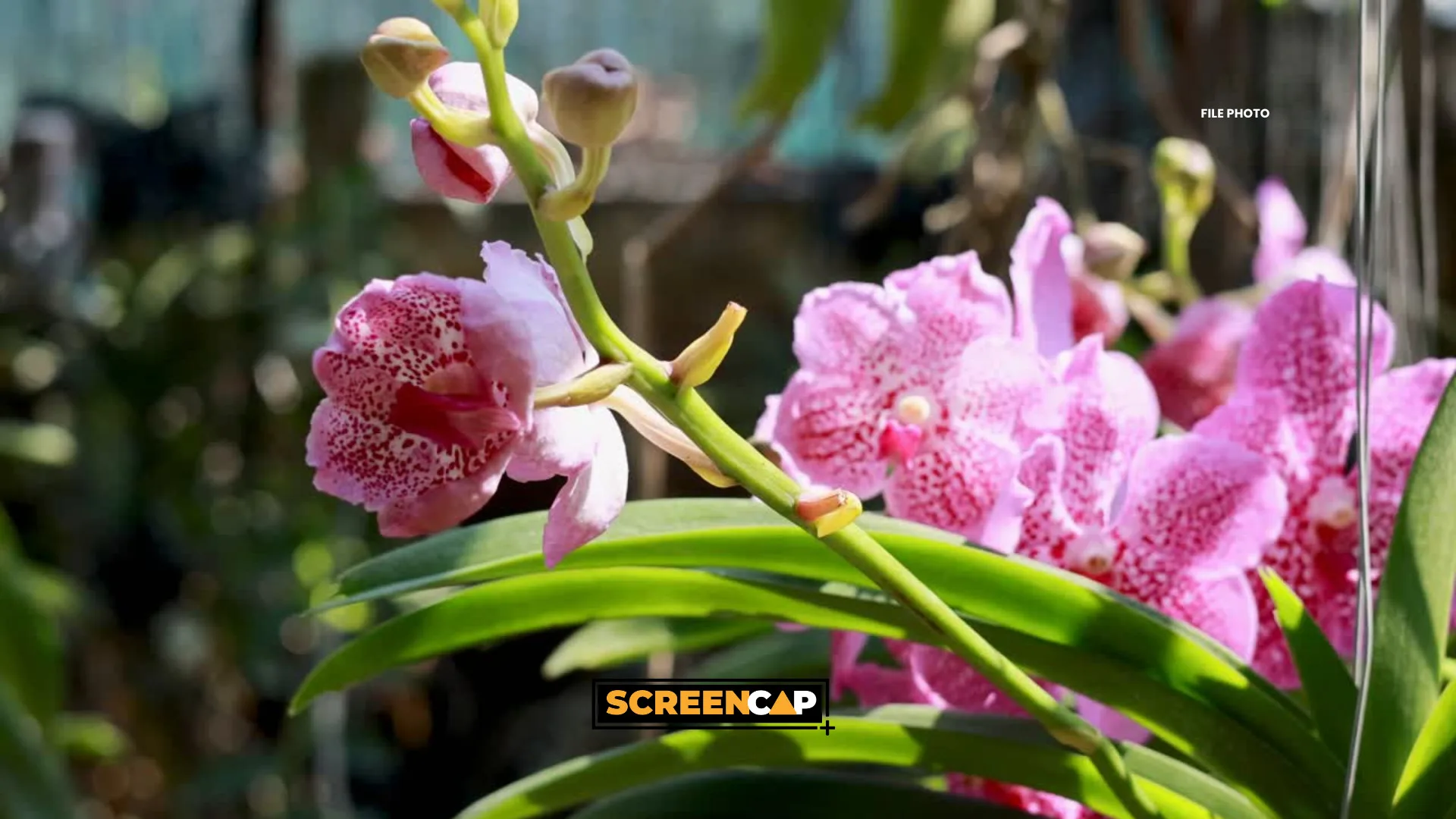
A bill seeking to declare the Waling-waling (Vanda sanderiana) as the National Orchid of the Philippines has been filed in the Senate, underscoring growing calls to protect one of the country’s most iconic and endangered endemic flowers.
The measure aims to strengthen conservation efforts for the rare orchid, which faces threats from deforestation, habitat destruction, and the illegal collection of wild specimens for commercial and decorative use.
Senator Loren Legarda, who sponsored the proposal, said the initiative is part of a long-standing effort to elevate the Waling-waling as a national symbol and promote greater appreciation for Philippine biodiversity.
“This is not the first time that this representation has sought to elevate the Waling-waling to the level of a national symbol,” the senator said during her sponsorship speech.
She recalled filing a similar measure in 2012 that proposed recognizing the Waling-waling as an additional national flower alongside the Sampaguita. The proposal was approved by both chambers of Congress during the 15th Congress but was later vetoed.
Known as the “Queen of Philippine Orchids,” the Waling-waling is prized for its rarity, vibrant appearance, and cultural significance. The flower naturally grows in the forests of Davao, Cotabato, and Zamboanga and is regarded as one of the Philippines’ most valuable orchid species.
“The Waling-waling is endemic to the Philippines. It grows naturally in the forests of Davao, Cotabato, and Zamboanga. Yet, its survival is under threat from deforestation, from habitat loss, and from the unchecked harvesting of wild specimens for commercial and decorative purposes,” she remarked.
Under the proposed bill, the Department of Environment and Natural Resources (DENR) would lead the conservation, protection, and propagation programs for the species, while the National Museum of the Philippines would spearhead efforts to document and promote its scientific, cultural, and historical importance.
“Our national symbols are instruments of education, of unity, and of pride. As we deepen our understanding of who we are, we must also refine and enrich the symbols that represent us,” Legarda said.
She added that recognizing the Waling-waling as a national symbol also sends a strong message about the country’s commitment to preserving its natural heritage for future generations.
“Sa ating pagbibigay ng karapat-dapat na pagkilala sa Waling-waling, nagbibigay rin tayo ng malinaw na pahayag, na pinahahalagahan ng Pilipinas ang ating likas na yaman, ipinagmamalaki natin ang mga bagay na tunay na atin, at nakatuon tayo sa pangangalaga nito para sa mga susunod na henerasyon,” she said.