
The Philippines, United States, Japan, and Canada carried out a coordinated maritime strike exercise in Paoay, Ilocos Norte as part of Exercise Balikatan 41-2026, highlighting the growing interoperability and defense cooperation among allied forces.
The maritime strike activity, held Wednesday at Culili Point, involved combined air, naval, and ground assets from participating countries in a large-scale demonstration of precision strike and maritime defense operations.
The exercise centered on the decommissioned Philippine Navy vessel BRP Quezon (PS70), which served as the target ship during the live-fire operation.
For the first time in Balikatan history, the Japan Ground Self-Defense Force deployed its Type 88 Surface-to-Ship Missile System, successfully striking the target vessel as part of the coordinated drill.
The Armed Forces of the Philippines (AFP) deployed several military assets during the exercise, including BRP Miguel Malvar (FFG6), BRP Antonio Luna (FFG15), FA-50 fighter jets, and A-29 Super Tucano aircraft.
The United States reinforced the operation with P-8A Poseidon aircraft, MQ-9 systems, HIMARS rocket launchers, NMESIS anti-ship missile systems, and K-1000 equipment, while Canada contributed the warship HMCS Charlottetown.
Japan also provided intelligence, surveillance, and reconnaissance support through its ScanEagle unmanned aerial system.
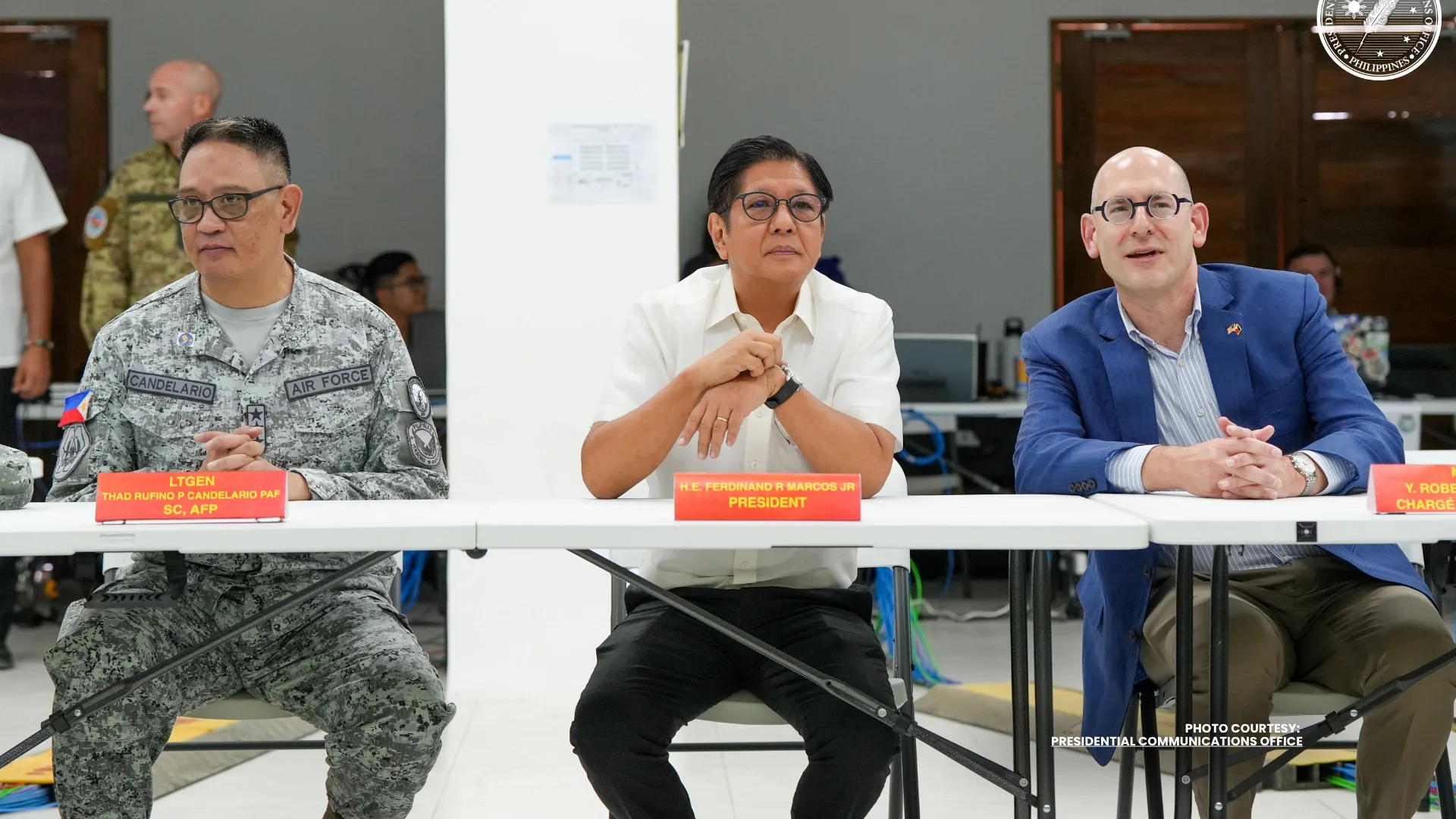
President Ferdinand Marcos Jr., AFP Chief of Staff Romeo Brawner Jr., and US Chargé d’Affaires Y. Robert Ewing monitored the exercise from the command center at Camp Aguinaldo.
Meanwhile, Defense Secretary Gilberto Teodoro Jr., Japanese Defense Minister Shinjiro Koizumi, and Japanese Ambassador Kazuhiko Endo observed the drills on-site in Ilocos Norte, alongside international defense observers.
Balikatan spokesperson Col. Dennis Hernandez said the successful execution of the maritime strike exercise demonstrated the increasing level of interoperability among allied and partner forces.
According to Hernandez, the operation showcased coordinated planning, information-sharing, and the integration of maritime, air, and ground capabilities in a complex operational environment.
He added that the activity contributes to strengthening collective maritime security and supports efforts to maintain a stable and rules-based Indo-Pacific region.