
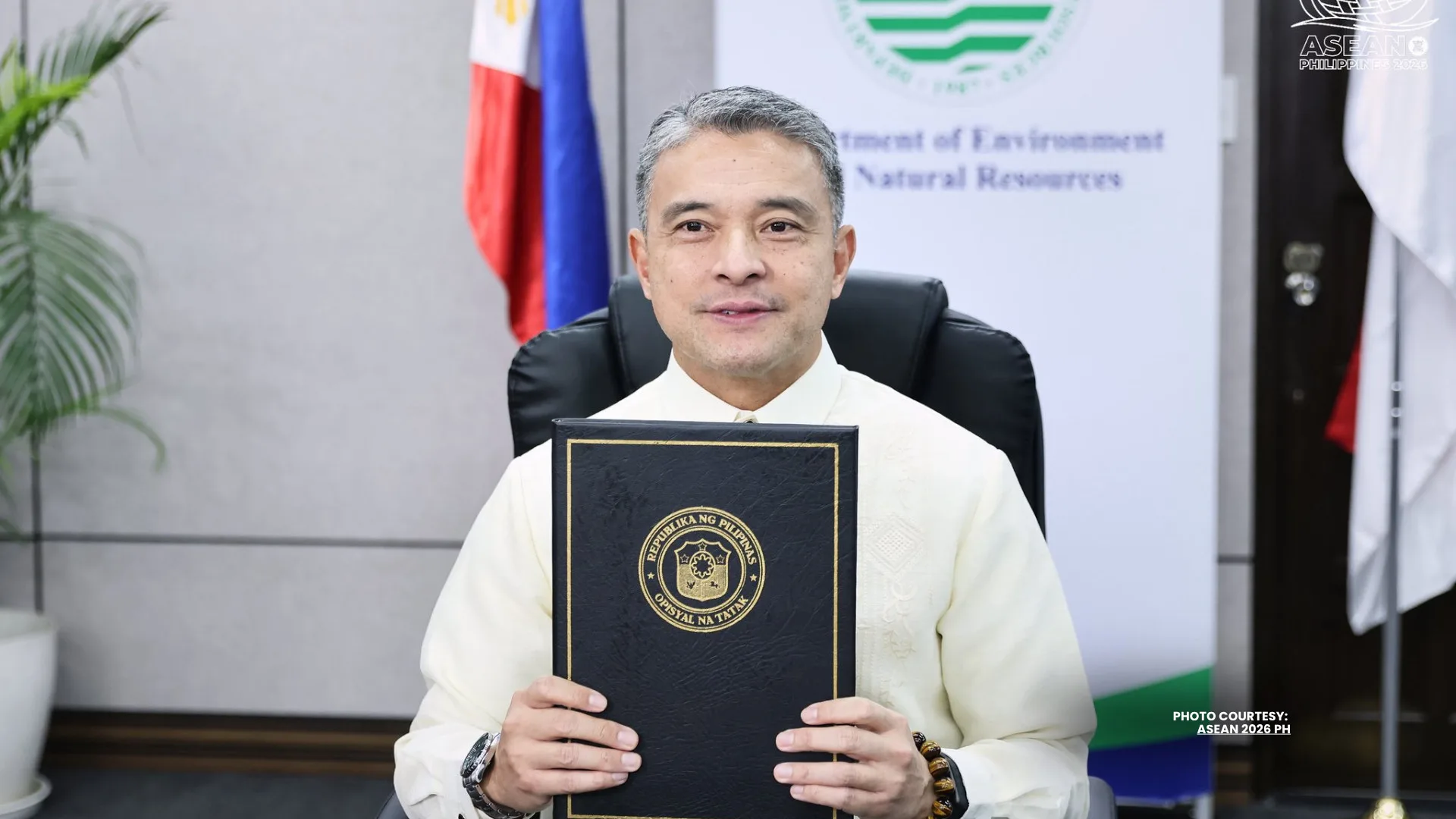
The Philippines and Singapore have formalized a new climate partnership aimed at boosting carbon market cooperation and accelerating low-carbon investments across the region.
The agreement, signed on April 30, 2026 during the ASEAN Climate Week, establishes a bilateral framework under Article 6.2 of the Paris Agreement. It allows both countries to collaborate on emissions reduction projects and trade carbon credits known as Internationally Transferred Mitigation Outcomes (ITMOs).
Environment Secretary Juan Miguel T. Cuna and Singapore Sustainability Minister Grace Fu led the signing, which sets out rules for approving joint mitigation projects, authorizing carbon credit transfers, and ensuring transparency in line with global climate standards.
At the core of the deal is the creation of a joint oversight body that will supervise implementation, maintain a list of approved carbon crediting systems, and ensure compliance with reporting requirements under international frameworks and the Sustainable Development Goals.
Cuna said the partnership reflects growing trust between the two countries and positions the Philippines to tap new sources of climate financing. He noted that sectors such as renewable energy, waste management, methane reduction, and climate-smart agriculture stand to benefit from increased investment.
Fu, for her part, highlighted the agreement as a way to channel funding into impactful projects in the Philippines while opening opportunities for businesses and communities to participate in emerging carbon markets.
Officials said the agreement signals the country’s readiness to engage in high-integrity carbon trading, backed by strengthened governance and transparency systems. It is also expected to enhance the Philippines’ competitiveness as a destination for green investments in Southeast Asia.
Beyond national-level gains, the partnership is seen as a mechanism for delivering direct benefits to local communities. Revenues from carbon credit transactions could support reforestation efforts, renewable energy deployment, and climate resilience projects, particularly in vulnerable areas.
The deal is also being viewed as a potential template for other ASEAN members seeking to develop similar arrangements. Officials said it demonstrates how bilateral cooperation can be used to build a credible regional carbon market.
Following the signing, both governments are set to activate the joint committee, integrate their national carbon registries, and open the process for approving mitigation projects. These steps are expected to allow private sector players and local stakeholders to begin participating in cross-border climate initiatives under the agreement.