
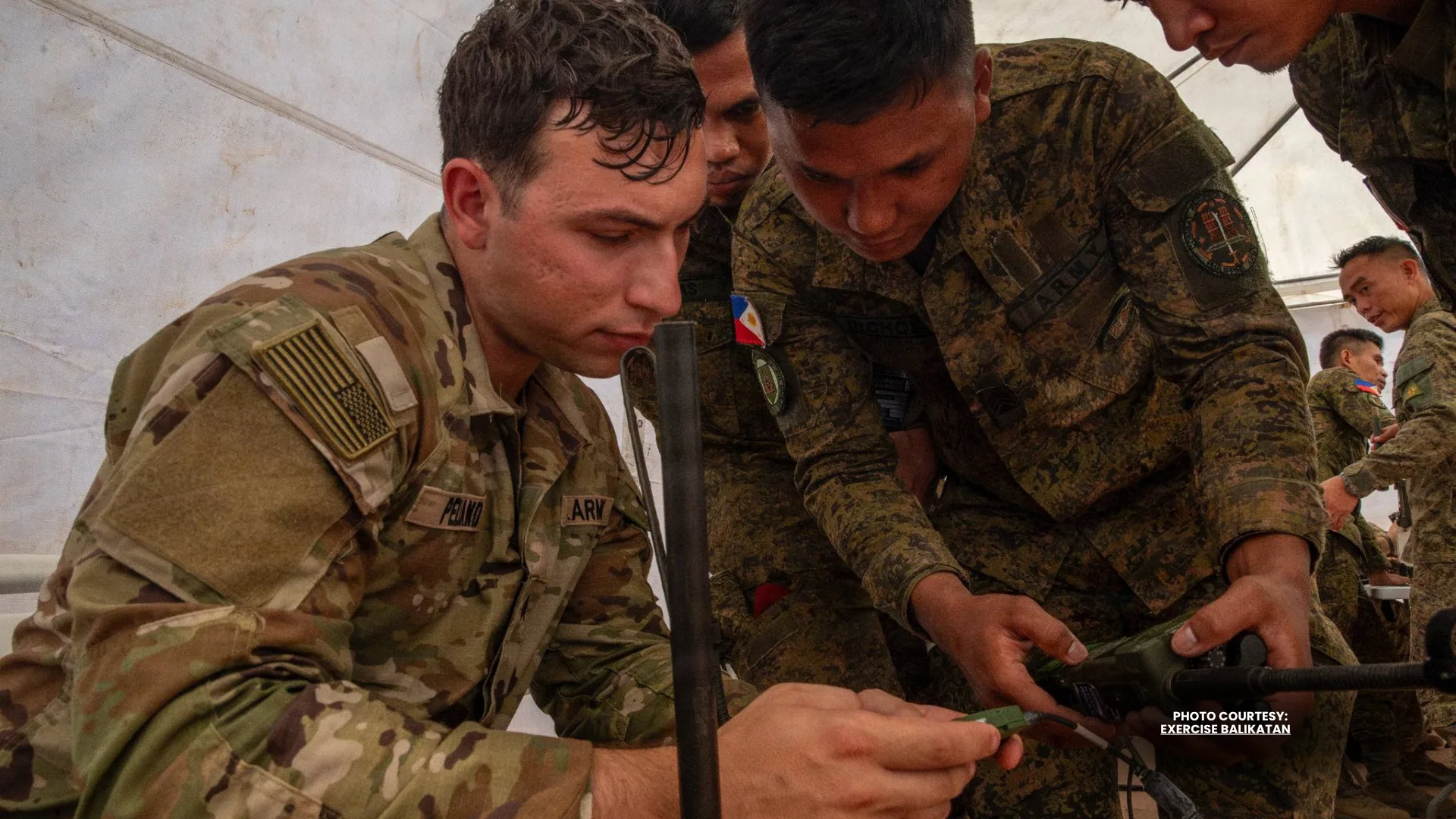
Troops from the Philippines, the United States, Australia, and New Zealand repelled a simulated amphibious assault during a live-fire exercise under Exercise Balikatan in Palawan.
According to the Combined Joint Information Bureau (CJIB), the counter-landing drill began with intelligence, surveillance, and reconnaissance assets detecting a mock enemy vessel approaching a shoreline facing the West Philippine Sea.
As the simulated threat advanced, High Mobility Artillery Rocket Systems were deployed to strike targets near the beachhead. The scenario escalated as enemy assault vehicles and fast boats attempted to breach the coast, prompting a coordinated response from allied forces using mortars, Stinger missiles, and anti-armor systems such as Javelin and tube-launched, optically tracked, wire-guided missiles.
The exercise culminated in a final defensive stand, with combined forces delivering direct fire to neutralize remaining targets and secure the shoreline.
CJIB said the drill demonstrated the ability of allied forces to synchronize land and air operations, make real-time decisions, and respond to a fast-changing battlefield. It added that troops achieved seamless coordination through a multi-domain command and control system integrating intelligence and precision firepower.
The Palawan-based exercise is among the key activities of this year’s Balikatan drills, running from April 20 to May 8 and involving thousands of troops from allied nations.
The training comes amid ongoing tensions in the West Philippine Sea, where China has asserted sweeping claims and has been accused of harassing Philippine vessels and fishermen in contested waters.
U.S. Marine Corps Col. G.J. Flynn III said success in such operations depends on how well capabilities are integrated, not just on individual assets. He added that operating side by side in defensive scenarios strengthened trust among allied troops.
Armed Forces of the Philippines spokesperson Col. Dennis Hernandez, also spokesperson for Balikatan, said the drill highlights the importance of joint operations in defending coastlines through speed, precision, and coordination.
New Zealand Army Capt. Will Hutchinson said the exercise enhanced interoperability with partner forces, while Australian Army Lt. Col. Benjamin Woolmer emphasized the value of “shoulder-to-shoulder” cooperation among regional allies.
Military officials said the exercise not only sharpened combat readiness but also reinforced cooperation among allied nations in addressing shared security challenges.