
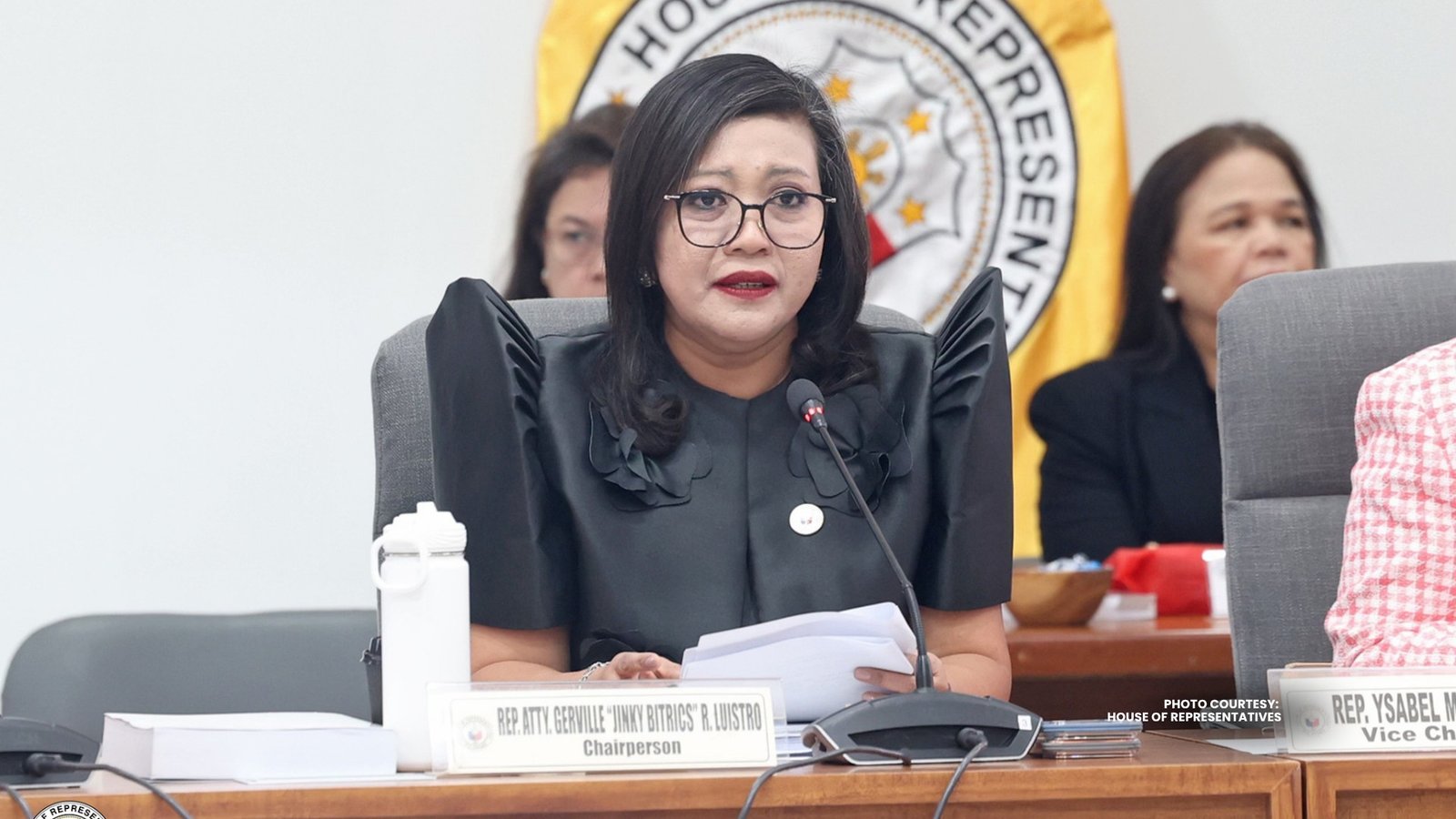
Batangas Rep. Gerville Luistro said the House Committee on Justice did not violate any law in disclosing Anti-Money Laundering Council (AMLC) findings, dismissing a complaint filed by Vice President Sara Duterte’s husband as an attempt to block evidence in impeachment proceedings.
In a radio interview, Luistro, who chairs the panel, said the committee stands by its actions during hearings where AMLC data on alleged suspicious transactions was presented.
“We maintain the position that we did not violate any law,” she said.
Luistro was referring to the complaint filed by lawyer Manases Carpio against lawmakers and financial regulators, including officials of the Bangko Sentral ng Pilipinas and the AMLC, over the disclosure of financial reports during the hearings.
The AMLC had earlier submitted reports flagging hundreds of “covered” and “suspicious” transactions linked to Vice President Duterte and her husband, amounting to billions of pesos. The documents are now part of the evidence under review by the House panel.
Luistro said the complaint appears aimed at challenging the use of these documents in the inquiry.
“These are attempts to suppress the disclosure of this information,” she said.
She added that the committee exercised caution before allowing the information to be presented publicly, noting that members carefully considered legal boundaries.
Luistro explained that the panel did not subpoena banks or directly obtain bank records, which are protected under the Bank Secrecy Law. Instead, it relied on AMLC reports submitted under the agency’s mandate to flag suspicious transactions.
“What the AMLC reports are not bank account details, but covered and suspicious transactions,” she said.
She said lawmakers chose what she described as a “safer approach” to avoid legal issues, even if they had the authority to compel bank records.
“We could have subpoenaed banks, but we chose not to. We relied on documents from other government agencies,” she said.
Luistro also said impeachment proceedings are grounded in constitutional accountability mechanisms, which allow certain exceptions to confidentiality rules when public officials are under investigation.
She cited provisions of the Bank Secrecy Law, saying impeachment cases are among the recognized exceptions, and argued that this principle should also apply to AMLC-related disclosures when warranted.
For Luistro, the issue ultimately centers on accountability rather than confidentiality.