
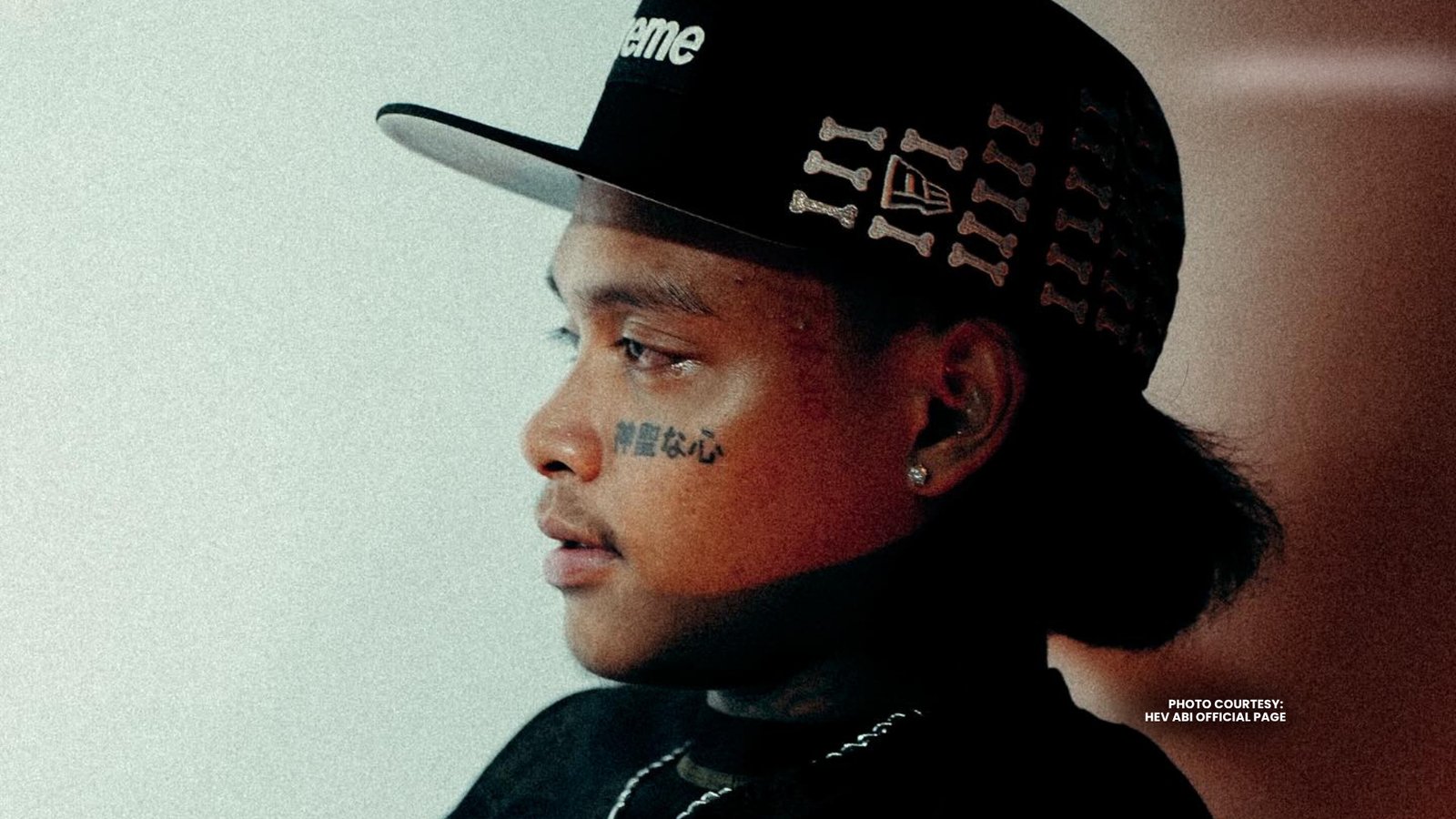
The 24-year-old rapper, whose real name is Gabriel Abilla, had been set to perform at the UP Fair, riding a steady rise in the local hip-hop scene fueled by viral tracks like “Alam Mo Ba Girl,” “Lil Kasalanan Shortie,” and “QC Girl.” Days before that appearance, however, he was arrested in Quezon City, shifting the conversation around him almost overnight.
According to the Philippine National Police’s Criminal Investigation and Detection Group (CIDG), Hev Abi was taken into custody in the early hours of April 14 during an operation in Barangay Laging Handa, Diliman. The raid, conducted under “Oplan Paglalansag Omega,” was tied to alleged violations of the Comprehensive Firearms and Ammunition Regulation Act and the Comprehensive Dangerous Drugs Act.
Police reported recovering a Taurus G3 9mm pistol, a magazine, and 15 rounds of ammunition. They also said they seized 11 cartridges containing suspected liquid marijuana, several sachets of powder believed to be cocaine, and other paraphernalia. Six other individuals were arrested during the same operation.
On paper, it reads like a standard enforcement case. It did not stay that way in public.
Within hours, the narrative split. The arrest was clear, but its interpretation wasn’t.
Online, attention quickly moved away from the list of seized items and toward the details surrounding the operation. The fact that the search warrant was reportedly issued in connection with firearms, while suspected drugs were also recovered, became a focal point of discussion. It was not necessarily unusual, but it was enough to invite scrutiny.
Images and videos tied to the raid circulated widely, with viewers dissecting moments frame by frame. Movements inside the scene, the placement of objects, and the sequence of events became points of speculation. None of these observations has been officially verified, but they have shaped how the story is being received.
Hev Abi’s camp responded with a firm denial. In a statement released on social media, his label, Urban Department PH, said they “categorically deny any and all allegations pertaining to this misunderstanding.” The label added that their legal counsel is already working with authorities to address the case and thanked supporters who continue to stand by the artist.
That response did little to settle the conversation. Instead, it reinforced the divide.
What exists now are two parallel narratives. One is built on official reports and pending charges. The other is shaped by public skepticism, amplified by the speed and reach of online platforms.
Hev Abi now sits between those two timelines.