
Bontoc’s Maligcong terraces draw fresh tourism interest
In Bontoc, Mountain Province, a heritage recognition offers a fresh reason to explore a landscape sustained by generations of farmers
May Flores
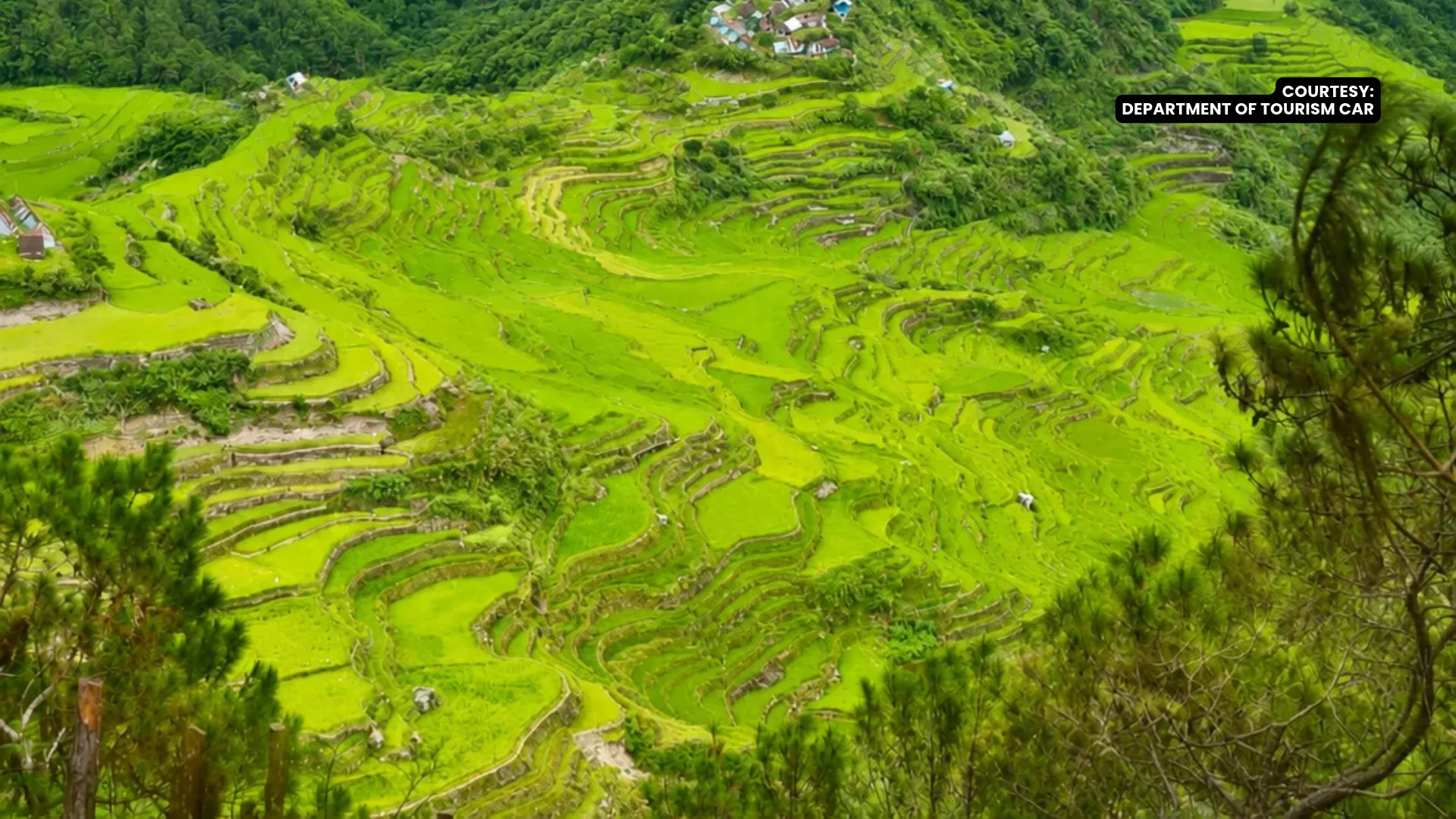
A sunrise hike may draw travelers to Maligcong, but the view deserves more than a quick photograph. Across the mountainside, stone-walled rice paddies trace the slopes in carefully built layers—a landscape whose beauty depends on the people who continue to cultivate it.
This farming village in Bontoc, Mountain Province, has received renewed attention following the turnover of a heritage marker recognizing its rice terraces as a National Cultural Treasure. The National Commission for Culture and the Arts handed the marker to Bontoc officials at the Metropolitan Theater in Manila on October 19, 2026. The recognition was formalized under NCCA Commission Declaration No. 2024-03.
For travelers, the milestone offers a reason to look more closely at what makes Maligcong worth the journey.
The work behind the view
The terraces are an expression of practical knowledge: how to hold soil on steep ground, distribute water and grow food where flat land is scarce.
The NCCA’s published documentation supporting the heritage petition describes stone walls built with closely fitted local rocks, irrigation channels and rice granaries that remain in use. It also records obobfo, or og-ogfo, a tradition of mutual assistance in which families help one another plant and harvest, with cooperation extending to stonewall repairs and house building.
Seen through that history, the terraces become more than an impressive arrangement of fields. Their continued cultivation connects engineering, food production and community life.
A mountain morning at Kupapey
For a wider perspective, travelers head to Mount Kupapey, also spelled Kofafey or Kufafey in travel accounts. The sunrise trek is one of Maligcong’s signature experiences, offering an elevated view of the terraces. Mount Fato provides another vantage point, with a rocky summit overlooking the surrounding landscape.
An overnight stay makes room for both the hike and the village below. Rather than squeezing everything into a rushed stop, consider arriving in the afternoon, settling into a homestay and arranging the following morning’s walk with a local guide.
The reward is time: time to watch the light shift across the fields, ask how the terraces are maintained and understand the landscape beyond its most familiar camera angle.
Let the rice calendar shape the trip
There is no single appearance to expect throughout the year. The paddies change with cultivation, and a photograph of intensely green terraces captures only one stage.
Published travel guides commonly recommend May to July for green fields. However, the NCCA’s heritage documentation records planting from February to March and harvesting from July to August, while some travel accounts give later planting dates. Visitors should ask local hosts about the actual crop conditions before choosing dates around a particular view.
That conversation is more useful than treating a “best month” list as a guarantee.
Give the community a place in the itinerary
Maligcong’s potential for tourism rooted in agriculture was already being explored before the marker handover.
In January 2024, the Department of Tourism–Cordillera nominated it as a pilot site for voluntourism focused on sustainable farming and environmental conservation. Preparatory activities involved farmers, guides and homestay owners, with proposed experiences including field preparation, planting, harvesting and learning local cooking. These were development plans, so travelers should confirm which activities are currently available rather than assume they can join farm work upon arrival.
For an ordinary visit, the choices are straightforward: book local accommodation, hire a community guide, ask permission before photographing residents and follow guidance on where to walk. Working paddies and terrace walls deserve care.
Getting there
Bontoc is the gateway to Maligcong, which travel guides place roughly eight kilometers from the town center, or around 30 minutes by jeepney. Travelers can reach Bontoc through routes from Metro Manila, Baguio or Banaue, then arrange the onward transfer. Confirm current departures, fares, guide fees and accommodation directly before traveling.
The heritage marker gives Maligcong national recognition. A thoughtful visit gives travelers something equally valuable: a clearer understanding of the skill and everyday work that keep this mountain landscape alive.