
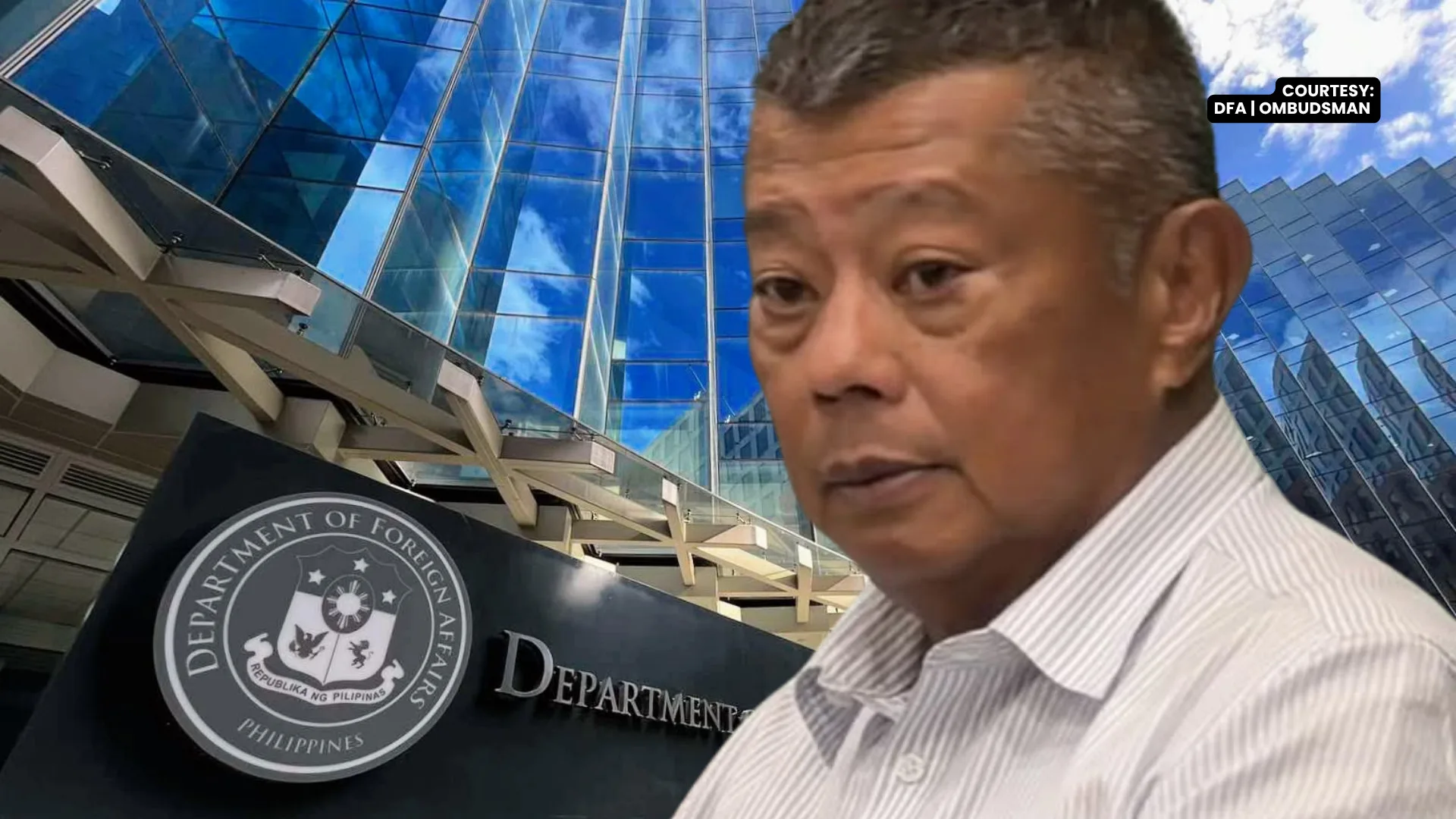
The Department of Foreign Affairs (DFA) on Monday pushed back against Ombudsman Jesus Crispin Remulla’s proposal to strip the agency of its visa-issuance functions, rejecting his allegations that foreign service posts had turned visa processing into a commercial enterprise.
In an official statement, the DFA stated that Remulla’s comments “undermine the institutional integrity of the Department and unfairly malign the reputation of the Philippine Foreign Service and its personnel.”
Addressing allegations regarding fee collection, the department clarified that all visa fees are collected strictly in accordance with statutory guidelines and official fee schedules, reiterating its commitment to transparency, accountability and professional public service.
The foreign affairs department strongly contested Remulla’s characterization of visa processing as routine paperwork, emphasizing that evaluating foreign applicants requires substantive assessment and legal verification.
“These responsibilities require the exercise of official judgment pursuant to the applicable Philippine laws, rules and regulations,” the agency stated, noting that visa issuance cannot be reduced to administrative receipt.
Remulla previously advocated for outsourcing visa operations to third-party providers such as VFS, arguing during his DZRH radio program that visa screening is fundamentally an immigration function under the Department of Justice (DOJ).
“The DFA’s problem is that it seems to have forgotten that its primary job is to be diplomats. In this case, they want something else to happen—they want to do business. They used to turn visa issuance in China into a business,” Remulla claimed, questioning the agency’s overseas screening capacity.
The friction comes as government bodies review visa-free entry policies for Chinese visitors following concerns raised by the Presidential Anti-Organized Crime Commission (PAOCC) over illegal Philippine Offshore Gaming Operator (POGO) activities.
While acknowledging that third-party vendors can assist with administrative tasks like document intake, the DFA stressed that third-party contracts cannot transfer sovereign authority.
“This authority remains a governmental responsibility, as exercised by the Philippine Embassies and Consulates,” the DFA asserted, reaffirming that the power to grant or deny entry visas is anchored in Philippine law and international conventions.
The agency pledged to maintain its statutory mandates and preserve the integrity of the country’s border entry controls.