
Malacañang has implemented a comprehensive suite of measures to cushion the impact of Super El Niño, prioritizing food security, water and power conservation, and emergency relief for affected communities.
Palace Press Officer Claire Castro on Wednesday said President Ferdinand Marcos Jr. and his administration are pursuing a proactive strategy through a whole-of-government approach, encouraging households to conserve critical resources during the dry spell.
During a Task Force El Niño meeting on Tuesday, Marcos underscored the need to secure agricultural output, safeguard worker health, reinforce water and energy infrastructure, execute public information campaigns, and offer alternative livelihood training for farmers.
Castro noted that the President directed health authorities to ensure adequate supplies of electricity, water, medicines, and medical equipment for healthcare facilities, as the Department of Health (DOH) prepares to manage heat-related illnesses.
To support the water supply, the government is utilizing cloud seeding, strategic dam management, water treatment facilities, mobile water tankers, and the activation of 61 decommissioned deep wells in Metro Manila. Metro Manila’s water reserves are expected to gain further support with the scheduled completion of the Kaysakat Water Treatment Plant at the Upper Wawa Dam next month.
On agricultural stocks, Castro stated that existing national inventories remain sufficient, with rice stocks good for 75 days, pork for 170 days, and chicken for 125 days, adding that the government remains open to supplementary imports if required.
To cushion agricultural workers against financial losses, the Department of Social Welfare and Development (DSWD) and the Department of Labor and Employment (DOLE) are prepared to issue emergency cash transfers (ECT) and cash-for-work assistance, while the Technical Education and Skills Development Authority (TESDA) stands ready to provide skills retraining.
Monitoring efforts are also underway, with the Department of the Interior and Local Government (DILG) and Department of Trade and Industry (DTI) tracking prices of water storage containers like drums and buckets, while the Department of Energy (DOE) oversees fuel and power supplies.
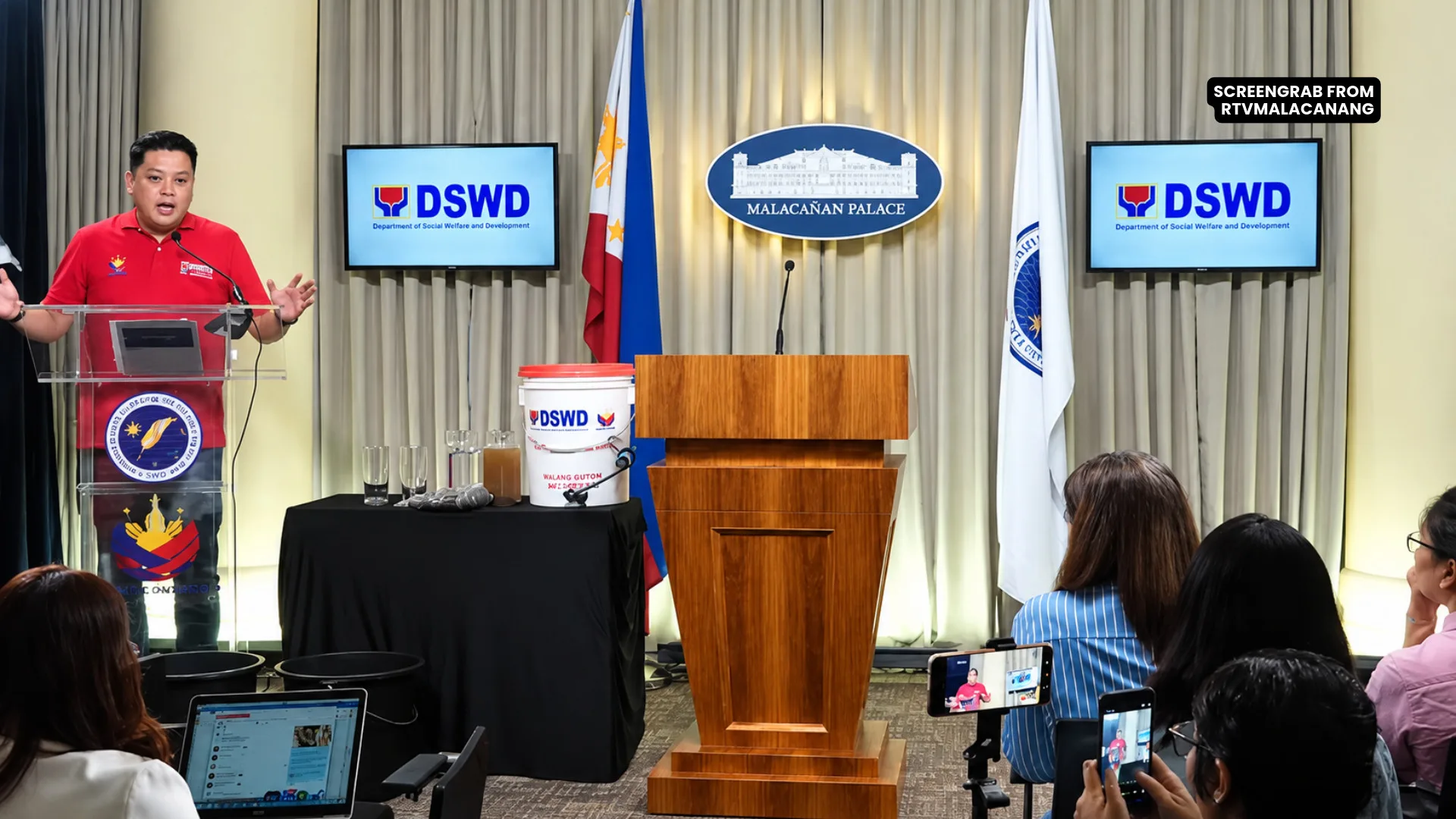
For water safety, DSWD Secretary Rex Gatchalian assured the public during a Malacañang briefing regarding the cleanliness of water processed through department-issued filtration kits.
Gatchalian said the DSWD will begin distributing water filtration kits next week, targeting areas declared under states of calamity and high-density communities experiencing low water pressure. The department will also conduct community guidance sessions covering proper assembly, cleaning, and upkeep of the units.
The filtration kits hold a Certificate of Health Related Device Registration from the Food and Drug Administration (FDA), comply with the Philippine National Standards for Drinking Water (PNSDW), and carry DOH safety certification. The technology has been utilized in disaster-stricken zones since 2024.
Gatchalian noted that the units, which can last up to five years with proper maintenance, feature 0.1-micron filters capable of eliminating cholera, salmonella, E. coli, and coliform bacteria, alongside a bucket adapter assembly, drill bit, filter hanger, cleaning plunger, and instruction guides.
Furthermore, the DSWD is executing Project Local Adaptation to Water Access (LAWA) and Breaking Insufficiency through Nutritious Harvest for the Impoverished (BINHI) to strengthen food and water security in vulnerable sectors. The initiative engages residents in Geographically Isolated and Disadvantaged Areas (GIDA) for 20 days to build Small Water Impounding Projects (SWIPs) over natural springs and establish community gardens.
Gatchalian added that over 5,000 impounding sites are currently operational across the country, providing freshwater access and food sources for rural families as part of the department’s broader climate resilience response directed by the President.