
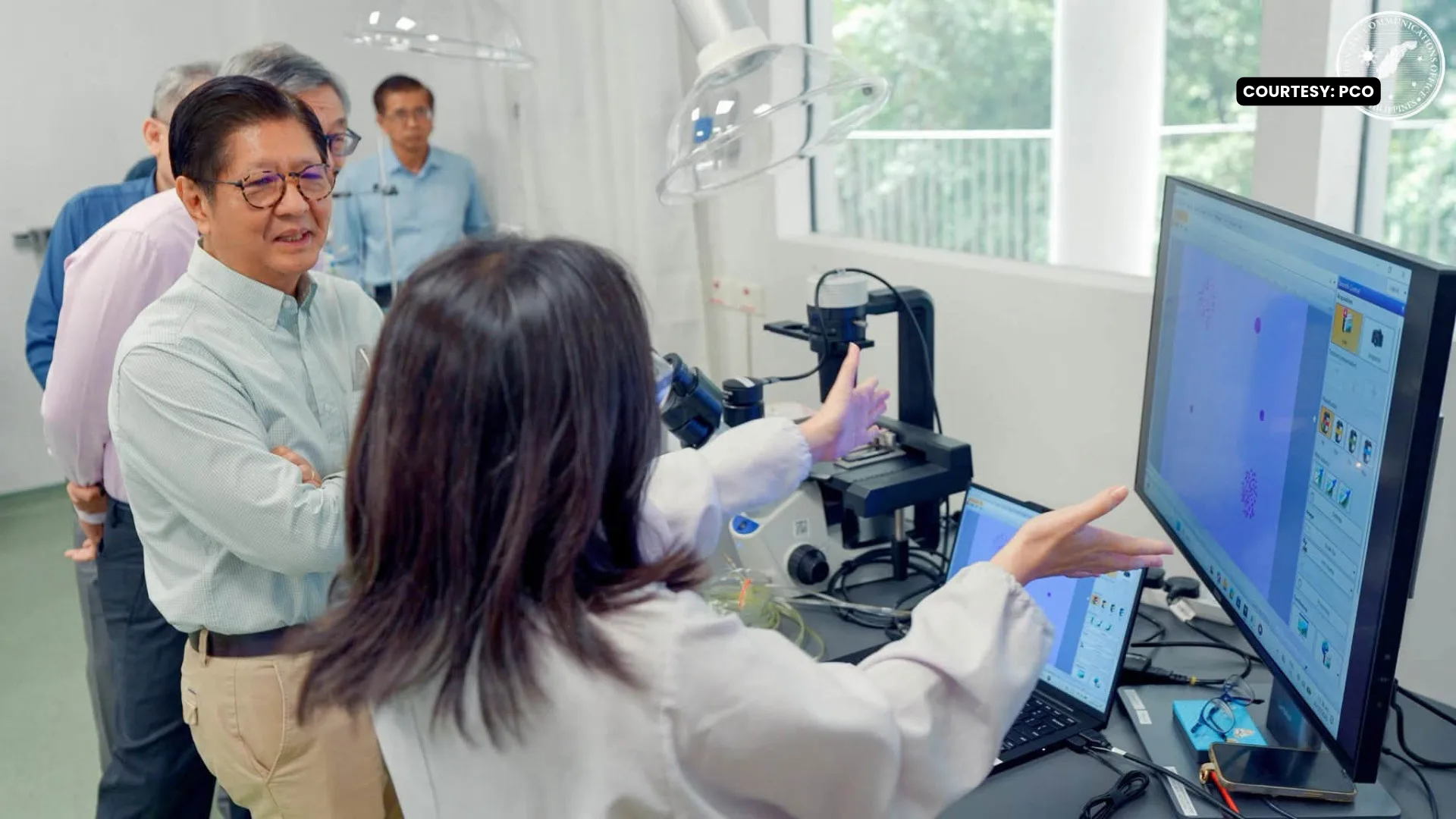
President Ferdinand R. Marcos Jr. affirmed that his administration is “serious” about integrating nuclear power into the country’s energy mix, warning that the rapid expansion of artificial intelligence (AI), data centers and critical mineral processing will dramatically surge power demands.
At a media interview in Singapore on Sunday, the President underscored that while current power generation remains manageable, future tech-driven economic growth requires expanding baseload capacity.
“So yes, we’re serious about nuclear power because even as we stand now, we’re okay in terms of power generation for the Philippines,” Marcos said. “But everybody knows that what’s coming down the road is our data centers, is AI. And I think everybody by now knows that the demand for power is going to increase at a very, very high rate.”
The Chief Executive noted that for the Philippines to secure a competitive footprint in the digital economy and global tech supply chains, it must guarantee reliable, continuous electricity.
He highlighted recent nuclear adoption and research efforts in neighboring Asian nations including Vietnam, China and South Korea as evidence of the technology’s evolving safety and operational viability.
The President also pointed out the country’s extreme exposure to global supply shocks, saying that the Philippines imports 99 percent of its oil requirements and relies on indigenous sources for only one-third of its natural gas supply.
The remarks follow the President’s visit to the Singapore Nuclear Research and Safety Institute (SNRSI) on Saturday, where he lamented that the Bataan Nuclear Power Plant (BNPP) was never operationalized. Calling the decision to halt the plant “a bad choice,” Marcos noted that the facility had already completed initial phases and developed a pool of trained local nuclear specialists before operations were stopped in 1986.