
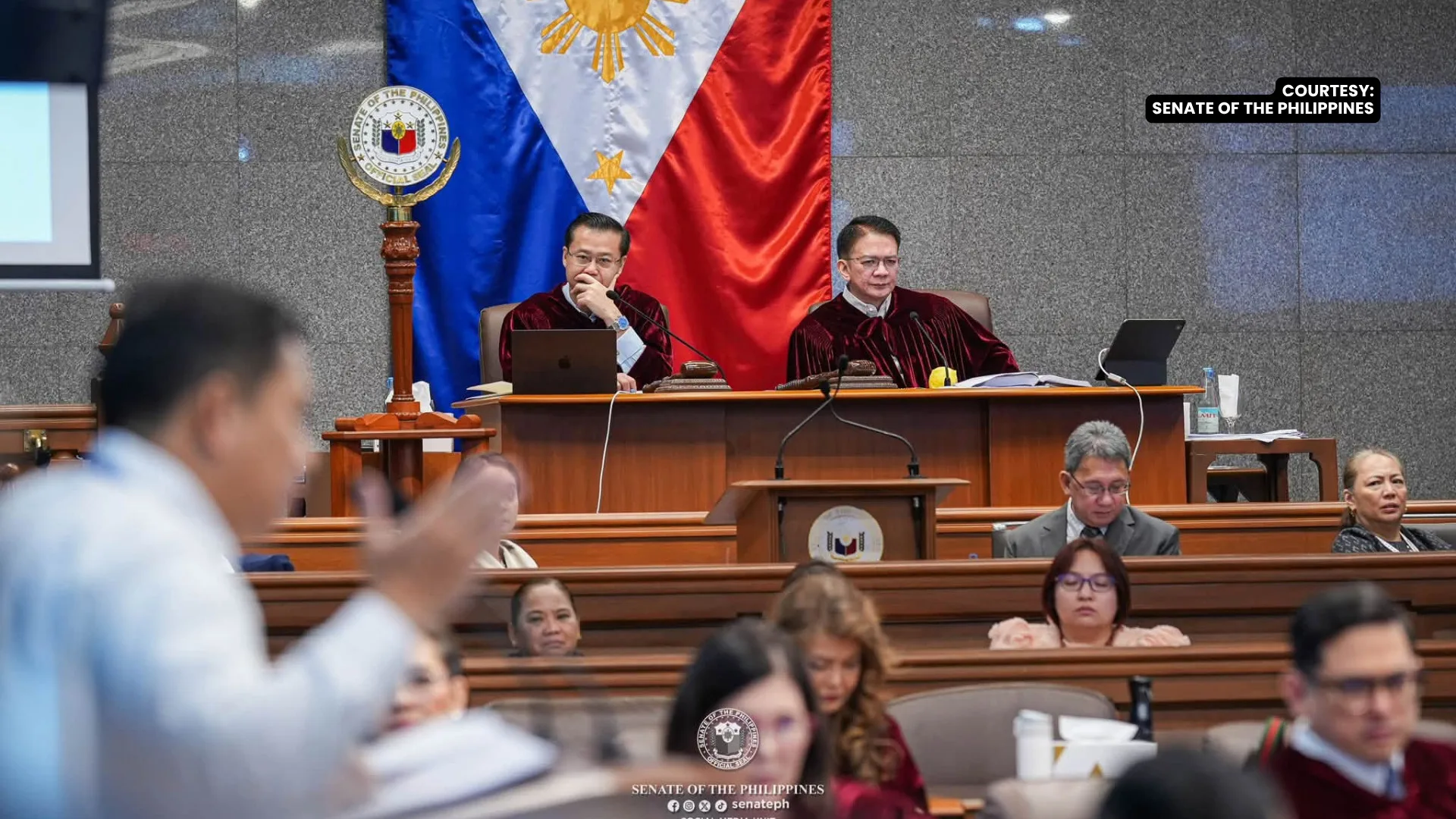
House prosecution adviser and trial spokesman Robert Ace Barbers stated that the Duterte family’s long-cultivated image of living a simple lifestyle cannot shield them from financial disclosures released by the Anti-Money Laundering Council (AMLC).
Barbers stressed that official banking records and paper trails presented before the Senate impeachment court fundamentally alter the nature of the allegations involving Vice President Sara Duterte and her husband, attorney Manases Carpio.
”Ilang taon nilang ipinakita sa publiko ang imahe ng simpleng buhay—natutulog sa kulambo, kumakain sa karinderya, at namumuhay na parang karaniwang Pilipino. Pero ngayon, may mga financial records na kailangang ipaliwanag. Hindi na sapat ang imahe. Ang dokumento ang dapat magsalita,” Barbers said.
The former Surigao del Norte lawmaker emphasized that the financial disclosures are no longer a matter of public perception or political narrative, requiring a comprehensive examination of all bank movements.
”Hindi na ito simpleng usapin ng perception o political propaganda. Kapag may financial records, transactions at money movements na lumilitaw, kailangang tingnan ang buong paper trail. Saan nanggaling ang pera? Saan ito napunta? Kanino dumaan? At higit sa lahat, tugma ba ito sa mga ipinahayag nilang assets, income at lifestyle?” Barbers said.
Regarding the AMLC documents, Barbers noted that while the disclosures should not be immediately prejudged as proof of criminal guilt, they contain significant red flags that demand clear explanations under due process.
”Hindi natin sinasabing guilty ang sinuman dahil lamang sa AMLC disclosures. Ang sinasabi natin: kung may red flags, dapat siyasatin. Kung may unexplained transactions, dapat ipaliwanag. At kung may discrepancy sa financial declarations, dapat masagot nang malinaw. Iyan ang tunay na due process,” he also said.
The prosecution spokesman highlighted that the stark contrast between public portrayals and multi-billion-peso transaction records naturally leads the public to demand transparency from high-ranking officials.
”Kung ang ipinapakitang buhay ay simple at ordinaryo, pero ang financial trail ay nagpapakita ng malalaking halaga at transaksiyong kailangang ipaliwanag, natural lamang na magtanong ang publiko. Hindi puwedeng ang kulambo ang maging sagot sa bank records,” Barbers said.
He underscored that inside the impeachment court, documented financial evidence must take precedence over political image-building when evaluating allegations of unexplained wealth.
”Sa impeachment trial, hindi sapat ang image-building. Evidence ang pag-uusapan. Kung may financial records na relevant sa mga alegasyon, kailangang tingnan ng Impeachment Court ang records na iyon sa kanilang kabuuan at hayaan ang ebidensiya ang magsalita,” Barbers also said.
Barbers cautioned public officials against using political diversion tactics or attacking critics when confronted with legitimate financial inquiries, asserting that official documentation requires direct answers.
”Huwag nating patayin ang usapan sa pamamagitan ng diversionary tactics. Kapag pera ang pinag-uusapan, pera ang sagutin. Kapag bank records ang pinag-uusapan, bank records ang ipaliwanag. Kapag may discrepancy, ipakita ang dokumentong maglilinaw. Simple lang iyon,” he said.
He added that holding public office carries a heightened standard of transparency that cannot be satisfied by relying on personal narratives of modesty.
”Ang pagiging public official ay may kasamang mas mataas na pamantayan ng transparency. Hindi puwedeng sabihin na, ‘Simple lang ang buhay namin,’ at doon na magtatapos ang usapan. Kapag may dokumentong nagtataas ng seryosong tanong tungkol sa pinansiya, obligasyon mong sagutin iyon—hindi takasan, hindi ilihis, at lalong hindi takpan ng political narrative,” Barbers also said.
Concluding his statement, Barbers reiterated that public accountability must follow wherever the documentary evidence leads in the ongoing tribunal proceedings.
”Sa huli, hindi kulambo ang susuriin ng bayan—financial trail ang susuriin. Hindi karinderya ang magpapaliwanag ng bank records. At hindi public image ang magpapawalang-bisa sa dokumentong kailangang siyasatin. Kung mapapatunayang walang anomalya, then let the records establish that. Pero kung may perang hindi maipaliwanag, may yaman na hindi maipaliwanag, o may transaksiyong hindi tugma sa mga deklarasyon, hindi maaaring ibaon iyon sa ilalim ng isang kuwento ng simpleng pamumuhay. The Filipino people deserve the truth, and where the evidence leads, accountability must follow,” Barbers said.