
Twenty-three years is a long time to stay away from the MTV Video Music Awards stage.
Madonna needed one sentence to announce her return.
“It’s mother.”
Then came Sabrina Carpenter. Then Charli XCX. By the end of the night, Madonna had collected seven Moon Persons—including Artist of the Year—and turned what could have been a nostalgia appearance into something considerably more interesting: a demonstration of how an artist with more than four decades behind her can remain connected to the pop music happening around her now.
The September 27 ceremony in Los Angeles marked Madonna’s first VMA performance since 2003, the year she famously shared the stage—and kisses—with Britney Spears and Christina Aguilera. This time, the generational handoff looked different.
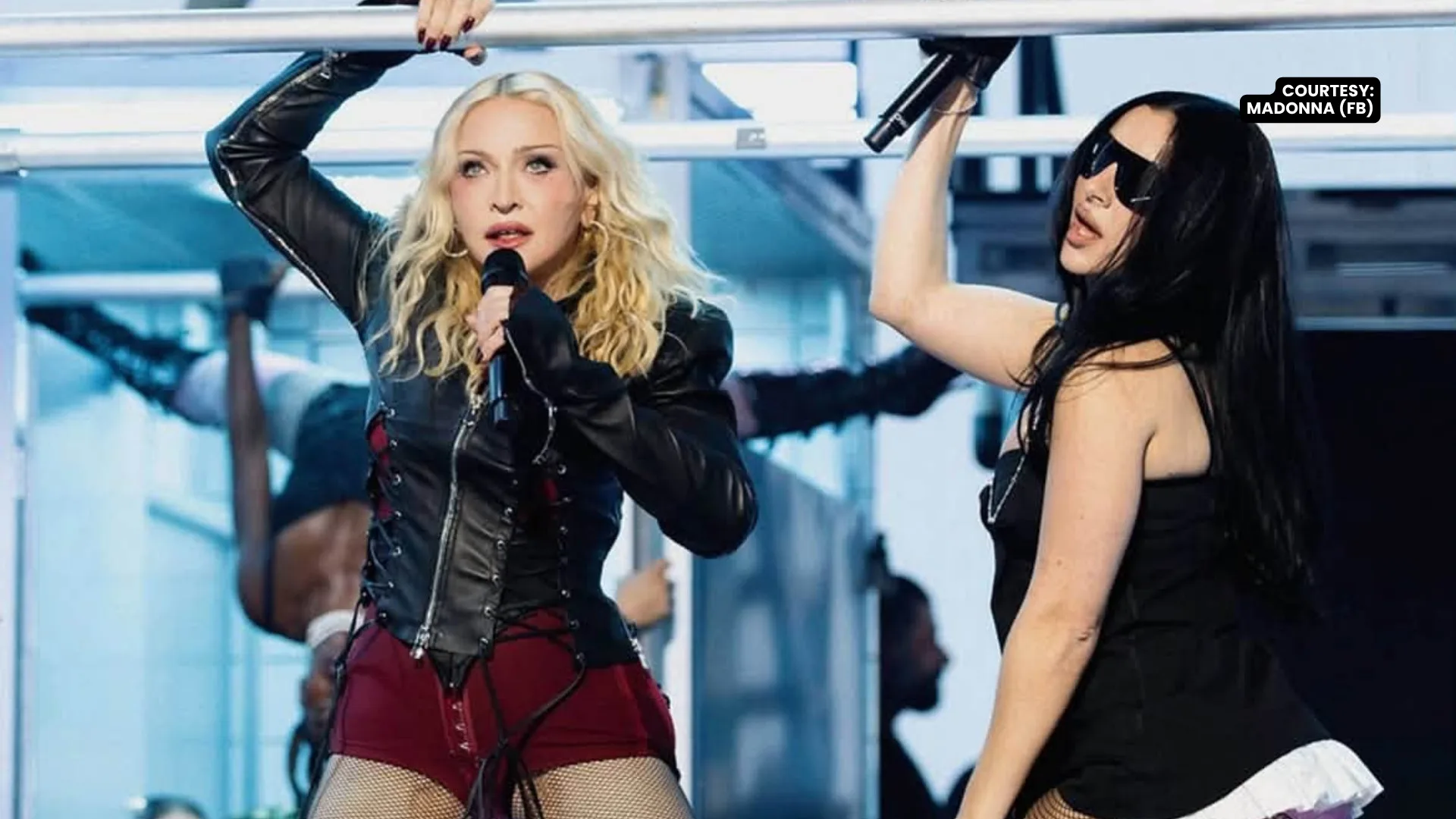
She opened with “Bring Your Love” alongside Carpenter before Charli XCX emerged from a bathroom stall for “Danceteria Afterhours,” their newly released reworking of Madonna’s “Danceteria.” Debi Mazar, Julia Garner, Sombr and Seth Rogen were among the other faces appearing during the elaborate performance.
The Carpenter collaboration came together in particularly Madonna fashion.
Madonna revealed that after waiting five days to be connected with Carpenter, she lost patience and sent the younger singer a direct message herself. Carpenter answered, and within weeks they were recording together.
The resulting “Bring Your Love” won Best Collaboration at the VMAs. Madonna also discovered that she and Carpenter share one decidedly analog habit: both still write lyrics on pieces of paper.
Charli represents another intriguing connection.
“Danceteria Afterhours” is their first collaboration and arrived only days before the VMAs. Madonna co-produced the track with Andrew Watt, Cirkut and Stuart Price. It followed another recent cross-generational pairing, Madonna’s August collaboration with Kylie Minogue on “Love Sensation (Afterhours Mix).”
There is a pattern here.
Madonna is not treating younger pop stars as decorative guests in a career retrospective. She is recording with them, appearing alongside them and folding their voices into her current work.
And current work is important.
Her seven VMA victories weren’t lifetime-achievement prizes. She won Artist of the Year and Best Album for Confessions II, while “Bring Your Love” took Best Collaboration. Confessions II — The Film accounted for wins in Best Dance, Best Long Form Video, Best Cinematography and Best Choreography.
That brought Madonna to 27 career VMAs.
There is an almost absurd symmetry to seeing Madonna command the VMAs in 2026.
Her relationship with the awards goes back to their beginning. At the inaugural ceremony in 1984, she performed “Like a Virgin” in a wedding dress and rolled across the stage after losing a shoe—creating an image that became one of the defining moments of early MTV.
In 2003 came Britney, Christina and the kisses.
In 2026, it was Sabrina and Charli.
The supporting cast keeps changing because pop keeps changing. Madonna’s unusual achievement is that she keeps finding a way into the next version of it.
At 68, she did not return to the VMAs to receive flowers for what she did decades ago.
She showed up with new music—and left carrying seven trophies.