
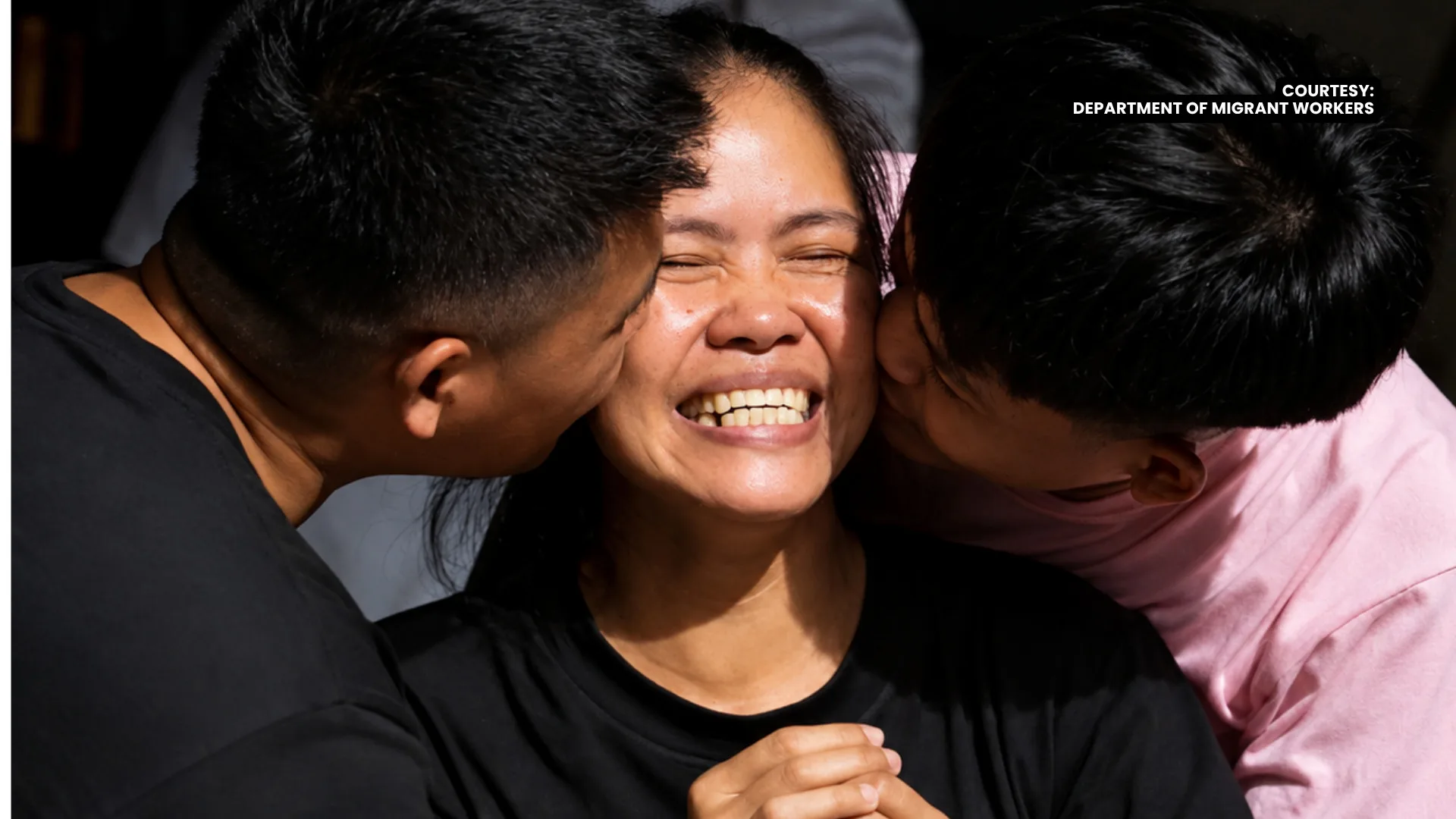
The Department of Migrant Workers (DMW) has initiated full reintegration measures for Mary Jane Veloso after she received an absolute pardon from President Ferdinand Marcos Jr., bringing her nearly 15-year legal ordeal to a close.
Migrant Workers Secretary Hans Leo Cacdac directed a specialized DMW team to travel to Nueva Ecija to collaborate with Veloso’s family and local officials in crafting a tailored aid program.
“Our instructions are clear: the DMW must stand shoulder-to-shoulder with Mary Jane, her children, and her parents as they rebuild their lives,” Cacdac stated.
Working alongside the Overseas Workers Welfare Administration (OWWA), the agency plans to provide psychosocial support, starter kits for small businesses, enterprise capital, and vocational training. To reinforce long-term economic stability, Veloso’s proposed business efforts will be integrated into municipal economic projects and local cooperatives in Nueva Ecija.
“Reintegration is not merely about coming home—it is about restoring dignity, ensuring financial self-sufficiency, and enabling Mary Jane to contribute to her local community and economy,” Cacdac noted.
The DMW formally welcomed the grant of executive clemency, characterizing the pardon as a “definitive, triumphant end to a grueling, decades-long ordeal” to secure Veloso’s freedom.
Veloso walked out of the Correctional Institution for Women in Mandaluyong City shortly past midnight on Saturday and reunited with her family later that morning.
Her case dates back to 2010 when she was arrested in Indonesia after being tricked into transporting a suitcase lined with 2.6 kilograms of heroin. She spent almost 15 years on death row until a last-minute reprieve was granted in 2015 when Philippine officials identified her as a human trafficking victim. She was eventually returned to the Philippines to serve her remaining sentence prior to receiving the presidential pardon.
The agency stressed that Veloso’s situation underscores the importance of the “non-punishment principle,” an international standard designed to protect human trafficking victims from criminal prosecution for acts committed as a direct consequence of their exploitation.